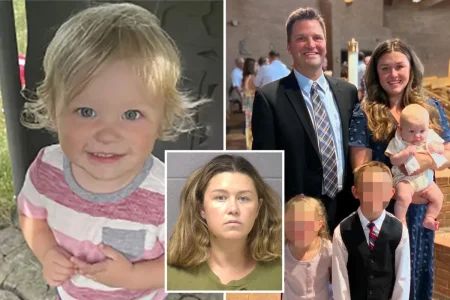





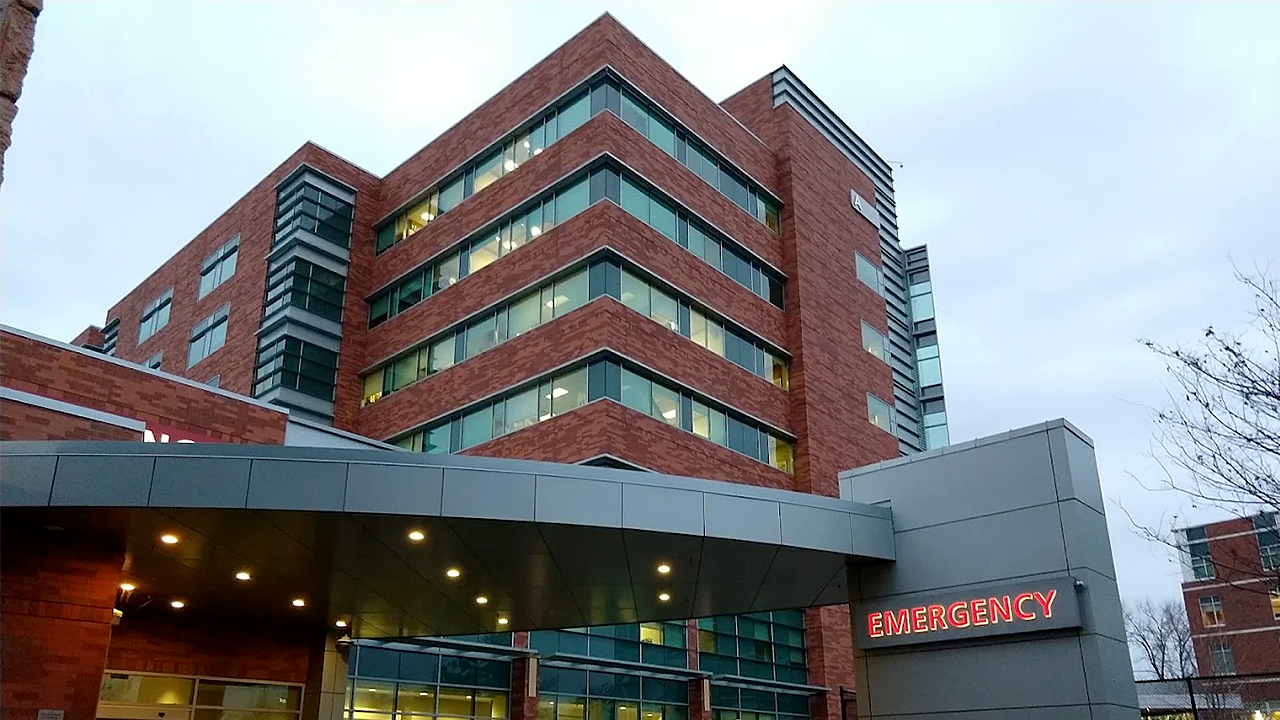
It began as a journey of faith and family. Aleksandr and Nataliya Yeremeyev, a Seattle couple with deep religious convictions, had traveled to Salem, Oregon, for a spiritual retreat, hoping to find comfort and community with their young children. Among them was their son, Michael, a nearly nine-month-old baby with Down syndrome who had already survived more than most infants could be expected to endure. He had spent the first six months of his life at Seattle Children’s Hospital, where his parents had fought tirelessly for his care, loving him through every procedure, every monitor, every uncertain night. They had arrived in Oregon with hope in their hearts, but their world shattered on the night of September 22, 2024. Michael developed rapid, shallow breathing, a terrifying symptom that sent his parents rushing him to the emergency room at Salem Health Hospital. There, despite every effort, the tiny boy died. The couple stood in the sterile corridors of an unfamiliar hospital, utterly devastated, holding the body of their child and asking a simple, heart-wrenching question: How would they bring him home with dignity? What happened next would leave them with a grief far deeper and a trauma that no parent should ever have to endure.
The story of Michael’s life is one of love and fierce parental devotion. Born with Down syndrome, he faced significant medical challenges from the very beginning. For six months, Seattle Children’s Hospital became a second home for the Yeremeyevs. They learned the language of medicine, the rhythms of the ICU, the quiet hope that comes with small victories and the crushing weight of setbacks. Through it all, they made sure Michael received excellent care, as their attorney Anna Bruckenhoefer later put it. They advocated for him, held him, sang to him, and never left his side. Michael was not just a patient; he was their child, a beloved member of a family that had already poured every ounce of strength into giving him a life filled with love. When they traveled to Oregon for the retreat, they likely believed the hardest days were behind them. But that September night, everything changed. In a foreign emergency room, surrounded by strangers, their son took his final breath. The shock and anguish must have been unbearable. Yet even in that darkest moment, the Yeremeyevs did what loving parents do: they tried to arrange for Michael to be treated with respect and care in death. They asked hospital staff how to transport his body back to Seattle so they could lay him to rest among family and friends. They had no idea that this simple, human request would be met with cold indifference and a suggestion that would haunt them forever.
According to the lawsuit filed against Salem Health and Dr. Stefani Sorensen, the hospital staff failed the family in the most profound way. When Aleksandr and Nataliya asked for help contacting a local funeral home to arrange a respectful transfer of Michael’s remains to Seattle, they were allegedly told such a service would be “too expensive.” Instead, staff pressured them to place their son’s body in their own private car and drive the four hours back home themselves. The parents were exhausted, heartbroken, and in a state of disbelief. They had just watched their child die. They were not thinking clearly. They needed guidance, not a bill; compassion, not a cost analysis. But according to the complaint, the hospital left them with no other choice. “They have repeatedly asked the hospital for assistance in helping them with what are the next steps,” Bruckenhoefer said. “This was all occurring overnight. They felt rushed that they had to make quick decisions and the hospital left them with no choice other than to take Michael’s body with them and head back to Seattle.” It is true that transporting a deceased person by private vehicle is legal in Oregon and Washington with the proper permits. But legality is not the same as decency. The Yeremeyevs were not looking for a technical workaround. They were looking for a hospital, an emergency department that is tragically accustomed to death, to step in and say, “We will help you. Here are the next steps. You don’t have to do this alone.” Instead, they were effectively told they were on their own.
What followed was a four-hour nightmare that no father should ever have to live. Aleksandr got behind the wheel of the family car with his son’s lifeless body laid across the backseat. His wife Nataliya and their other children followed in a separate vehicle, a caravan of sorrow crawling along the highway from Oregon to Washington. Every mile was a torment. Aleksandr drove in constant fear of being pulled over by police, unable to explain the tragedy in the backseat without breaking down. He feared a car accident, a sudden stop, any ordinary road hazard that could violate the fragile remains of his child. He was also, painfully, aware of the unavoidable reality of death: his son’s body was deteriorating. With each passing hour, the signs of decay grew more visible, more visceral, more unbearable. By the time the family reached a funeral home in Seattle, Michael’s body had leaked fluids onto the seat. Aleksandr, already shattered by grief, was forced to clean up his infant son’s remains from the upholstery. It was a final, degrading task that will likely stay with him forever. This was not a moment of closure or a peaceful final journey. It was a raw, horrifying experience that compounded his trauma. In the quiet agony of that drive, the father likely replayed every moment of his son’s short life, every hope, every promise, every dream now reduced to a body in the backseat. No parent should ever have to know that feeling. No parent should have to turn their family car into a hearse because a hospital told them there was no other option.
Now, the Yeremeyev family is fighting back. They have filed a $10 million lawsuit against Salem Health, Salem Health Hospitals & Clinics, Salem Emergency Physicians Service, and Dr. Stefani Sorensen, the emergency physician involved in Michael’s care. The complaint alleges direct negligence, vicarious liability, and a breach of the heightened duty of care that hospitals owe to bereaved parents for the respectful treatment and custody of a child’s body. This is not about money in the sense of greed; it is about accountability, about making sure no other family suffers this kind of callous treatment in their darkest hour. The family is seeking non-economic damages for severe emotional distress and psychological trauma, and they plan to amend the complaint to include punitive damages. Punitive damages are reserved for conduct that is particularly egregious, and the Yeremeyevs’ attorneys argue that the hospital’s behavior meets that bar. “No parents, no loved ones should ever be placed in the position that the Yeremeyevs were placed in,” their attorney said. “Just completely surprised that something like this would happen in 2026.” The word “surprised” is telling. We expect hospitals to be places of healing, and when healing is impossible, we expect them to be places of compassion. We expect protocols to exist for death, for dignity, for the aftermath of tragedy. The Yeremeyevs were failed on every level. They did not ask for special treatment. They asked for basic human decency, for the hospital to treat their son’s body as sacred, as the vessel of a precious life, not as an inconvenience to be handled cheaply. Instead, they were sent on a gruesome road trip that stripped away the last shreds of dignity from their son’s passing.
Salem Health, for its part, has offered a careful statement, citing privacy and the pending litigation. “Salem Hospital responded in accordance with the family’s wishes and followed both hospital policy and Oregon state law in consultation with the appropriate local authorities, including the medical examiner,” the hospital said. It also asserted that “care with respect is a guiding principle of clinical practice at Salem Hospital and remains central to how we support patients and families during some of life’s most difficult moments. We recognize the profound grief families experience following the loss of a loved one and treat every patient and family with empathy, dignity, and respect.” But those words ring hollow to a mother and father who were told to place their dead infant in the backseat of their car. If respect is truly a guiding principle, where was it at 3 a.m. when the Yeremeyevs were begging for help? Where was the empathy when a father had to clean bodily fluids from his car seat? Where was the dignity in a four-hour drive with a decomposing child? The hospital’s statement is a legal shield, not a moral answer. This case is a reminder that grief is not a clinical issue to be managed with policies and procedures, but a human experience that demands grace. The Yeremeyevs will carry this trauma for the rest of their lives. No verdict can erase the image of Aleksandr driving through the night with his son in the backseat, or the sound of Nataliya weeping in the car behind. But perhaps this lawsuit can force hospitals across the country to look at their own protocols, to ask themselves whether they would do the same to a grieving family, and to change before the next tragedy. Because every child, no matter how small, deserves to make their final journey with love, not with fear. And every parent deserves to say goodbye with peace, not with the horror of having to become their own undertaker.