




The quiet, ordinary suburbs of Vancouver, Washington, were suddenly thrust into a state of high alarm on the warm afternoon of July 26, when a flurry of panicked 911 calls began flooding the local emergency dispatch center. Callers reported a deeply disturbing and highly hazardous sight: a motorist who appeared to be drifting in and out of consciousness behind the wheel of a moving vehicle, actively inhaling from a can of compressed air—a dangerous and desperate form of substance abuse commonly referred to as “huffing.” To those watching from the safety of their front yards and sidewalks, it was immediately clear that the driver was entirely detached from reality, his head lolling limply as his multi-ton vehicle continued its erratic progress down the public roadway. Huffing compressed air is a devastatingly destructive practice that delivers an intense, suffocating chemical high by rapidly displacing oxygen in the brain, resulting in instantaneous cognitive impairment, hallucinations, and a severe loss of physical motor control. In this tragic scene, the driver, later identified as Brandon Wells, was not merely a reckless driver willfully defying traffic laws; he was a human being caught in the terrifying, suffocating grip of an acute substance use crisis. The citizens who contacted the police were not merely reporting a crime in progress, but were desperately pleading for intervention to prevent a looming tragedy, recognizing that without immediate help, Wells was highly likely to kill himself or cause a catastrophic accident involving innocent pedestrians. The unfolding situation presented a nightmare scenario for local law enforcement, who had to mobilize rapidly to intercept a moving vehicle guided not by a conscious, rational operator, but by the unpredictable, spasmodic reactions of a chemically incapacitated mind. As police cruisers rushed toward the scene, the atmosphere was thick with urgency and tension, with responding officers fully aware that every passing second increased the probability of a fatal collision on the community’s busy streets, highlighting the tragic intersection of public safety and personal addiction.
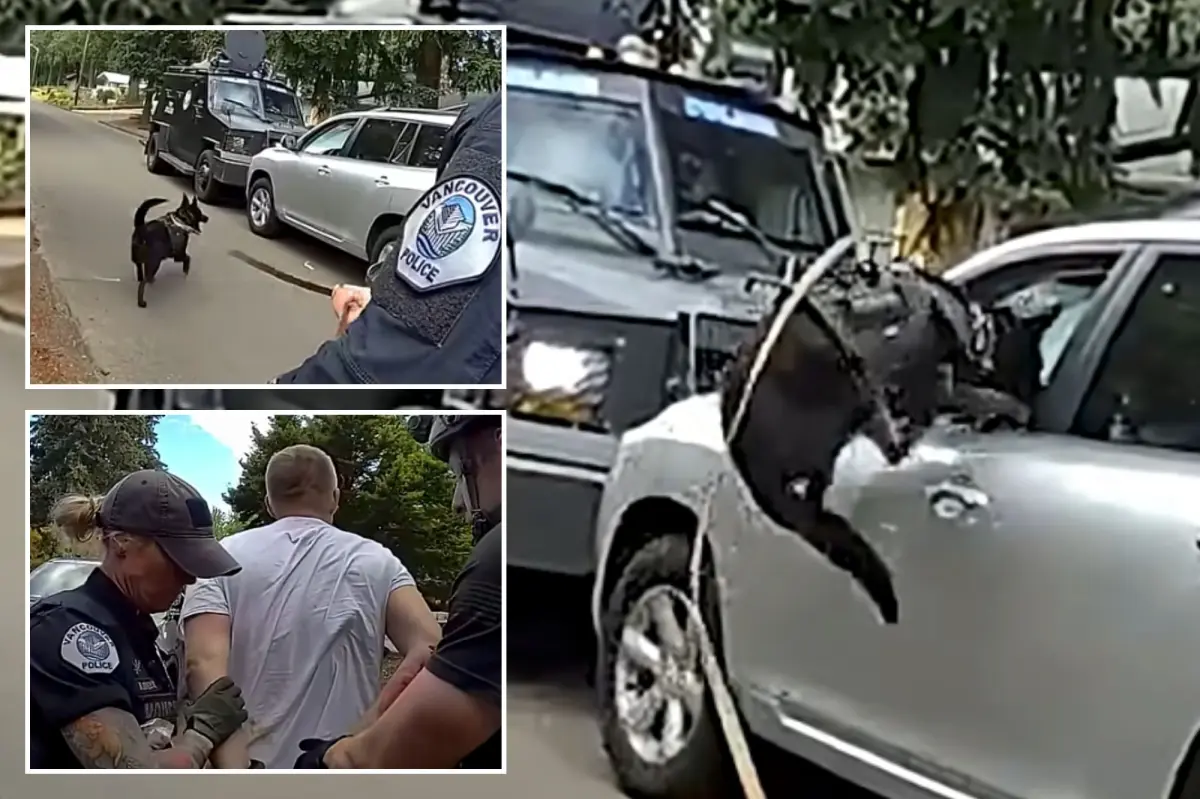
When officers finally intercepted the vehicle, their worst fears were instantly confirmed as they witnessed Wells actively inhaling from the pressurized can while continuing to navigate the public streets. Activating their emergency lights and piercing sirens, the officers attempted to initiate a standard traffic stop, hoping the sensory alarms would penetrate his chemically induced stupor and compel him to pull over safely. Instead, the pursuit took a harrowing turn as Wells completely ignored the emergency signals, pressing down on the accelerator as his vehicle began to swerve violently across lanes of traffic. The dash camera and body camera footage later released by the Vancouver Police Department captures the terrifying moments that followed, showing the suspect’s car striking a concrete curb, bouncing violently, and nearly careening directly into a residential yard where families and children could easily have been spending their afternoon. Recognizing the imminent, deadly threat that Wells posed to the community, and knowing that a prolonged high-speed chase would only escalate the danger, a tactical officer made the swift decision to deploy a specialized piece of modern technology known as the Grappler Police Bumper. This heavy-duty device, mounted directly to the front of a police cruiser, extends a powerful, heavy-duty nylon netting designed to snare the rear tire of a fleeing vehicle and wrap securely around the axle, effectively tethering the suspect’s car to the police cruiser and bringing it to a rapid, controlled stop. The maneuver was executed with flawless precision, successfully arresting the vehicle’s momentum and preventing further movement, yet the physical immobilization of the car did not mean the crisis was resolved; rather, it merely shifted the battlefield from a high-speed chase to a tense, static standoff. Inside the cabin, Wells remained locked away, both physically behind safety glass and mentally within the deep, impenetrable confines of his substance-altered state, leaving officers to face the daunting task of securing his surrender without escalating to lethal force.
What followed was an agonizing forty-minute standoff that severely tested the patience, professional training, and emotional resilience of every single officer on the scene. For nearly three-quarters of an hour, a heavily armed tactical perimeter stood in the oppressive summer heat, attempting to establish a peaceful line of communication with Wells, who remained stubbornly barricaded inside the locked vehicle. Rather than complying with the loud, repeated commands projected through police megaphones, Wells continued to abuse the compressed air cans right in front of the officers, seemingly oblivious to the gravity of his situation and the dozens of flashing lights surrounding him. This continuous consumption of inhalants created a deeply distressing and frustrating visual for the responding officers, who were forced to watch a human being systematically poison himself toward unconsciousness while they stood powerless to physically stop him without initiating a potentially violent confrontation. The psychological weight of this standoff was immense, illustrating the modern reality of law enforcement where officers are frequently forced to act as de-facto mental health and substance abuse crisis responders under highly volatile and life-threatening conditions. The officers on the perimeter had to constantly balance their duty to apprehend a dangerous offender with their deep commitment to preserving human life, knowing that any sudden movement or overly aggressive breach could trigger a tragic, lethal reaction from a suspect who was no longer capable of rational thought. The quiet residential street became a silent, high-stakes theater of tension, with neighbors watching anxiously from behind closed window blinds as the police department painstakingly evaluated their tactical options, desperately searching for a solution that would bring the incident to a safe and peaceful conclusion.
As the minutes continued to tick by and the risk of Wells suffering a fatal chemical overdose, cardiac arrest, or severe brain damage from the continuous inhalation of toxic gases grew more acute, the tactical team systematically evaluated and discarded various force options. Officers initially prepared less-lethal intervention tools, including a 40 mm less-lethal launcher and pepper balls, which are designed to compel compliance through physical discomfort and temporary sensory incapacitation without causing permanent injury. However, the unique and profound nature of Wells’s inhalant impairment presented a significant obstacle to these traditional methods, as the powerful anesthetic and dissociative effects of the compressed air meant that his pain receptors were likely severely dulled. This made it highly probable that pepper spray or physical impacts would fail to subdue him, and might instead provoke a frantic, blind panic that could cause him to somehow restart the vehicle or self-harm. The officers also knew that smashing the vehicle’s windows and attempting a manual, physical entry could lead to a dangerous, close-quarters struggle inside the tight confines of the front seat, placing officers in a position where they might be forced to use lethal force to defend themselves. It was in this moment of tactical deadlock that the decision was made to utilize K-9 Midas, a highly trained police dog whose unique capabilities offered a rapid, non-lethal means of breaking the suspect’s resistance and securing a peaceful resolution. Deploying a canine partner into such an unpredictable environment is always a decision of last resort, reflecting a calculated risk where the animal’s speed, psychological impact, and physical control are leveraged to resolve a crisis quickly, thereby minimizing the overall duration of physical conflict and protecting the safety of everyone involved.
The climax of the confrontation unfolded with breathtaking speed and precision, captured in vivid, heart-pounding detail by the newly released body camera footage that documents the seamless execution of the tactical plan. With the driver’s side window of the vehicle partially open or breached, the K-9 handler gave the decisive command, and K-9 Midas launched his powerful, athletic body through the narrow opening and directly into the cluttered interior of the car. In a fraction of a second, the highly trained animal crossed the threshold, instantly disrupting Wells’s drug-induced stupor and shifting the dynamics of the standoff from a prolonged psychological stalemate to an immediate physical resolution. The bodycam footage depicts a sudden flurry of intense, coordinated activity as officers, moving with synchronized precision and absolute urgency, swarmed the vehicle the moment Midas made entry, opening the doors to assist the canine and secure the suspect. The interior of the car was a chaotic scene of discarded aerosol cans, dust, and physical struggle, but the sudden and overwhelming presence of the K-9 effectively neutralized Wells’s ability to offer prolonged resistance, allowing officers to quickly and safely pull him from the driver’s seat. Within seconds, the physical altercation was brought to an end, the handcuffs were clicked into place, and Midas was safely recalled by his handler, uninjured and calm after executing his demanding duty flawlessly. The rapid and successful resolution of the forty-minute standoff was a powerful testament to the effectiveness of the K-9 program and the tactical restraint of the officers, who managed to transform a highly volatile, potentially lethal situation into a safe, controlled arrest without firing a single gunshot or causing serious injury to the suspect.
Following his arrest, Brandon Wells was immediately transported to a local medical facility for evaluation and clearance before being booked into the Clark County Jail, where he now faces an array of serious criminal charges, including attempting to elude police, driving under the influence, reckless driving, and resisting arrest. While these legal charges paint the sterile portrait of a dangerous criminal in the police blotter, the human reality of the situation is far more complex and poignant, shining a stark light on the destructive power of addiction and the immense, multifaceted challenges that modern law enforcement officers face on a daily basis. By releasing both the body camera and dash camera footage, the Vancouver Police Department did more than just provide public transparency regarding their tactics; they offered the community a rare, unvarnished look at the harrowing realities of policing in an era deeply impacted by substance abuse and mental health crises. The video serves as a powerful reminder of the bravery, patience, and professionalism of the officers and their canine partner, Midas, who put their own safety on the line to resolve a highly dangerous situation with compassion, restraint, and tactical excellence. Ultimately, the community is left with a sense of profound relief that no innocent bystanders or officers were harmed during the chaotic pursuit, along with a quiet, collective hope that this harrowing encounter and subsequent arrest will serve as a rock-bottom catalyst for Wells, guiding him away from the destructive path of inhalant abuse and toward the medical treatment, counseling, and long-term rehabilitation he so desperately needs to rebuild his life.