


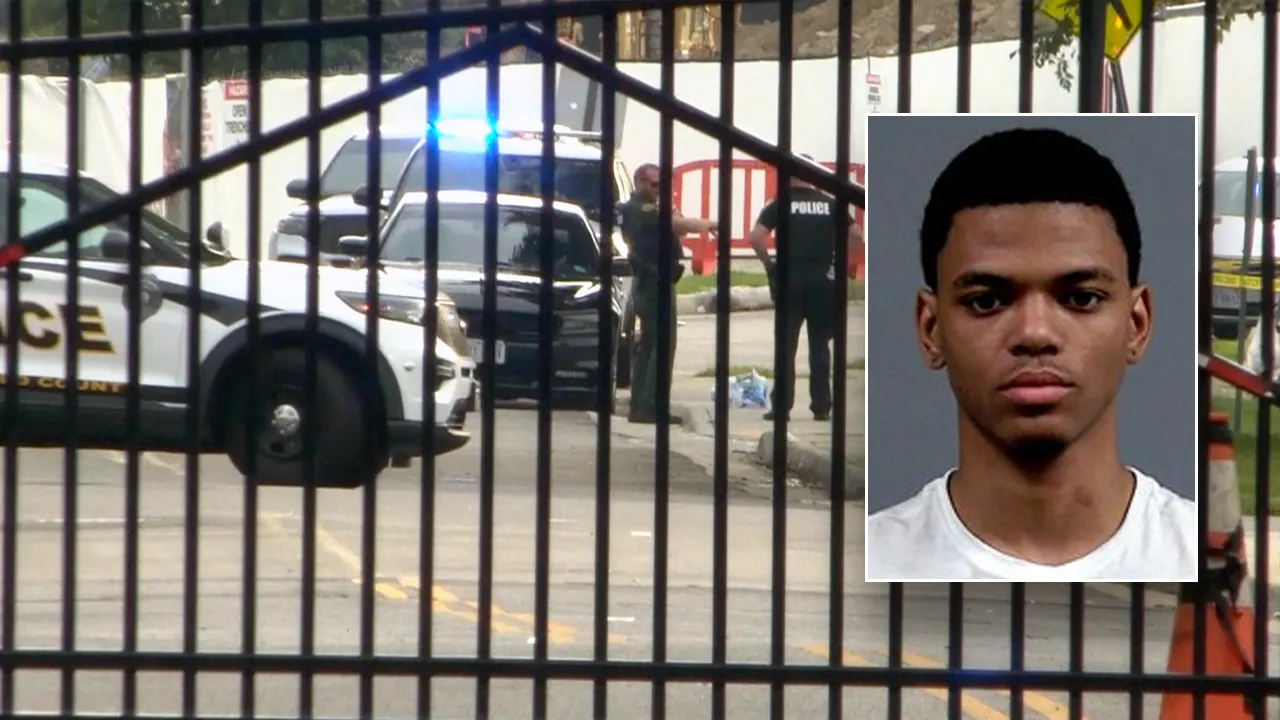
The clock had just struck 1:28 in the morning, a time when the world is usually wrapped in a fragile silence, when the quietude of Virginia State University’s campus was violently shattered. The air, once filled with the low hum of late-night study sessions and the distant laughter of students returning to their dorms, was suddenly torn apart by the sharp, deafening crack of gunfire. On Boisseau Street, a thoroughfare that runs alongside the university’s residence halls, chaos erupted from the darkness. Five young individuals, their lives just beginning to unfold with promise and potential, were struck down by bullets, their bodies collapsing onto the pavement as the echoes of the shots faded into the night. The immediate aftermath was a blur of screams, frantic phone calls, and the piercing wail of sirens as police and emergency medical services rushed to the scene. One of the victims was clinging to life, their condition critical, a stark reminder that the consequences of this violence were not just statistical but deeply, painfully human. For the families of those five individuals, the phone call in the dead of night was a parent’s worst nightmare—a chilling notification that their child had been caught in a storm of senseless violence. For the students who witnessed the horror, the image of their peers bleeding on the ground will be seared into their memories, a permanent scar on what should have been a time of growth and learning. The campus, a sanctuary of higher education and Black excellence, had been breached, and the safety that students take for granted was stripped away in a matter of seconds. As dawn broke over Ettrick, Virginia, the reality of the situation began to sink in: this was not a random act of nature, but a deliberate, violent act that had targeted a community, leaving five people wounded and an entire university reeling in shock and disbelief.
As the sun rose, casting a pale light over the crime scene, law enforcement officers began the grim task of piecing together what had happened. Their focus quickly turned to a name: Camron Harris, a 19-year-old from Henrico, Virginia. The revelation that Harris was not a student at Virginia State University added a chilling layer to the tragedy. This was not a dispute between classmates or a fraternity rivalry gone wrong; this was an outsider who had brought a weapon onto a college campus and unleashed terror. The manhunt that followed was intense and exhaustive, transforming the campus into a fortress of anxiety. Students were ordered to shelter in place, their dorm rooms becoming makeshift prisons as they huddled in fear, listening for any sound of approaching danger. Police officers, their faces grim and determined, swept through buildings, checking every corner, every stairwell, every shadow. The tension was palpable, a thick fog of dread that hung over the university. Hours passed, each minute feeling like an eternity. Then, in a moment that was both a relief and a stark reminder of the proximity of the threat, authorities located Harris. He was found hiding in a closet inside one of the campus dormitory buildings. The image is haunting: a young man, accused of a horrific crime, crouched in the dark, cramped space of a student’s living quarters, trying to evade justice. The arrest brought a sense of immediate safety, but it did little to quell the emotional turmoil. The fact that he had managed to hide within the very walls where students slept underscored the vulnerability of the campus. The lockdown was lifted, but the psychological lockdown on the minds of the students would take much longer to ease. The manhunt was over, but the search for answers had just begun.
With Harris in custody, the legal machinery began to grind into motion, a process that would seek to hold him accountable for the devastation he had wrought. The Chesterfield County authorities announced that felony warrants had been obtained for four counts of malicious wounding and four counts of the use of a firearm in the commission of a felony. These are not minor charges; in Virginia, malicious wounding is a serious offense that carries the weight of intent—the deliberate act of causing severe bodily harm to another person. The fact that there are four counts suggests a specific targeting or a spray of gunfire that struck four distinct individuals, leaving a fifth victim unaccounted for in the initial charges, perhaps awaiting further legal action. The use of a firearm enhancement adds another layer of severity, acknowledging that the presence of a gun escalated the crime from a physical assault to a potentially lethal one. Harris was taken to the Chesterfield County Jail, where he was being held without bail. The denial of bail is a powerful statement from the judicial system, signaling that he is considered a significant flight risk and a danger to the community. Authorities also hinted that more charges could be forthcoming, leaving the door open for additional counts of attempted murder or even more serious offenses if the condition of the critical victim were to worsen. As Harris sits in a cell, the weight of his actions must be pressing down on him. He is just 19 years old, an age where the brain is still developing, where impulsivity often overrides judgment. Yet, the law does not excuse such violence. The legal proceedings will be a long and arduous journey, a public reckoning for a private act of destruction. For the victims and their families, the charges are a first step toward justice, but they are also a painful reminder that the scars of this night will not heal quickly, and the courtroom will become a stage for reliving the trauma.
In the wake of the shooting, Virginia State University found itself thrust into a position of crisis management, tasked with comforting a terrified student body while also projecting an image of control and resilience. The university’s official statement was measured and somber, acknowledging the gravity of the situation while attempting to reassure the community. “We recognize the concern this incident has caused among our students, parents, alumni, friends and the broader VSU community,” the statement read, a recognition that the ripples of this violence extended far beyond the immediate campus boundaries. The administration promised an increased police presence on campus, a visible show of force intended to deter further violence and to provide a sense of security to those who remained. But a police car parked on a corner cannot erase the memory of gunfire. The university also directed students to monitor their VSU email for updates on safety measures and, crucially, for information about available support resources. This is the quiet, often overlooked work of tragedy—the deployment of counselors, the establishment of hotlines, the creation of safe spaces for students to process their grief and fear. The lockdown, which had held the campus in a vice grip for hours, was lifted, allowing students to move freely again. But the freedom was bittersweet. The hallways that once echoed with chatter now felt heavy with silence. The dining halls, once bustling with energy, were subdued. Parents across the country received frantic calls from their children, begging to come home. Alumni, many of whom had walked those same halls decades ago, felt a pang of sorrow for their alma mater. The university is not just a collection of buildings; it is a living, breathing entity made up of the people who inhabit it. And on that Saturday, that entity was wounded. The promise of increased security is a practical measure, but the true healing will come from the community coming together, from the shared tears and the collective determination to not let this define them.
To fully understand the impact of this shooting, one must appreciate the unique and profound role that Virginia State University plays in the fabric of American higher education. As a state-supported Historically Black University (HBCU), VSU is more than just an institution of learning; it is a cultural cornerstone, a legacy of resilience, and a sanctuary for generations of Black students. Founded in 1882, VSU has weathered the storms of segregation, discrimination, and systemic inequality to emerge as a beacon of hope and opportunity. For many students, attending an HBCU is a rite of passage, a connection to their heritage, and a place where they are not just a number but part of a family. The campus in Ettrick, Virginia, located about 25 miles south of Richmond, is a testament to the enduring spirit of Black excellence. When gunfire erupts on such a campus, it is not just an attack on a physical location; it is a violation of a sacred space. It strikes at the very heart of a community that has historically been a refuge from the violence and prejudice of the outside world. The shooting at VSU is a stark reminder that gun violence in America is an indiscriminate scourge, one that disproportionately affects Black communities. It forces a painful conversation about the safety of our schools, the accessibility of firearms, and the societal failures that allow a 19-year-old to obtain a weapon and use it with such devastating effect. The students at VSU are not just victims of a random act; they are casualties of a broader epidemic that has plagued the nation for decades. The resilience of HBCUs, however, is legendary. They have survived lynchings, bombings, and the constant threat of erasure. This shooting will not break them, but it will leave a mark. It will be a topic of discussion in classrooms, a moment of reflection in chapel services, and a catalyst for advocacy. The community will mourn, but they will also organize, they will speak out, and they will demand change, honoring the legacy of their ancestors who fought for the very right to exist in these hallowed halls.
As the investigation continues and the legal process unfolds, the focus must inevitably shift to the human beings at the center of this tragedy—the five individuals who were wounded, their families, and the countless others whose lives have been irrevocably altered. One victim remains in critical condition, their life hanging in the balance, a family keeping a vigil at the hospital, praying for a miracle. The other four are recovering from physical wounds, but the psychological trauma of being shot is a lifelong companion. They will carry the scars, both visible and invisible, for the rest of their lives. They will flinch at loud noises, struggle with anxiety in crowded spaces, and grapple with the profound question of “why me?” The university community, too, is left to pick up the pieces. The semester that was filled with promise—of exams, of friendships, of spring events—is now overshadowed by a single, violent night. The unanswered questions loom large: What was the motive? Was Harris known to the victims? Was this a targeted attack or a random act of rage? The police have not yet provided these answers, leaving the community in a state of limbo, searching for meaning in a senseless act. But even in the depths of this despair, there is a glimmer of hope. The resilience of the human spirit is a powerful force. Students are already organizing vigils, offering support to one another, and vowing to reclaim their campus. The administration is working to provide resources and to ensure that the academic year can continue, albeit with a heavy heart. The broader VSU community—alumni, parents, and friends—has rallied around the university, offering prayers, donations, and words of encouragement. This is the true test of a community: not how it reacts in the face of triumph, but how it stands together in the face of tragedy. The road to healing will be long and winding, but it is a road that will be walked together. The name Camron Harris will be associated with this crime, but the names of the five victims, and the strength of the VSU community, will be the legacy that endures. They will not be defined by the bullets that flew, but by the courage they show in the aftermath. And as the sun sets on Ettrick, Virginia, the hope is that peace will eventually return, and that the halls of Virginia State University will once again echo with the sounds of learning, laughter, and life.