






For millions of everyday commuters across America, public transit is the absolute beating heart of metropolitan life—a vital, democratic space where students, service workers, and corporate professionals share the quiet, predictable rhythm of their daily journeys. Yet, a shadow of profound anxiety has cast itself over these essential transit arteries following a series of terrifying, unprovoked attacks in three major cities. The visceral fear of stepping onto a train car or navigating a bustling station platform is no longer just an abstract concern; it has transformed into a heavy, daily psychological tax paid by citizens who rely on these systems to sustain their livelihoods. This rising tide of transit violence is not merely a collection of isolated tragedies, but a stark, disturbing window into a fractured criminal justice system that repeatedly fails to track, contain, or treat highly volatile, repeat offenders. As communities process the emotional and physical wreckage left in the wake of these assaults, a swelling chorus of public outrage is demanding a fundamental reassessment of how society balances compassion with public safety, highlighting the steep human cost of systemic leniency in our courts.
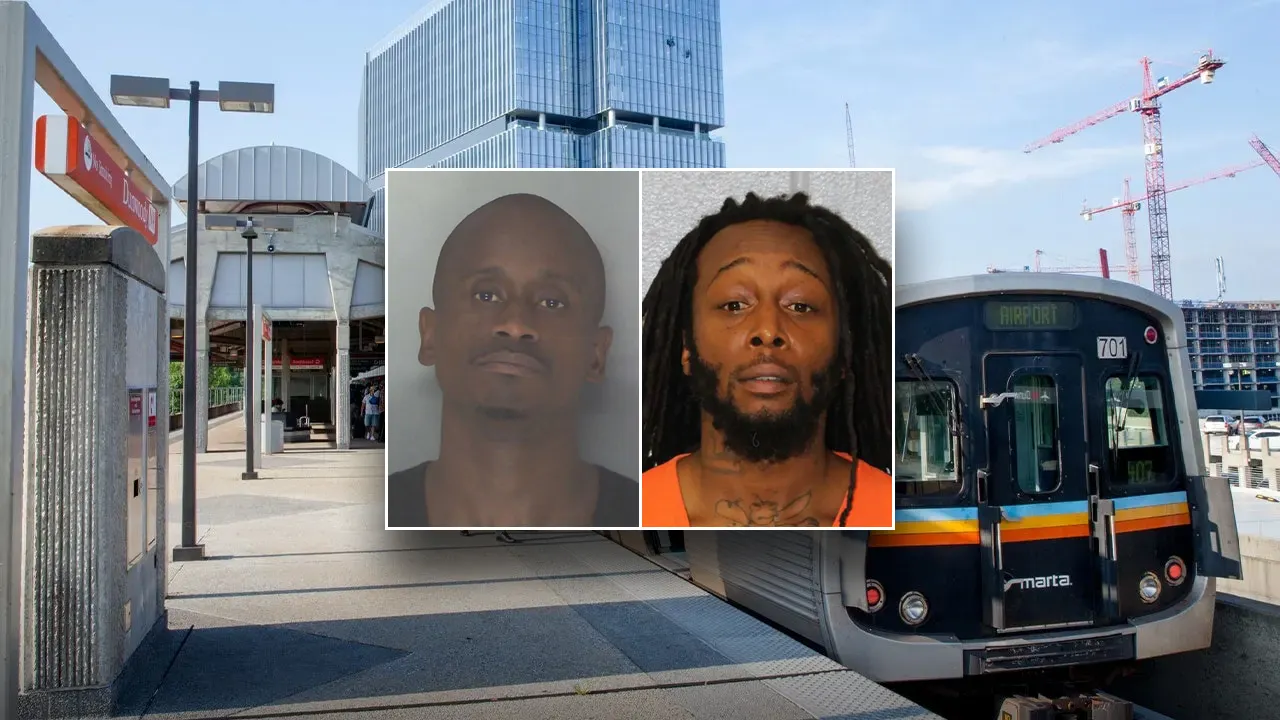
The terror took a tangible, deeply horrifying shape in Atlanta, Georgia, where passengers on the Metropolitan Atlanta Rapid Transit Authority (MARTA) system were forced to confront the nightmare of active gunfire in a confined space. Inside the Midtown station, Anthony Tyrone Gresham, a 42-year-old convicted felon with a lengthy criminal record, allegedly approached a seventeen-year-old passenger, retrieved a handgun from his bag, and fired multiple rounds, striking the teenager in both the hand and leg. The sheer randomness of the attack shattered the mundane peace of the commute, sending panicked passengers scrambling for cover while Gresham slipped away, sparking an intense, multi-agency manhunt that finally ended with his capture in Douglasville. For Atlanta residents, this shooting was not an anomaly but the continuation of a horrifying pattern; only days earlier, Margaret Swan, a cherished 66-year-old great-grandmother, was randomly and brutally stabbed to death on the very same transit system by another troubled individual, John Elijah Matthews. These devastating losses have left local families grieving and commuters asking an agonizingly simple question: how many lives must be disrupted or cut short before authorities secure the platforms and cars that serve as the city’s lifelines?
A similar sense of betrayal and vulnerability echoed through the congested subterranean corridors of New York City’s Penn Station, one of the busiest and most iconic transit hubs in the world. During a bustling Sunday evening, as commuters rushed toward their trains in the New Jersey Transit concourse, 51-year-old Hector Deleon unleashed a chaotic slashing and stabbing spree that left five people bloodied, physicalizing the transit nightmares that so easily slip into the minds of city dwellers. Among the victims was Henry Obadiah, who was simply walking toward an escalator when his eyes locked with Deleon’s—an encounter he described as staring directly into the face of a madman fueled by pure rage before a sudden, violent blow split his mouth open. The outrage surrounding Deleon’s attack is compounded by his extensive criminal history, which included at least seven prior arrests, culminating in a 2022 incident where he was accused of slashing a man’s neck, yet was ultimately released back into society on probation under the promise of mental health treatment. Victims like Obadiah are now speaking out, fiercely criticizing the lenient, “soft-on-crime” policies that leave dangerous, repeat offenders on the streets, turning public spaces into gauntlets of survival where innocent people pay the price for the judicial system’s misplaced optimism.
Perhaps the most heart-wrenching illustration of this systemic breakdown occurred aboard Charlotte’s Lynx Blue Line in North Carolina, where the promise of a new beginning was violently stolen from a young woman who had fled conflict in her home country. Iryna Zarutska, a 23-year-old Ukrainian refugee who had sought solace and safety in the United States, was sitting quietly on the train when 35-year-old Decarlos Brown Jr. allegedly slipped behind her, pulled a knife, and stabbed her to death in an unprovoked act of extreme violence. Like the perpetrators in Atlanta and New York, Brown was a ticking time bomb with a well-documented history of violent crime, including assaults and robberies, overlaid with a severe diagnosis of schizophrenia. The tragedy of Zarutska’s death is magnified by the bitter irony that she escaped the terrors of a war zone only to perish in a public space in America, victimized by a man who, despite his proven danger and profound psychiatric instability, was permitted to wander freely among unsuspecting commuters.
The aftermath of the Charlotte tragedy has spotlighted the excruciating legal and medical limbos that often protect violent individuals while denying closure to those they have harmed. Following a comprehensive federal mental health evaluation, a judge recently ruled that Decarlos Brown Jr. is incompetent to stand trial, mirroring a previous ruling made at the state level. While U.S. Attorney Russ Ferguson has assured the public that Brown will remain securely in federal custody at a specialized facility aimed at restoring his legal competency, this diagnostic pause highlights an agonizing systemic loop. When the criminal justice and psychiatric care systems fail to coordinate proactively, individuals who are too ill to govern their own actions are left to deteriorate in public spaces; then, when they commit acts of unspeakable violence, the legal process grinds to a halt because they are too ill to be prosecuted. For the family of Iryna Zarutska, this dynamic delays the pursuit of tangible justice, leaving them to grieve in an agonizing vacuum where accountability is stalled by the very psychiatric realities that the public system failed to manage before the crime occurred.
Ultimately, these three incidents across Atlanta, New York, and Charlotte represent a watershed moment for American transit systems and the millions of ordinary citizens who rely on them daily. The humanization of these tragedies shifts the spotlight away from sterile, bureaucratic statistics and onto the real, beating hearts of the communities affected: the terrified teenagers, the grieving families of great-grandmothers, and the traumatized survivors who must still board these trains tomorrow to earn a living. The conversation can no longer simply be about transit budgets or train schedules; it must center on the fundamental human right to travel through our cities without fearing for our lives. Addressing this crisis requires an honest, non-partisan reckoning with the failures of both our judicial leniency and our mental health delivery networks, forging a compassionate yet fiercely protective path forward that honors the memories of the fallen by reclaiming the safety and dignity of our shared public spaces.