





A Quiet Street’s Sudden Horror
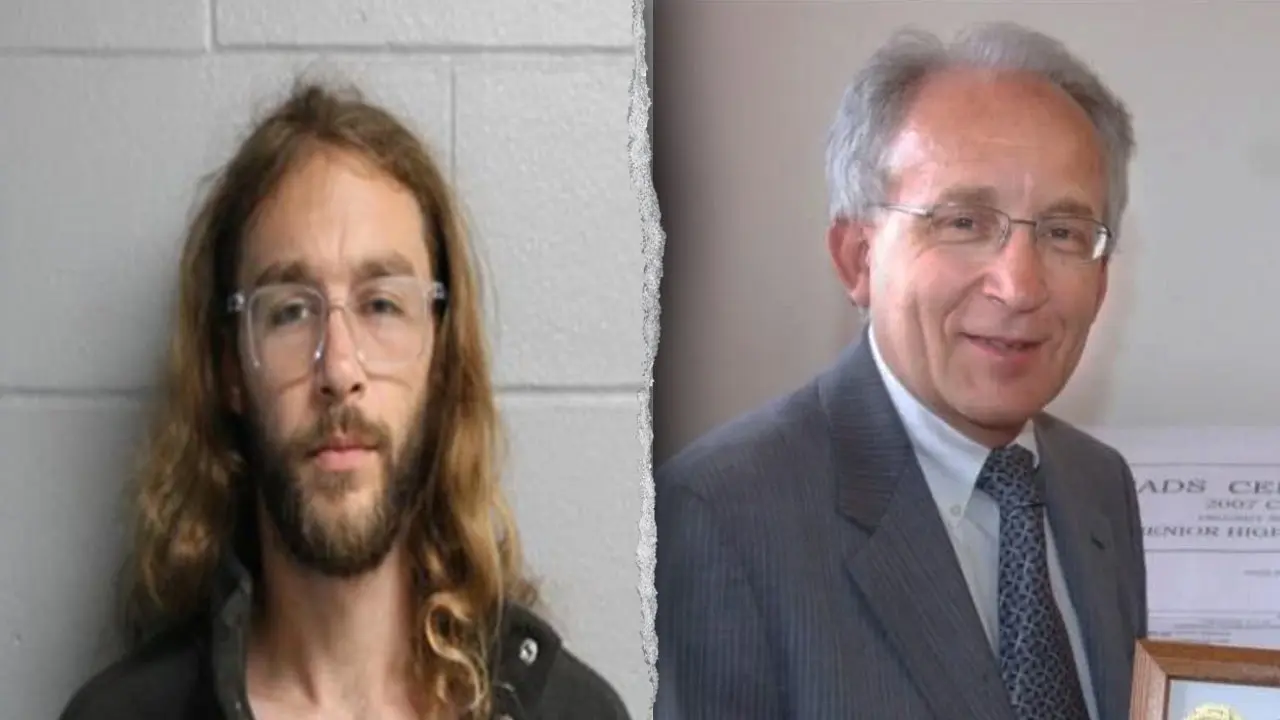
On a quiet Friday afternoon in Madison, New York, a small town where life usually moves at a gentle pace, something unspeakable happened. Deputies responding to a call on McCormick Road found a scene that would shake the community to its core. Inside a comfortable family home, three bodies were discovered: Steve Sislo, 76, his wife Donna Walker-Sislo, 72, and their adult son Justin Sislo, 35. According to the Madison County Sheriff’s Office, the first deputy on the scene looked through a main-level window and saw two adults who were obviously deceased. Once investigators entered the home, they located a third body. What authorities described as a suspected murder-suicide had turned a beloved couple’s home into a place of tragedy. Justin, investigators say, gunned down his parents before turning the gun on himself. The news traveled fast, leaving neighbors stunned, friends heartbroken, and local officials asking how a family so respected could end in such a devastating way. The victims were not just names in a police report—they were people who had spent decades building a life together, giving back to their community, and loving a son who was clearly struggling in ways that perhaps no one fully understood.
Steve Sislo was far more than a victim of a terrible crime. He was a prominent businessman and philanthropist, a man whose contributions to the region had left an imprint on so many institutions. The Rome Daily Sentinel reported that Steve was deeply involved in local organizations, including the Capitol Theatre and the Rome Area Chamber of Commerce. He was the kind of person who showed up, who supported the arts and the economy, who believed in the power of community. Donna Walker-Sislo, his wife of many years, was by his side through all of it—a partner, a companion, and likely the emotional anchor of the family. Together, they represented a certain stability that small towns rely on. They were the people you’d see at local events, the couple who seemed to have it together. But behind the public image of success and generosity, there was a private sorrow that many families can relate to: a child in crisis. Their son Justin had a violent history, with numerous arrests and increasingly serious charges. Yet despite the fear and worry he must have caused them, they did what so many parents do—they tried to help. They paid for his bail, brought him home, and perhaps believed that love could overcome the demons that followed him. That love, tragically, may have cost them their lives.
Justin Sislo’s history was a red flag flying long before the shots rang out. Court records show that he had been arrested on charges related to a domestic violence case that involved more than two dozen counts. In June, he was charged with strangulation and endangering an incompetent person in Cayuga County. These are not minor offenses; they speak to a pattern of escalating violence that should have been taken far more seriously. Domestic violence is often a precursor to more extreme acts, and the legal system has clear mechanisms meant to intervene. But despite his dangerous trajectory, Justin was not in custody when he allegedly committed the ultimate act of violence. What makes this even more difficult to comprehend is the fact that he was under two protective orders at the time of his most recent arrest—orders that explicitly banned him from having firearms. Yet when authorities searched his home, they uncovered several guns. This is the kind of detail that makes the tragedy feel not just sad, but preventable. How, people are asking, did someone with a documented history of violence, multiple protective orders against him, and a recent arrest for strangulation have access to weapons? How did a system designed to protect victims fail so completely? In hindsight, every clue seems to point to the danger. But for Steve and Donna, the danger was attached to their own son, and that made it impossible to see clearly.
The weeks leading up to the murder-suicide were a whirlwind of worry, hope, and financial sacrifice. Justin had been arrested on July 29, and his parents made the difficult decision to bail him out of jail. But it wasn’t the first time. Investigators confirmed that the couple had bailed him out on two separate occasions in the same month, with the second bail costing them $10,000. This is the heartbreaking reality of families dealing with loved ones who are in deep crisis. On one hand, they want justice and safety; on the other, they cannot bear to leave a child locked up. Steve and Donna likely felt they had no choice. They may have believed they could guide him toward treatment, that this time would be different, that their presence and support could save him. They were not naïve; they were hopeful. But their compassion put them directly in the path of a man whose rage was spiraling out of control. Parents who have struggled with a child’s addiction, mental illness, or violent behavior will understand this impossible position. You love them. You fear them. You refuse to give up on them. And sometimes, the very bond that defines parenthood becomes the thing that places you in harm’s way. The $10,000 bail was not just a sum of money—it was a symbol of their commitment. And in the end, that commitment was answered with bullets.
Local authorities were clearly frustrated by how the system had allowed this tragedy to unfold. On Monday, Madison County Sheriff Todd Hood made his anger public. He condemned the fact that Justin Sislo had been walking free, saying plainly that he wished the judge had set no bail and forced him to stay in custody. His words resonate as a larger criticism of a criminal justice system that often struggles to balance the rights of the accused with the safety of the broader community. Domestic violence cases, in particular, are notoriously difficult. Protective orders are only as good as their enforcement, and bail decisions are made by judges who must weigh legal principles against potential danger. But when a man with two dozen charges, a strangulation charge, and documented guns in his home is released multiple times in a single month, the public has a right to ask questions. Sheriff Hood’s frustration is the frustration of law enforcement officers across the country who see the same patterns repeating: suspects with violent histories are released, firearms remain in their possession, and families pay the price. The sheriff’s words are not just bureaucratic criticism; they are an expression of grief for a community that lost two of its most respected members. It is a reminder that behind every crime statistic is a family torn apart, a neighborhood shattered, and a legacy of love replaced by the trauma of loss. The question now is whether anything will change before the next tragedy strikes.
In the aftermath, Madison is left to grieve and to reflect. The wooden pews of local churches will fill with mourners remembering Steve Sislo’s generosity and Donna Walker-Sislo’s kindness. The Capitol Theatre, where Steve was so involved, will likely dim its lights in honor of a man who believed in the arts. The Rome Area Chamber of Commerce will pause to remember a businessman who gave so much of his time to the community. But those memorials are also a reminder of the complexity of human life. The same family that contributed so much to others was unable to save itself. Justin Sislo was not a stranger; he was their son. He was likely loved fiercely, worried about endlessly, and remembered in childhood photos as a little boy with his whole life ahead of him. Somewhere along the way, the path twisted. Perhaps it was mental illness, substance abuse, unresolved trauma, or a combination of forces too complicated to untangle. What we know is that he harmed those who loved him most, and that is a tragedy for everyone involved. The community will not easily recover from this loss, and the legal system will be forced to examine its own role. But perhaps the best way to honor Steve and Donna is to have honest conversations about domestic violence, gun safety, and the burden carried by families who love someone capable of violence. They needed help, not just as victims but as parents grappling with an impossible situation. In the end, they paid the highest price. Their story is a sad, human reminder that sometimes the greatest danger comes not from strangers, but from the very people we cannot stop loving.