





On what was supposed to be a routine, unassuming Friday afternoon, a quiet intersection in Des Moines, Iowa, suddenly became the stage for a near-fatal confrontation that highlights the fragile, highly volatile nature of modern human temperaments. Around 2:30 p.m., a minor, low-impact traffic collision occurred—the kind of mundane vehicular mishap that usually results in nothing more than minor paint scratches, exchanged insurance cards, and temporary inconveniences. However, instead of a calm resolution or even a standard, frustrated conversation, the situation exploded into absolute psychological terror. Police reports indicate that 43-year-old Bradley Ratkovich emerged from his vehicle not with driver’s credentials in hand, but with a Glock 9mm handgun gripped tightly and aimed directly at the occupants of the other sedan. Inside that targeted car sat two young people whose lives were instantly plunged into a terrifying, high-stakes crisis: an eighteen-year-old driver and his sixteen-year-old female passenger. For these teenagers, a routine drive home in an instant morphed into a nightmare, staring down the barrel of a loaded firearm as an older adult reportedly screamed threats that he was going to shoot them. The sheer asymmetry of this encounter—an angry, armed grown man confronting two terrified, defenseless adolescents over an insignificant fender bender—paints a chilling picture of how rapidly civility can dissolve on our public roads. What should have been a standard, easily resolvable traffic incident instead became a terrifying testament to how quickly unchecked aggression can weaponize an everyday commute, leaving two young victims frozen in fear as they confronted their own mortality on a bright Iowa afternoon.
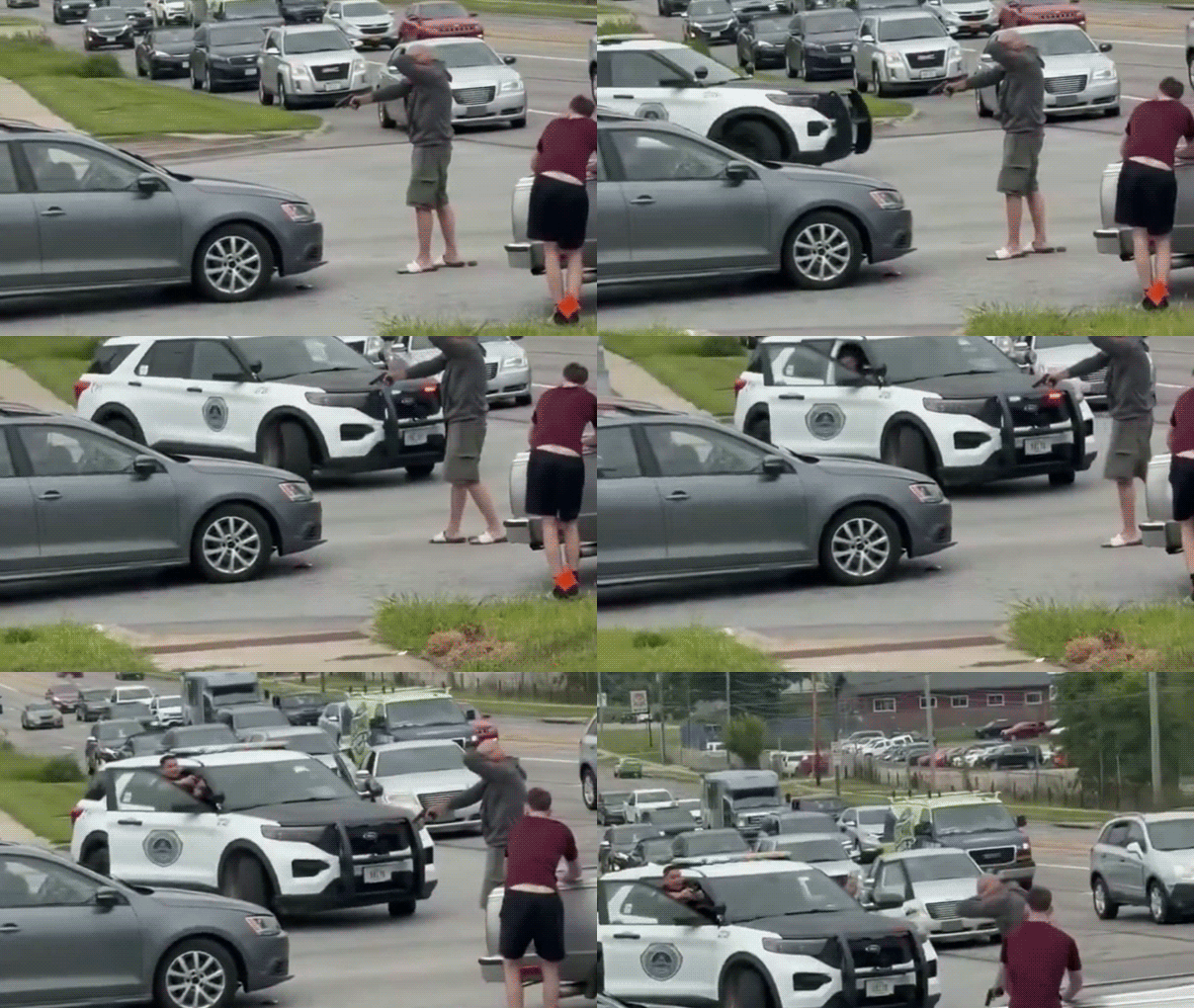
Amidst the rising terror of the confrontation, the power of brave, alert bystander intervention became a crucial shield against potential tragedy. Joshua Barzon, a local citizen making his own daily commute home from work, found himself stopped at the exact same intersection, witnessing a scene that felt more like a Hollywood thriller than a Midwestern afternoon. Rather than turning a blind eye or speeding away from the danger, Barzon captured the harrowing standoff on his phone camera, providing a vital piece of digital evidence that would later circulate widely on social media platforms like X, formerly known as Twitter. His recording captured the stark, visual horror of Ratkovich standing defiantly in front of the teenagers’ occupied sedan, aggressively pointing his handgun inward toward the windshield. But Barzon did not just record the event; he actively attempted to defuse the ticking time bomb with his own voice, calling out to Ratkovich with a calm yet urgent plea: “Don’t do it. Relax, bro.” Barzon’s words, echoing through the tense air, represented the voice of collective sanity trying to reach a man seemingly consumed by irrational, explosive fury. Later reflecting on the near-miss, Barzon shared his deep-seated relief and shock online, noting that the terrifying escalation had occurred at the very spot he frequents every single day. His raw, honest assessment that the situation “almost turned deadly” underscored a chilling reality for the local community: the very places we consider safe and familiar can, in a heartbeat, become theaters of extreme violence, reminding us of our profound vulnerability and highlighting the critical role that vigilant, empathetic citizens play in speaking up when humanity falters.
The tension of the standoff finally broke when the distant, wailing sirens of Des Moines police cruisers grew loud enough to shatter Ratkovich’s focus, signaling the swift, highly coordinated arrival of law enforcement. In a choreographed burst of high-stakes policing, a patrol cruiser pulled directly into the busy intersection, halting just feet from the armed suspect. Almost before the vehicle had finished rolling to a complete stop, an officer flung open the passenger-side door and stepped out with his service weapon drawn, placing himself directly between the danger and the helpless teenagers in the sedan. “Put the gun down!” the officer commanded, his voice carrying the absolute authority and intense urgency of a life-or-death situation. Under the immense pressure of the moment, Ratkovich’s aggressive posture crumpled; he bent down and placed his Glock 9mm onto the asphalt, stepping away as a second officer quickly emerged from the driver’s side to assist. With weapons still raised to ensure safety, the officers barked clear, sequential orders for Ratkovich to back away, raise his hands, and place them on top of his head. He complied, allowing the officers to close the physical gap, secure his hands, and place him in handcuffs without further incident or injury. It was a masterclass in rapid de-escalation under extreme duress, demonstrating how the disciplined, decisive intervention of trained police officers prevented a highly volatile situation from turning into a split-second tragedy, proving that when professional courage meets chaotic hostility, innocent lives are successfully saved.
Following his successful arrest, Bradley Ratkovich’s life took a swift and severe turn from the hot-tempered chaos of the street corner to the cold, stark reality of the American criminal justice system. Officers initially transported the 43-year-old to a local medical facility for a comprehensive evaluation to ensure his physical and mental fitness before officially booking him into the Polk County Jail. The legal consequences of his alleged split-second rage were both immediate and heavy, as prosecutors levied a litany of serious charges against him. Ratkovich now faces two counts of assault while displaying a dangerous weapon, two counts of first-degree harassment, and a severe charge of being a person ineligible to carry dangerous weapons in the first place due to legal restrictions. When he eventually stood before a judge, court records show that Ratkovich entered a plea of not guilty, chose to waive his right to a preliminary hearing, and saw his bond set at a substantial $12,000 cash. Represented by criminal defense attorney Kent Balduchi, Ratkovich is now staring down a rigorous legal battle, with his next court appearances scheduled for early August and formal arraignment set for September 9. This legal saga serves as a sobering, humanizing reminder of how an unchecked moment of anger can instantly collapse a person’s life, stripping away their freedom, draining their financial resources, and binding them to the court system for months or years to come, all for a minor traffic dispute that could have been resolved with a simple insurance exchange.
This harrowing incident in Des Moines does not exist in a vacuum; rather, it serves as a glaring, highly disturbing reflection of a much larger societal epidemic of road rage and escalating violence on our shared streets. In an era marked by heightened anxiety, economic stressors, and a general fraying of social cohesion, the simple act of driving has increasingly morphed from a mundane task of transportation into a highly charged, competitive, and emotionally sensitive activity. When you combine this heightened psychological tension with the widespread, easy accessibility of firearms, ordinary traffic disputes can instantly turn lethal, converting everyday citizens into potential perpetrators and victims. It is particularly tragic to consider how young, inexperienced drivers—who are already navigating the natural anxieties of learning to drive—are being subjected to the explosive, weaponized hostility of older adults who should be modeling safe, mature behavior. The vulnerability of those teenagers in Des Moines highlights the deep-seated fears shared by parents everywhere, who worry that a simple mistake behind the wheel by their child could trigger an armed assault from an aggressive stranger. This incident forces us to confront uncomfortable questions about our collective mental wellness, our relationship with firearms, and how easily we are willing to discard the eternal value of human life over petty frustrations, highlighting a desperate need for a cultural shift back toward patience, mutual respect, and basic driving etiquette.
In the wake of this deeply unsettling event, the Des Moines Police Department released a poignant, highly necessary public statement that serves as a blueprint for maintaining sanity and safety in our increasingly frantic world. Recognizing that traffic accidents are naturally stressful events, the department strongly emphasized that introducing a firearm into these volatile situations dramatically, and often irreversibly, escalates the potential for catastrophic violence. They urged drivers to remember the basic protocols of roadside safety: if an accident occurs, immediately dial 911 for law enforcement and medical professionals, remain safely inside the protective shell of your locked vehicle, and let the arriving officers manage the conflict in a structured, calm environment. Beyond these tactical instructions lies a deeper, more human plea for empathy, emotional intelligence, and self-control when sharing public spaces. Ultimately, no amount of vehicle damage, no dented bumper, and no bruised ego is ever worth a human life, a prison sentence, or a lifetime of paralyzing trauma for innocent victims. As we navigate our daily commutes and share the roads with neighbors and strangers alike, this close-call in Iowa should serve as a powerful, enduring reminder to breathe, step back, and prioritize human life above all else, keeping our communities safe one patient interaction at a time.