





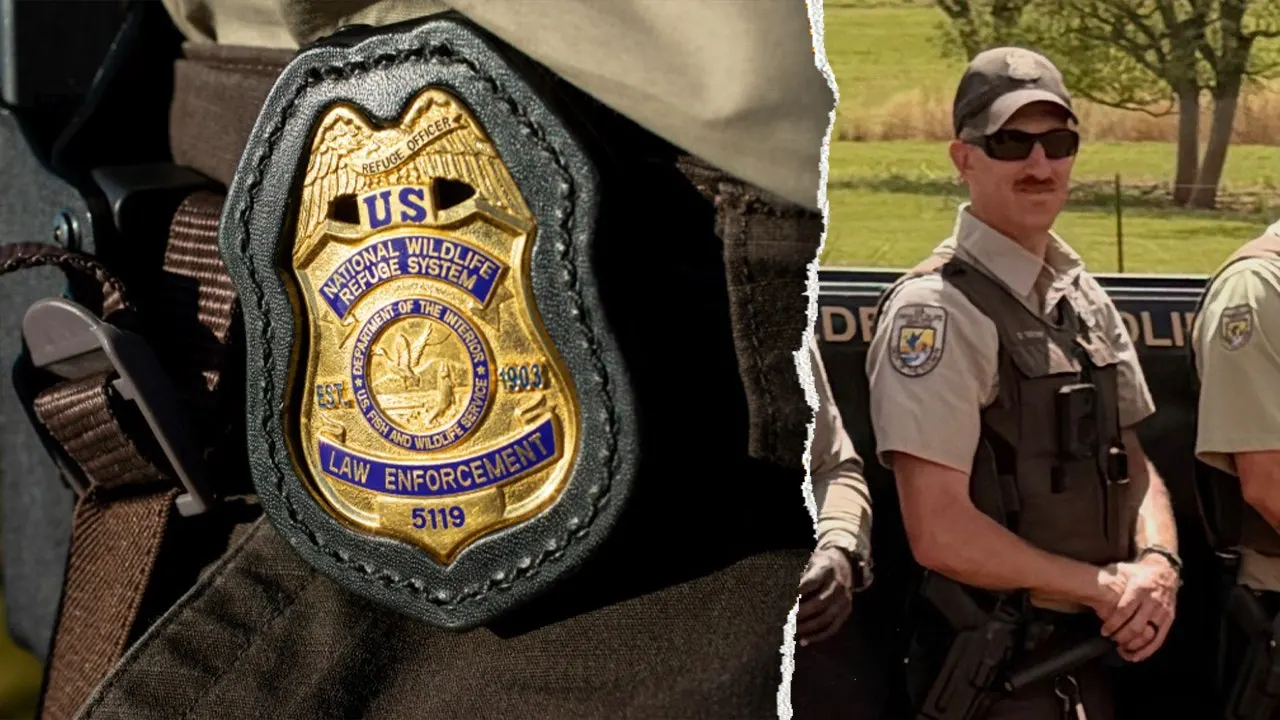
The Oklahoma prairie is a place of stark, rugged beauty, where the red earth meets a scorching sky, but on that fateful Saturday, that sky turned an apocalyptic orange. The Railroad South Fire, a fast-moving wildfire, tore through Comanche County with a terrifying hunger, threatening scattered homes and the lives of those who cherished their remote solitude. As the wind howled and embers rained down, the call went out for evacuation. It was in this crucible of flames and fear that David Taylor, a 38-year-old federal wildlife officer, answered the call with a singular focus. Alongside local emergency crews, Taylor moved deliberately from house to house, his boots pounding on driveways, his voice shouting warnings over the roar of the inferno. He was not just a first responder; he was a guardian, ensuring no one was left behind. His last radio transmission came while he was assisting a family struggling to escape their home—a final act of selflessness that perfectly encapsulated the man he was. Moments later, he was gone. The U.S. Fish and Wildlife Service confirmed the heartbreaking news, noting that evidence recovered from a structure indicated where Taylor made his ultimate sacrifice. The rugged terrain of the Wichita Mountains provided a daunting backdrop, with dry brush and tall grass acting as kindling, allowing the fire to leap from canyon to ridge with unpredictable wrath. Taylor, who had trained for such contingencies, understood the peril intimately, yet he never hesitated. The structure where his life ended became a silent memorial, a testament to a man who chose to face death so that a family could live. His last moments were not spent in retreat, but in advance, pressing further into the danger to ensure the safety of those he served.
David Taylor’s journey to that fateful hillside in Oklahoma was paved with decades of unwavering service to his country. Born in the quiet town of Scio, Oregon, nestled in the foothills of the Cascade Mountains, Taylor embodied the values of hard work, humility, and duty that define small-town America. Before he ever donned the uniform of the U.S. Fish and Wildlife Service, he served with distinction in the United States Navy. Rising to the esteemed rank of Senior Chief Petty Officer, Taylor dedicated 20 years of his life to the naval service, becoming a leader to men and women who looked to him for guidance and strength. His overseas deployments were not merely assignments; they were missions of extraordinary significance. He served a tour in Iraq, where he experienced the intense heat and dangers of combat zones, and he completed four additional deployments to Djibouti, in the Horn of Africa, where he contributed to critical security and stability operations. This dual expertise—combat readiness and compassionate leadership—made him a formidable presence. After retiring from the Navy, Taylor sought a different kind of service, one that connected him to the natural world he loved deeply. Joining the U.S. Fish and Wildlife Service, he first served at the Rio Mora National Wildlife Refuge in northern New Mexico, a stunning landscape of grasslands, forests, and river corridors. He then transferred to the Las Vegas National Wildlife Refuge in New Mexico, where he honed his skills in managing ecosystems and protecting native species. Eventually, his path led him to the Wichita Mountains Wildlife Refuge in Oklahoma, a 59,000-acre sanctuary home to bison, elk, and a stunning array of biodiversity. Colleagues described him as a steady hand, a man of few words but immense action. He treated every species, from the majestic bison to the tiny prairie dog, with the same respect he had afforded his fellow sailors, and he spoke of his family back home with a pride that mirrored his professionalism.
The Railroad South Fire was a beast of an entirely different caliber, fed by unseasonably dry conditions and powerful wind gusts. As a federal wildlife officer, Taylor’s duties during a wildfire were multifaceted; he was responsible for protecting the refuge’s infrastructure, ensuring public safety, and assisting in strategic fire suppression. However, when the fire jumped its containment lines and threatened residential areas adjacent to the refuge, his role shifted to that of a lifesaver. He worked in tandem with volunteer fire departments, sheriff’s deputies, and other federal agents, forming a human chain of defense. The going was treacherous; thick smoke reduced visibility to just a few feet, and the heat was so intense it melted plastic siding off homes. Taylor’s twenty years of military training kicked in, allowing him to maintain a clear head in the face of absolute pandemonium. His systematic approach to knocking on doors was a testament to his dedication—he refused to let a single structure go unchecked. The last family he contacted that day will forever carry the weight of his sacrifice in their hearts. As he guided them toward safety, the winds shifted violently, cutting off his exit route. He radioed dispatch with an urgent update, his voice calm and collected, detailing his location and his intention to shelter in place. That was the last time anyone heard his voice. Firefighters navigated burned-over roads and smoldering debris to search for him, and it was amidst the charred remains of a residence that they found the evidence confirming their worst fears. The structure had collapsed around him, and despite the best efforts of his fellow responders, he could not be saved. He died exactly the way he lived: in the service of others, facing the flames head-on, with no regard for his own personal safety.
The announcement of Taylor’s death sent shockwaves through the U.S. Fish and Wildlife Service, a bureau that rarely suffers such profound losses in the line of duty. Director Brian Nesvik, visibly moved, released a heartfelt statement that captured the essence of the tragedy. “Everything we know about David’s actions demonstrates extraordinary courage and selflessness,” Nesvik said. “When people were in danger, David was there helping them get to safety. He remained committed to protecting others under the most dangerous circumstances. We mourn alongside his family, friends and colleagues, and we will never forget his service.” The words echoed in the halls of the department, where Taylor’s colleagues gathered to share memories, their grief tempered by pride. The agency immediately activated its critical incident response teams, offering mental health support to the firefighters and refuge personnel who had witnessed the tragedy firsthand. The Department of the Interior, the parent agency of the Fish and Wildlife Service, pledged its full support, coordinating logistical and financial assistance for Taylor’s grieving family. Flags across the refuge system were lowered to half-mast in his honor. The tight-knit community of wildlife professionals, who often work in isolation, came together in a virtual gathering to remember a man who had dedicated his life to two distinct but equally noble causes: the defense of his country and the preservation of its wild places. The outpouring of condolences came from every corner of the federal government, illustrating the interconnectedness of the public service family, and at the Wichita Mountains Wildlife Refuge, a makeshift memorial began to form, adorned with flowers, American flags, and heartfelt notes from visitors who had crossed paths with Taylor during his patrols.
The impact of Taylor’s sacrifice rippled outward from the federal level to the state capital in Oklahoma City. Governor Kevin Stitt, upon learning of the officer’s death, acted swiftly to honor his memory, issuing an executive order that all American and Oklahoma flags on state property be flown at half-staff from September 1st through September 4th. In a heartfelt post on the social media platform X, Governor Stitt wrote, “Sarah and I are praying for his family, his fellow officers and everyone who was impacted by this tragedy. His courage, selflessness and devotion to protecting others will never be forgotten.” The gesture was a formal recognition of a debt that the state of Oklahoma owed to a man who, despite being a federal employee, had laid down his life for its residents. The Comanche County community, still reeling from the destructive fire that had threatened their homes, rallied around the memory of their fallen protector. Stories emerged from survivors who told of Taylor’s gentle but urgent knock on their doors, his reassuring presence in the face of overwhelming fear. The fire itself, which had scorched thousands of acres, was now under control, and evacuation orders were fully lifted, allowing residents to return to their properties to survey the damage. Yet, amid the charred landscape, a collective sense of gratitude overshadowed the destruction. The cause of the Railroad South Fire remained under investigation—whether it was sparked by lightning, a downed power line, or human activity was yet to be determined. But for the people of Comanche County, the cause mattered less than the effect: a hero lost, a community saved.
In the end, the story of David Taylor is not merely a tale of a wildfire tragedy; it is a profound testament to the indomitable spirit of human selflessness. He was a man who seamlessly transitioned from the global stage of military conflict to the quiet, sacred grounds of a wildlife refuge, finding in both arenas a purpose greater than himself. As a Senior Chief Petty Officer, he learned the value of leading from the front; as a wildlife officer, he applied that lesson under the harshest conditions nature could throw at him. His final act—going door-to-door, refusing to abandon a single soul—was the culmination of a lifetime of service. He did not die in a distant land, but on American soil, protecting American lives, embodying the very ideals that the flag represents. The family he tried to save will forever live with the knowledge that their lives were purchased with his. The residents of Comanche County will rebuild their homes, but they will carry the imprint of his courage. His co-workers at the Wichita Mountains Wildlife Refuge will continue to protect the bison and elk that roam the plains, seeing his spirit in the vast skies and rugged peaks he loved. The flags will be raised again after the days of mourning, but the depth of his impact will never fade. David Taylor leaves behind a legacy that transcends his years—a legacy of courage, unwavering duty, and a compassion that refused to yield even in the face of an infernal blaze. He is gone, but he will never be forgotten—not in the quiet dawn of the refuge, not in the thankful prayers of the family he saved, and not in the collective memory of a nation that owes him a debt that can never be repaid.