

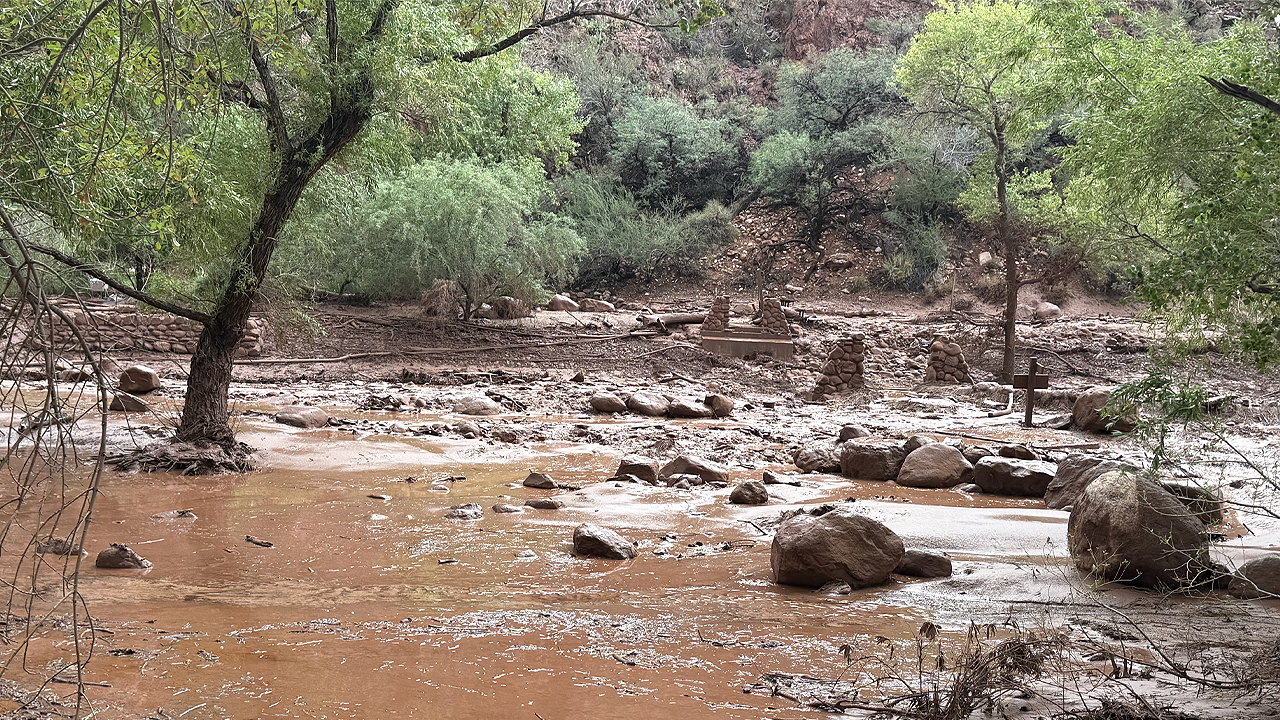
It begins as a place of quiet wonder, where the Colorado River has carved stone over eons and the desert silence is broken only by the wind and the water. But in the remote depths of Grand Canyon National Park, that peace was violently shattered on August 29, when a major flash flood tore through Bright Angel Canyon and the Phantom Ranch area, sweeping through one of the most beloved and rugged corridors in the American wilderness. Now, more than 20 people may be missing or unaccounted for, according to the National Park Service, and the agency has made an urgent public plea for help in piecing together what happened. The flood did not just leave behind destruction; it left behind a deeply human puzzle, one filled with anxious families, exhausted rescuers, and a community of hikers, rangers, and park staff desperately hoping for good news. What was once a routine trek into the canyon, a journey of switchbacks and river crossings, has become a search for answers and a solemn reminder of how quickly nature can turn from serene to savage.
The National Park Service confirmed that 62 people had been evacuated as of Sunday morning from Bright Angel Canyon and the Phantom Ranch area, which sits deep in the canyon and serves as a rest stop for hikers traveling between the rims. Those evacuations came after floodwaters raged through the narrow, steep-walled gorge, forcing people to higher ground and cutting off normal routes of escape. The park service said additional evacuations were planned for Sunday and beyond, but the threat was far from over. Forecasters warned that more thunderstorms and heavy rain were possible Sunday and Monday, raising the danger of further flash flooding, debris flows, and rockfall. For the people still inside the canyon, the sky itself has become a source of dread; every darkening cloud could mean another surge of water down Bright Angel Creek. For the rescuers, it means racing against weather and terrain, trying to move people out of harm’s way while the landscape remains unpredictable. The human toll is measured not just in numbers but in stories of hikers who woke up to roaring water, who climbed onto boulders, who waited for hours wondering whether help would come before the next storm.
The destruction left behind by the flood is staggering. According to the National Park Service, nearly all of the footbridges spanning Bright Angel Creek were destroyed. These are not just pieces of infrastructure; they are lifelines, the familiar and reassuring structures that hikers use to cross the creek as they make their way between campsites, trailheads, and the famous Phantom Ranch. Their loss means that travel through the area is now far more dangerous and complicated, forcing hikers to wade through swift, cold water and requiring rescuers to use alternative routes. The flood also hammered an area known as “the Box,” a narrow, dramatic stretch of canyon north of Phantom Ranch. This is a place where the walls close in and the trail hugs the creek, and it is especially vulnerable to flash flooding. For hikers in that moment, the experience would have been terrifying: the sound of water rushing, the sudden rise of brown, debris-filled current, and the instinct to climb, to hold on, to survive. The aftermath is now a scene of wrecked trails, scattered gear, and the haunting realization that the familiar landscape has been rearranged by a single, violent event.
Amid the chaos, the National Park Service is asking for the public’s help. Officials are working to account for more than 20 people who may have been in the affected area during the flood, and they are trying to identify individuals who may have been traveling on the North Kaibab Trail between the North Kaibab Trailhead and Phantom Ranch, staying at Bright Angel Campground, or passing through the Box. Anyone with a campground reservation in the affected area is also asked to come forward, because reservation records may help officials determine who was present and who may still be missing. The request is a stark reminder that in a place as vast and remote as the Grand Canyon, the park service cannot always know exactly who is on the trails at any given moment. Hikers come from all over the world, often with permits and sometimes without, and the canyon does not give up its secrets easily. For the families and friends of those who are unaccounted for, the waiting is a special kind of torment, a mix of hope and fear amplified by every passing hour. The park service has not released details about the missing people, including whether they were day hikers, overnight backpackers, or visitors with reservations, but the public is being asked to share any information that might help close the gaps.
This event is also a powerful reminder of the unique dangers that come with exploring the American Southwest, especially in places like the Grand Canyon, where beauty and danger are inseparable. Flash floods in desert canyons are notoriously swift and unpredictable. Rain falling many miles away, sometimes on the rim, can be funneled into narrow side canyons and creek beds, turning a trickle into a wall of water in minutes. By the time the danger becomes visible, it may already be too late. The Grand Canyon has seen tragedy before, and it will again; each year, visitors underestimate the heat, the terrain, and the weather. But there is also something profoundly human about the desire to descend into that great chasm, to test oneself against something larger and older than any civilization. The flood on August 29 was not a failure of human spirit; it was a demonstration of nature’s raw power. The hikers and backpackers who were caught in the flood are not statistics. They are people who likely stood on the edge of the canyon and felt awe, who made plans and packed supplies, who told friends and family about the adventure ahead. Now, the same canyon that drew them in is the arena for their survival, and for the efforts of rangers, rescue teams, and Arizona Department of Public Safety crews who are working around the clock.
As the search and evacuation operations continue, the National Park Service has asked anyone with information about hikers or backpackers who were in the inner canyon along Bright Angel Creek on August 29 to contact investigators. The agency has set up a dedicated tip line at 888-653-0009 and an email address at [email protected], and officials are urging the public to reach out even if the information seems small or insignificant. Perhaps someone saw a hiker at a trailhead, exchanged a few words at Phantom Ranch, or noticed a backpack left behind at a campsite. In a place where thousands of visitors come and go, the smallest detail can be the key to solving a mystery. The days ahead will not be easy. More storms are in the forecast, the trail system is damaged, and the work of accounting for every person is painstaking and complex. But there is hope, too. In the face of overwhelming power, people reach for one another. Hikers help strangers, rangers press on against exhaustion, and families cling to the possibility that their loved ones will emerge from the canyon safe. The Grand Canyon has always been a place of extremes, but at its heart it is a human place. And right now, that humanity is being tested. The world waits, hoping for the next call, the next rescue, the next sign that the people who entered the canyon have not been lost to it.