


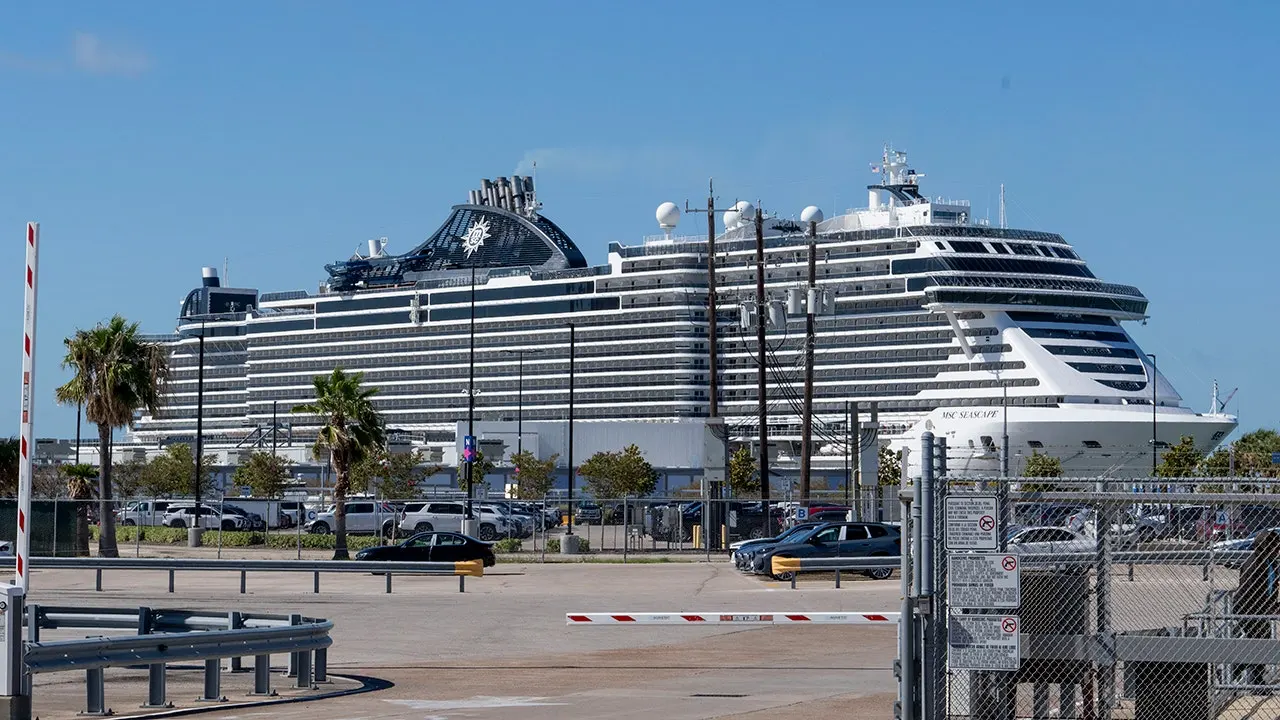
1. The morning sun over Galveston, Texas, should have been the start of another perfect day at sea for the passengers aboard the MSC Seascape. They had boarded the gleaming cruise ship just the day before, their bags packed with swimsuits and sunscreen, their minds filled with the promise of turquoise waters in Mexico and the lush, palm-lined shores of Honduras. The ship had slipped away from the Texas coast at four o’clock on a quiet Sunday afternoon, carrying thousands of vacationers into the Gulf of Mexico for what was supposed to be a weeklong escape from the routines and responsibilities of everyday life. But by Monday, that dream had been shattered. Instead of sailing toward the warm Caribbean sun, the Seascape was heading back to port, its return ordered under the shadow of a suspected homicide. When the massive vessel finally docked in Galveston, law enforcement officers were waiting on the pier—not to welcome passengers home, but to begin a murder investigation that would leave a family in grief, a ship full of travelers in shock, and a community searching for answers. The FBI had been called in, and the cheerful departure that had taken place less than twenty-four hours earlier suddenly felt like a distant memory. For the people on board, the vacation they had planned and paid for had turned into something no one could have anticipated, and the bright promise of the open sea had been replaced by an unsettling uncertainty that would follow the ship all the way back to the Texas coast.
2. The investigation began to take shape when FBI Houston confirmed that agents had responded to the MSC Seascape after the ship docked in Galveston on Monday morning. In an official statement, the bureau said that FBI Texas City was responding to a suspected homicide onboard the cruise ship, and that a Maritime Liaison Agent from the bureau’s Texas City Resident Agency was coordinating with the U.S. Coast Guard, the Port of Galveston Police Department, Customs and Border Protection, and MSC Cruises. The Galveston County Sheriff’s Office added that a man had been brought to the Galveston County Jail on an FBI hold by Port Police on Monday in connection with a murder investigation. Beyond those sparse details, however, almost nothing has been released. Officials have not identified the person who died, have not said whether the victim was a passenger or a crew member, and have not described the circumstances surrounding the death. They have not revealed where aboard the ship the incident occurred, how the victim lost their life, or what led investigators to take a suspect into custody. The lack of information has left room for speculation, but it has also served as a reminder that a criminal investigation at sea is a delicate, complicated process. With the FBI serving as the primary federal agency authorized to investigate potential crimes on the high seas, the case has now moved into the careful hands of federal agents, local law enforcement, and international partners, all of whom are working to piece together what happened aboard a massive floating city that had been sailing under the flag of Malta with thousands of people on board.
3. The involvement of the FBI is not unusual in cases like this, but it underscores the unique legal landscape of cruise ship crimes. When a vessel is in international waters, the jurisdiction can become murky, and the question of which country has the authority to investigate and prosecute can be complicated. In this case, the MSC Seascape departed from a United States port, which gives American authorities a strong claim to jurisdiction, particularly when the alleged crime involves American citizens or occurs on a ship that is about to return to U.S. soil. The FBI, as the lead federal agency for investigating crimes that occur on the high seas, has the training and the authority to handle everything from forensic evidence collection to witness interviews in an environment where the scene is not a fixed location but a moving vessel. Investigators must act quickly, because cruise ships do not stay still. Passengers and crew members scatter, witnesses disembark at different ports, and physical evidence must be preserved in a maritime setting that presents unique challenges. The fact that the ship was ordered back to Texas just one day into its voyage suggests that authorities believed the situation was serious enough to interrupt the entire journey and bring the vessel back to a place where the investigation could proceed more effectively. It also speaks to the gravity of the situation: a suspected homicide is not something that can wait until the end of a seven-night itinerary, and the decision to turn the ship around likely involved close coordination between the cruise line, the FBI, the Coast Guard, and other agencies working together to secure the scene and protect everyone on board.
4. MSC Cruises, for its part, responded quickly to the unfolding situation. In a statement to Fox News Digital, a spokesperson said that authorities had instructed the Seascape to return to Galveston after the cruise line reported an incident involving a guest. The spokesperson emphasized that the company was cooperating fully with the investigation and providing support to those impacted, adding that the ship had left the port and resumed its planned itinerary. “Our thoughts are with the guest’s family and friends at this difficult time,” the statement read. But while the cruise line’s words were measured and sympathetic, the reality for the passengers and crew on board was far more complicated. A vacation that had begun with such promise had been interrupted by tragedy, and the sudden return to port brought with it a mix of confusion, anxiety, and sadness. For the family and friends of the victim, the news was devastating, and the days ahead would be filled with grief and unanswered questions. For the man taken into custody, the presumption of innocence still applies, but he now faces the weight of a murder investigation and the uncertain path of the legal system. And for the hundreds of other passengers who had boarded the ship expecting nothing more than a relaxing holiday, the experience would be one they would never forget, though not for the reasons they had hoped. The cruise line’s promise to support those affected was a small comfort in the midst of a situation that no amount of customer service could truly fix, and the process of healing, for everyone involved, would take far longer than the voyage they had originally planned.
5. The MSC Seascape is a relatively new addition to the cruise line’s fleet, having entered service in 2022. It is a state-of-the-art vessel that can carry more than 5,800 passengers and approximately 1,600 crew members, spread across 2,270 cabins and 19 decks. The ship sails under the flag of Malta and is marketed as a modern luxury experience, offering seven-night Western Caribbean cruises from Galveston with scheduled stops in Costa Maya and Cozumel, Mexico, as well as Roatan, Honduras. According to CruiseMapper, the Seascape had departed Galveston at 4 p.m. Sunday and was not scheduled to return until November 15. Its first scheduled port call was set for Wednesday in Costa Maya, a popular destination known for its beaches, Mayan ruins, and snorkeling. But those plans were thrown into disarray when the ship was forced to turn around and head back to Texas. The itinerary, which had been carefully planned to give passengers a week of exploration and relaxation, was now secondary to the grim reality of an active homicide investigation. The ship’s size and modern amenities—multiple restaurants, pools, entertainment venues, and lounges—suddenly felt irrelevant in the face of what had happened on board. For the thousands of passengers who had chosen the Seascape for its comfort and convenience, the trip had become something entirely different, and the remaining days of the voyage, if they continued at all, would be forever marked by the knowledge that a life had been lost somewhere within the ship’s maze of corridors and cabins.
6. As the investigation continues, many questions remain unanswered. Authorities have not released the name, age, or nationality of the person who died, nor have they identified the man who was taken into custody. They have not said where or when the suspected homicide occurred, how the victim died, or what evidence led investigators to believe the death was not an accident or a medical emergency. The FBI has not provided a timeline of events, and it is unclear whether other passengers witnessed the incident or whether the investigation will rely on surveillance footage, forensic analysis, and witness testimony. The silence from officials is frustrating, but it is also intentional. In a case like this, premature disclosure of information can compromise the investigation, jeopardize the prosecution, and cause additional pain to the victim’s family. The people who loved the victim deserve answers, but they also deserve a thorough and fair process, and that takes time. In the meantime, the MSC Seascape has moved on, continuing its journey through the waters of the Caribbean, carrying with it the memory of what happened on that brief, fateful voyage. The passengers who remain on board will eventually return home, but the emotional weight of the experience will linger long after the ship docks again. And for those of us watching from the outside, the story serves as a sobering reminder that even the most beautiful settings, the most luxurious ships, and the most carefully planned vacations cannot shield us from the unpredictability of life—or the fragility of it. As the investigation unfolds, the hope is that justice will be done, that the victim will be remembered with dignity, and that the truth will bring some measure of peace to a family left behind with far more questions than answers. Until then, the sea, which once seemed so inviting, holds its secrets close, and a community waits, with heavy hearts, for the answers that are still to come.