


A Transatlantic Cage Match: Trump’s Arrival at the G7 Summit Ignites Deep Geopolitical Fractures Over the Iran Conflict and NATO’s Future
The Combatant-in-Chief Touches Down in France
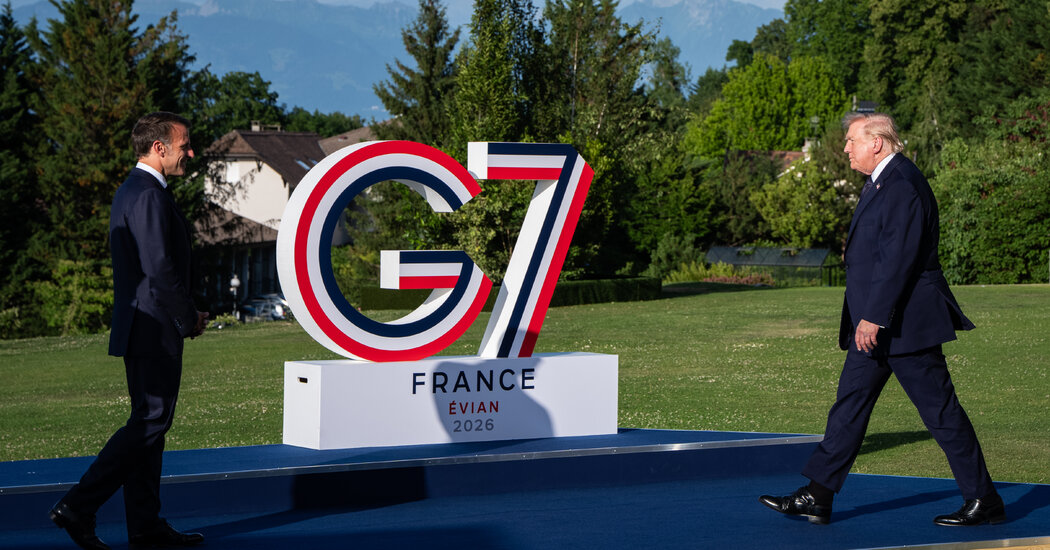
As Air Force One touched down on the tarmac in France, the stark contrast between the carefully manicured protocols of European diplomacy and the raw, pugilistic political style of Donald J. Trump could not have been more pronounced. Just hours prior to his departure, the American president had spent his 80th birthday hosting a series of high-profile, brutal cage fights on the South Lawn of the White House—a physical spectacle of combat that many international observers took as a deliberate metaphor for his approach to global governance. Now, as he joins the leaders of the world’s most powerful industrialized democracies for the annual Group of Seven (G7) summit, a palpable sense of anxiety hangs over the historic venues of France. U.S. allies and international diplomats are watching with bated breath to see whether Trump intends to view this high-level gathering as an open window for constructive transatlantic collaboration, or merely as the latest arena for a high-stakes diplomatic brawl. The fundamental baseline of the Western alliance has been severely shaken, primarily due to the three-month-old joint U.S.-Israeli war against Iran, a conflict that has fundamentally altered how European capitals view the American administration. Rather than seeing Washington as the reliable godfather of global security, European leaders increasingly view Trump as a volatile and combat-ready opponent whose unilateral actions continuously threaten to destabilize the fragile architecture of international peace.
Mines, Oil, and Middle Eastern Maneuvers
          ┌──────────────────────────┐
          │  ST_OF_HORMUZ CONFLICT   │
          └────────────┬─────────────┘
                       │
         ┌─────────────┴─────────────┐
         ▼                           ▼
┌──────────────────────────┐ ┌──────────────────────────┐
│ U.S. / Israel Allies │ │ European G7 Coalitions │
│ • Direct Military Ops │ │ • Strategic Autonomy │
│ • Mine-Clearing Demands │ │ • Push for Diplomacy │
│ • Unilateral Sanctions │ │ • Energy Stabilization │
└──────────────────────────┘ └──────────────────────────┘
The immediate catalyst for the current crisis is the economic and military fallout from the Persian Gulf theater, an issue that is guaranteed to dominate the closed-door plenary sessions. Trump arrived on European soil boasting of a self-proclaimed diplomatic breakthrough, announcing on the eve of his journey that Washington and Tehran had reached a tentative agreement to temporarily reopen the Strait of Hormuz—the world’s most sensitive maritime oil chokepoint—and to resume broader negotiations aimed at bringing a halt to the hostilities. However, the temporary nature of this deal does little to offset the immense damage already inflicted on global energy prices, which have spiked dramatically and placed severe inflationary pressures on European domestic economies. Faced with these challenges, Trump’s official agenda involves demanding that European allies supply military hardware, naval vessels, and personnel to assist in clearing sophisticated Iranian sea mines from the newly opened shipping lanes. This demand is met with profound skepticism by European leaders who feel they were dragged into an avoidable war by the unilateral decisions of Washington and Jerusalem, and who are reluctant to risk their own naval assets. Heidi E. Crebo-Rediker, a distinguished senior fellow at the Council on Foreign Relations, pointedly summarized the collective nervousness of the European diplomatic corps, questioning which version of the American president will ultimately dominate the summit: a leader seeking genuine partnership, or an angry commander intent on berating allies for failing to deploy their own troops and resources to defend American interests in the volatile waters of the Gulf.
The Ideological Rift Over Migration and Military Deterrence
This deep-seated disagreement over military strategy in the Middle East has ignited broader domestic and ideological feuds, most notably on the politically sensitive issue of immigration. The rhetorical warfare between Washington and key European capitals escalated sharply following public comments made in April by German Chancellor Friedrich Merz, who openly lamented that the United States was suffering a profound international “humiliation” at the hands of skilled Iranian negotiators. Trump reacted with characteristic social media fury, accusing the German Chancellor of improper interference in American foreign policy and suggesting that Merz would be better off redirecting his attention toward resolving Germany’s own internal struggles, specifically targeting Berlin’s immigration record. The dispute quickly escalated from rhetoric to tangible military consequences when the Pentagon abruptly announced the withdrawal of 5,000 active-duty American troops from military bases in Germany, a move widely interpreted across Europe as direct political retaliation. The ideological divide was further highlighted when United States Defense Secretary Pete Hegseth delivered a highly controversial D-Day anniversary speech on the historic beaches of Normandy. Hegseth used the solemn event—traditionally dedicated to honoring the shared sacrifices of the transatlantic alliance—to launch a scathing critique of modern European immigration policies, comparing current migration patterns to a hostile cultural “invasion” driven by dangerous and destabilizing ideologies.
FEUD FORGETS BILLIONS: THE U.S.-GERMAN SPLIT┌────────────────────────────────────────────────────────┐
│ April: Chancellor Merz claims U.S. is “humiliated” │
├────────────────────────────────────────────────────────┤
│ May: Trump retaliates on social media over migration │
├────────────────────────────────────────────────────────┤
│ June: Pentagon orders 5,000 troops out of Germany │
└────────────────────────────────────────────────────────┘
A History of G7 Disruptions and Growing Transatlantic Isolation
For veteran diplomats tasked with preparing the summit’s final communiqués, Trump’s antagonistic relationship with his G7 partners is a familiar and distressing pattern of behavior. Over the years, the American president has consistently acted as the disruptive outlier among the leaders of the Group of Seven, which represents the world’s most advanced industrialized economies: Canada, France, Germany, Italy, Japan, the United Kingdom, and the United States. During his first term in 2018, Trump famously upended the Canadian summit by imposing surprise tariffs on the host nation, insulting Prime Minister Justin Trudeau, and demanding that the group readmit the Russian Federation—which had been expelled following its illegal annexation of Crimea in 2014—before abruptly leaving the gathering early. History repeated itself during the inaugural G7 meeting of his second term last year, where Trump renewed his controversial demands to welcome Vladimir Putin back into the international fold, arguing bizarrely that Russia’s presence at the table would have prevented the 2022 invasion of Ukraine. He then departed the summit early to coordinate joint military strikes with Israel against strategic targets inside Iran. This pattern of disruptive unilateralism has led to a profound systemic shift; during the World Economic Forum in Davos, Switzerland, Trump went so far as to threaten a sweeping new regime of punitive tariffs against the European Union unless they facilitated an American acquisition of Greenland. This transaction-based approach to international sovereignty led Canada’s Prime Minister, Mark Carney, to declare a historic “rupture” in the Western alliance, while Max Bergmann, director of the Europe, Russia, and Eurasia Program at the Center for Strategic and International Studies, warned that the global community now confronts a fundamental, perhaps irreversible, breach of trust regarding America’s status as a reliable treaty partner.
Shifting Balances of Power and the Ukraine Dilemma
This erosion of trust has fundamentally altered the power dynamics of this year’s G7 summit, with European leaders largely abandoning their historical deference to Washington in favor of a newly declared path of strategic self-sufficiency. In previous years, European heads of state walked on eggshells around Trump, hoping that polite diplomacy and flattery would protect global trade agreements, preserve the U.S. financial commitment to Ukraine, and prevent a broader conflagration in the Middle East. Today, however, the European Union has emerged as the primary financial lifelines of Ukraine’s defense against Russia, stepping into the security vacuum left by shifting political winds in Washington. European capitals are now openly critical of the joint U.S.-Israeli military campaign in Iran, asserting that Europe must act as the principal architect of continental stability and peace. This emerging dynamic will be put to the test during the high-stakes working sessions on Tuesday, which will be attended by Ukrainian President Volodymyr Zelensky. While senior White House officials have confirmed that no private, one-on-one bilateral meeting has been scheduled between Trump and Zelensky, the complex domestic and international chess match was made even more complicated by the revelation that Trump held separate, back-to-back phone conversations with both Zelensky and Russian President Vladimir Putin immediately prior to boarding his flight to France.
Pageantry, Flattery, and the Art of Versailles Diplomacy
Despite the deep structural divides and systemic challenges threatening the foundation of the Western alliance, European leaders are fully aware that Donald Trump’s foreign policy is highly personalized, making him susceptible to grand gestures, historical pageantry, and direct flattery. This tactical understanding of the American president’s personality has successfully guided allied efforts in the past, such as when King Charles III managed to temporarily defuse intense trade and security disagreements during his formal state visit to Washington, or when Emmanuel Macron successfully charmed Trump during a highly publicized 2017 dinner at the Eiffel Tower. Hoping to replicate this success and navigate the president’s erratic temperament, Macron has gone to extraordinary lengths to accommodate Trump at this year’s summit, even rearranging the official G7 schedule to delay the starting ceremonies so the American president could attend the high-profile Ultimate Fighting Championship event held on the South Lawn of the White House to celebrate his milestone birthday. The climax of this charm offensive will take place at the historic Palace of Versailles, where Macron will host Trump for an incredibly exclusive, private gala dinner. This grand gesture is ostensibly designed to commemorate the 250th anniversary of American independence—celebrated just days after Trump marked the historic occasion with cage fights at the White House—but its true geopolitical purpose is far more pragmatic. By wrapping the American president in the gilded grandeur of Versailles, the French government hopes to soothe his grievances, soften his demands for military concessions, and buy the European continent valuable time as they collectively navigate an increasingly dangerous, highly combustible global landscape.
MACRON'S CHARM OFFENSIVE┌────────────────────────────────────────────────────────┐
│ STEP 1: Delay G7 starting time for Trump’s UFC event │
├────────────────────────────────────────────────────────┤
│ STEP 2: Coordinate bilateral trade & mineral talks │
├────────────────────────────────────────────────────────┤
│ STEP 3: Host lavish state dinner at Versailles Palace │
└────────────────────────────────────────────────────────┘