


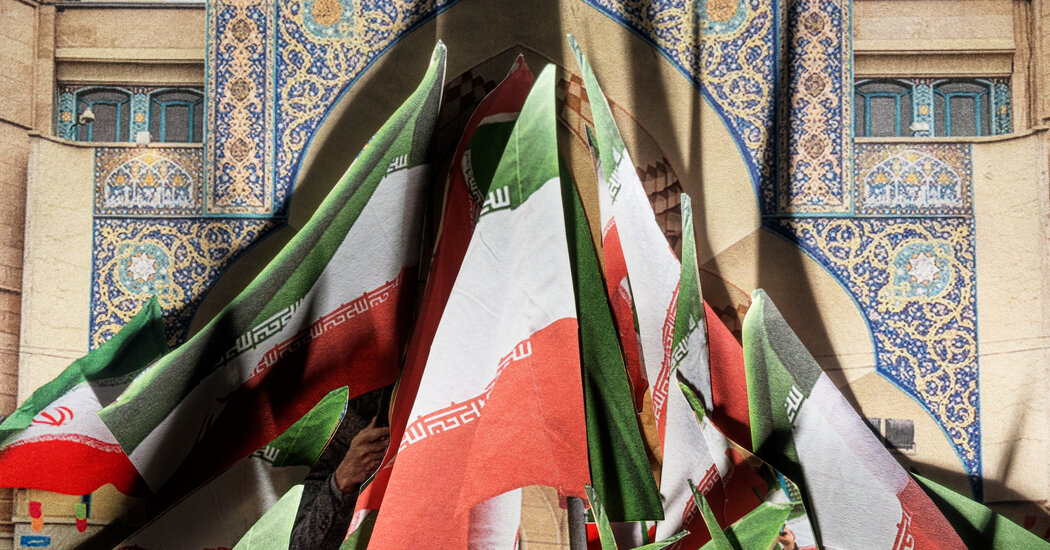
While official channels in New Delhi paint a picture of a tight geopolitical and military partnership between the government of Prime Minister Narendra Modi and the state of Israel, the heartbeat of the Indian public tells a profoundly different story, one rooted in centuries of cultural, linguistic, and spiritual exchange with Iran. This deep-seated historical affinity has manifested not in passive sympathy, but in active, ground-level mobilization that transcends political and religious divides. In the congested, vibrant streets of New Delhi, a diverse coalition of citizens—including ardent Hindu nationalist supporters who ordinarily back Modi’s administration—converged upon the steps of the Iranian Embassy, carrying with them cardboard boxes and crates filled to the brim with life-saving medications, antibiotics, and medical supplies funded entirely by hard-earned, local donations. Meanwhile, far to the north in the picturesque but heavily militarized valley of Kashmir, the solidarity took on an even more deeply personal and sacrificial tone. Here, rural families whose entire livelihoods depend on agriculture made the painful but willing decision to donate their prized sheep to aid collections, while women unclasped family-heirloom gold bangles from their wrists and parted with the meticulously crafted bridal trousseaux they had saved for their daughters’ weddings, transforming their most cherished symbols of security and future hope into immediate lifelines for a people suffering thousands of miles away.
This groundswell of human solidarity in Asia finds a powerful, albeit more structural, echo across the African continent, where the outbreak of war has suddenly accelerated a fierce, long-simmering desire for complete economic and political sovereignty. For decades, various autonomy-seeking movements across West Africa and the arid stretches of the Sahel have been quietly but steadily working to dismantle the lingering scaffolding of colonialism, arguing that their nations must urgently decouple from Western financial donors and dismiss European military interventions that have long failed to provide genuine security. Today, as the escalation of hostilities in the Middle East has culminated in the devastating closure of the Strait of Hormuz—a crucial maritime artery through which the lifeblood of global trade flows—these intellectual and political arguments for self-reliance have suddenly shifted from abstract, academic debates into matters of immediate national survival. The closure has imposed a brutal, unforgiving economic toll on African nations, disrupting critical supply chains and revealing the profound vulnerability of keeping domestic economies dependent on global networks that are ultimately policed and controlled by distant, competing superpowers.
The tangible, everyday reality of this geopolitical shockwave has been described not in terms of naval strategy or balance-of-power diplomacy, but in the language of the household budget, where the true violence of global conflict is felt. As former South African lawmaker Faiez Jacobs recently observed in a widely circulated and deeply resonant op-ed, modern wars no longer remain confined to distant, barren battlefields; instead, they cross oceans and borders to quiet kitchens, arriving uninvited in the form of soaring petrol prices at local pumps, sudden and exhausting electricity blackouts, the skyrocketing cost of a basic loaf of bread, and the sudden, terrifying loss of local manufacturing jobs. This immediate threat to domestic stability has galvanized African journalists, intellectuals, and citizens to demand a fundamental break from financial and political systems designed, built, and dominated by Western capitals. In its place, there is a powerful post-colonial push toward continental unity and the rapid expansion of the BRICS framework, with ordinary people championing the creation of independent, non-dollar payment systems, localized industrial corridors, and African-led maritime security strategies designed to shield the continent from the catastrophic fallout of imperial conflicts.
In other corners of the globe, however, the response to the conflict is defined not by loud declarations of sovereignty or public displays of solidarity, but by a heavy, fragile, and calculated silence. In nations deeply fractured by internal religious, ethnic, or sectarian divisions, the war has acted as a dangerous magnifying glass, threatening to inflame domestic tensions and spark localized unrest if governments take a definitive stance on either side of the Middle East chasm. For other governments, particularly those that are economically or militarily dependent on the financial patronages of Israel or the wealthy monarchies of the Persian Gulf, the war presents an impossible diplomatic tightrope where a single misstep could result in devastating financial retaliations or the loss of crucial security alliances. Thus, many world leaders have chosen the path of strategic quietude, keeping their heads down and refusing to issue formal statements, a silence driven by a shared, palpable anxiety over where the erratic, high-powered spotlight of the Trump administration will land next, as nations quietly pray to remain unnoticed in a rapidly shifting and highly volatile global hierarchy.
Perhaps nowhere is this existential anxiety felt more acutely or viewed with more seasoned historical skepticism than in the Caribbean nation of Cuba, where the rhythms of daily life are already defined by the grueling struggle against a decades-long United States embargo. In Havana and across the Cuban provinces, families gather in the sweltering heat, planning their days around the highly unpredictable and brief hours of the day when the state-run power grid actually provides electricity. According to the insightful observations of historian Sara Kozameh, during these precious windows of power, Cubans do not look for escapism; instead, they crowd around flickering television sets to follow the military developments in Iran with a intense, personal investment, fully aware that their own domestic safety is directly tied to the outcome of this distant war. For the average Cuban citizen, a potential defeat or strategic setback for the United States in the Middle East is viewed as a vital shield, believing that if Washington is bogged down or humbled abroad, it will have far less political appetite or military capacity to launch an aggressive intervention against Cuba.
At the very same time, this hope is tempered by a profound, generational understanding of the psychology of American imperial power, which recognizes that a wounded or frustrated empire can be a highly dangerous entity. Cubans harbor a quiet, gnawing fear that if the Trump administration feels denied a clear, decisive victory in the Middle East, it may desperately seek out an alternative, easier target closer to its own shores to aggressively assert its dominance and project an image of military strength to its domestic base, potentially placing Cuba directly in the crosshairs of a retaliatory geopolitical theater. This intricate web of global connections—linking the survival of a family in Havana to the defense of Tehran, and the financial security of a Johannesburg household to the blockades in the Strait of Hormuz—reveals that modern warfare is a deeply humanized, interconnected tragedy where the decisions of a few powerful leaders instantly vibrate through the lives of the global majority. As everyday people from New Delhi to the Sahel seek out alternative alliances, share their meager resources, and brace for economic shocks, they are actively rewriting the narrative of global conflict, proving that while empires may wage war for dominance, it is the ordinary, resilient citizens of the world who must navigate its ruins and quietly build the foundations for a more self-reliant and cooperative future.