




Six Paragraphs on Grief, Memory, and the Weaponization of Pain
There are moments when grief and principle collide with such force that they reshape a person’s public identity, and for Judea Pearl, the past week has delivered one such collision. At ninety years old, the distinguished UCLA professor has lived a life marked by intellectual rigor and the quiet dignity of a mathematician and computer scientist. Yet beneath the academic credentials lies the harrowing story of a father who lost his son to the brutal excess of ideological zealotry. The ache of that loss never truly fades; it resurfaces with fresh intensity each time the calendar circles back to a fateful day in early 2002. But a different kind of sorrow has gripped him now—not merely the melancholy of memory, but the sting of betrayal from the institution he has called his professional home. When word reached him that his university was preparing to host a lawyer who defends the very man who killed his son, the grief transformed into anger, and the anger kindled into shame. He could not remain silent. The platforming of Melanie Partow was the latest, most painful emblem of a distressing trend he believes has infected the ivory tower: the gradual, deliberate distortion of historical pain to serve ideological narratives.
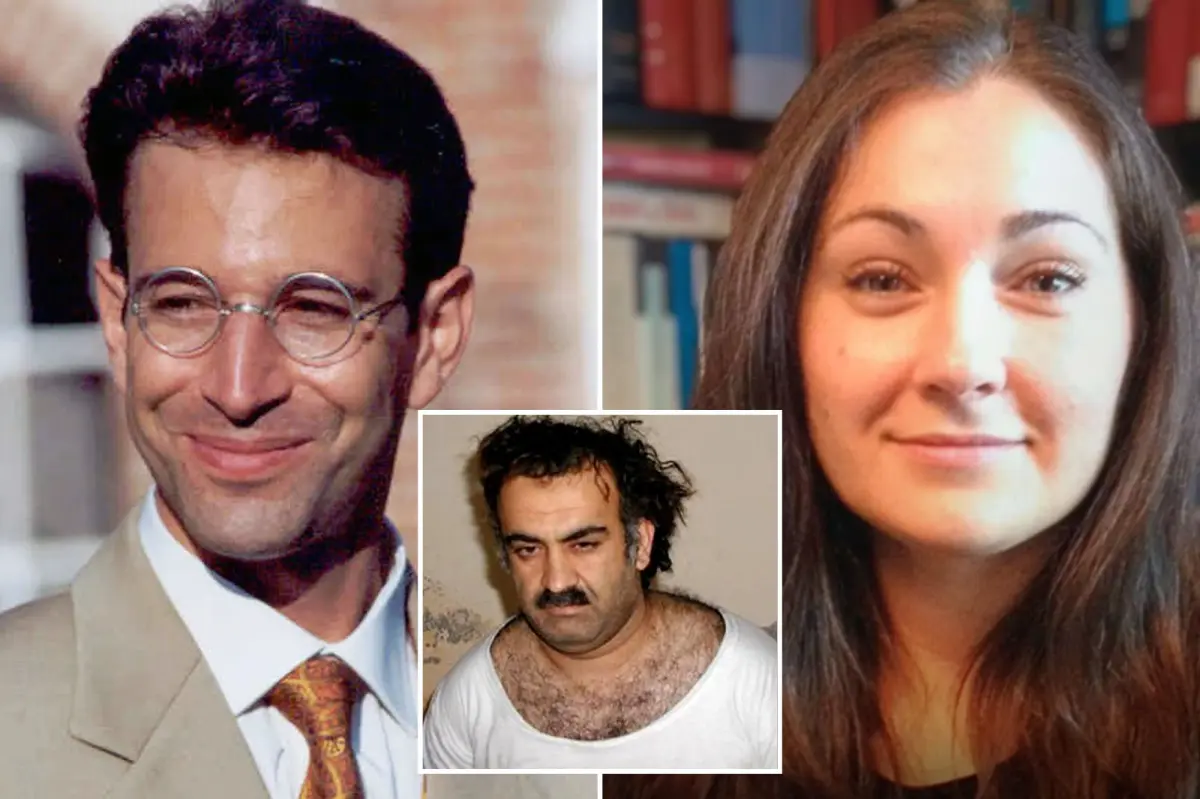
The story of Daniel Pearl is one that transcends borders and bloodlines, cutting to the very heart of shared humanity. He was a Wall Street Journal reporter defined by curiosity, integrity, and an relentless drive to tell the stories of people who too often went unheard, from war-torn regions to economic hardship. That relentless curiosity brought him to Pakistan in early 2002, where he believed he was meeting an Islamic scholar for an interview. Instead, he was bait, lured into the hands of Khalid Sheikh Mohammad, the orchestrator of the September 11 attacks. The subsequent kidnapping and execution was not merely an act of terror; it was a spectacle of violence designed to publicize a gruesome ideology. In his final moments, foreshadowing his own death, Pearl spoke with a clarity that still haunts his family—he mentioned, of all things, a street named after his great-grandfather in the town of Brockton, Massachusetts. It was a strange, poignant gesture of identity and belonging amid imminent darkness, a testament to the Jewish roots and heritage that his killers both loathed but could not erase. The chilling admission would come years later when Mohammed, in a released Pentagon transcript, bragged of decapitating Pearl “with my blessed right hand”—a statement that has forever marked the trajectory of the Pearl family’s grief.
This is the weight that Judea Pearl carries into his judgement of UCLA’s decision to include Melanie Partow in the upcoming commemoration titled “25 Years After 9/11: Reimagining Freedom, Justice, and Security.” Partow is not just a lawyer; she is a civil rights and international human rights litigator who has represented Mohammed since February 2020, a legal citation interrupted by a more recent notoriety—her role in pressing for an arrest warrant against Israeli Prime Minister Benjamin Netanyahu. The invitation to have her speak during the solemn 9/11 memorial weekend feels, to Pearl, not merely insensitive but deliberately provocative. He hears in the symposium’s thematical framing—panels on torture, rendition, counterterrorism—a turn toward questioning America’s response to the attacks rather than mourning the fallen. This is the broader academic dogmatism that he believes has been added on top of the grief, a newly layered pain of seing his son’s murderer’s representative being given a university platform. He spoke not with shrill outrage but with a raw sorrow: “Having lost a son to such an ideology, I stand ashamed of my university.” This accusation carries the weight of an institution that has, in his view, turned its back on the very values that made such tragedies worthy of reflection.
But the story is broader than one law family’s suffering, moving into a gray area where national security, collective memory, and academic freedom collide. The symposium’s lineup also includes Asli Bâli, a Yale professor who has famously called post-9/11 counterterrorism a “racist gravy train,” sparking deep indignation among survivors and first responders. For FDNY lieutenant Jim McCaffrey, who stood amid the ruins of the Twin Towers, the symposium is not a beginning of intellectual exchange but a repudiation of the heroic struggle of that day. He sees a university that seems to be assigning a kind of guilt to the attackers and pointing fingers at the victims instead of honoring the dead. As it happening, the sentiment is spilled across a broader canvas: the university is dealing with lawsuits from the Trump administration, accused of ignoring antisemitism on campus and failing to adequately protect the same Jewish students who remain just a cultural footnote for many others in the halls of academia. The 9/11 anniversary has, for many, become a mirror reflecting the very ideological chasms that the attacks had briefly forced shut in the American collective consciousness. Raj that unity now seems like a distant memory, replaced by a fundamentally open-ended loop of academic lecture halls and courtroom verdicts.
Yet, even beneath the well of political acrimony, there lies the intimate, heart-wrenching domain of one man’s memory. Judea Pearl Jan, in a moment of reflection, shared the stories of his son’s last words with a vulnerability that sliced through the rancor. Daniel, facing an imminent death, recalled the street in Brockton named after his great-grandfather, a pioneer of the town’s founders. Pearl’s father was surprised when he heard that, as the family rarely spoke about his grandfather. But it was, in the end, a defiant declaration of identity—a Jewish identity, a proud connection to a lineage and an ethos of building, of creating life. In a profession that forces us to witness the worst of human nature, this reference of heritage in his final seconds became a testament that went far beyond an individual life. It was a glimmer of meaning in a gutter of terror, a realization that even in the face of pure brutality, there is something in us that reaches back to who we are and who we came from. This is the logic that makes the battle the louder, but also clearer. One must insist that the memory of Daniel Pearl—and the fight to preserve his story—remains entangled with the very principles that define both a family and a nation.
The UCLA event serves as a poignant metaphor for a country whose medium is a “state of disunion,” where the lesson of 9/11 is no longer a single tale of resilience, but a layered conversation about rights, security, and the preservation of memory. For Judea Pearl, though, this is not just an academic debate; it is the constant re-extension of the struggle of a son whose death echoes in every act of rationalization. He sees a backdrop of history that courageously continues to weaponize the painful days of 9/11 and 10/7, pointing fingers at the victims, not comforting them. His voice is rooted-specific, yet universal. It is the voice of a father refusing to let his legacy become fodder for an abstract abstract ideology, insisting that the memory of the victims doesn’t get lost in a sea of legalistic punctiliousness and academic myopia. The challenge now rests on the ivory tower itself: Can it remember the empathy that defines human connection, the foundation of a community wisdom, or will its answer be a somber affidavit of the American memory, shaken from within by the very guardians of its conscience? In this moment, Pearl’s shame is not a weakness; it’s a stripped cry for a kind of purposeful integrity that no university can dismiss. That is the line of sorrow he pro points out, and we all, in the end, must not look away.# The Weight of Memory: A Father’s Grief Meets an Academic Wound
There are moments when grief and simply too great to be contained, when a parent’s love for a lost child rises up and collides with the institutional forces that seem to have forgotten the very ideals they were built to protect. Judea Pearl is ninety years old, a distinguished professor in the Samueli School of Engineering at UCLA, a man who has spent a lifetime teaching, pioneering, and shaping minds. On the surface, he represents the quiet dignity of academic achievement, the kind of person who has earned his place in the halls of higher learning through decades of dedication and brilliance. But beneath that polished exterior beats the heart of a father who has endured the unendurable, a man whose son Daniel was taken away from him in the most brutal and coordinated fashion imaginable. In 2002, Daniel Pearl, a dedicated Wall Street Journal reporter, was kidnapped in Karachi, Pakistan after he was lured to a location under the pretense of interviewing a scholar. Instead, he walked into a trap, and was later executed by Khalid Sheik Mohammed, the infamous architect of the 9/11 attacks, in a way that was meant to be a spectacle of horror.
Mohammed’s words about the execrable act still echo in the Pearl family’s mind—those chilling statements penned in the Pentagon’s 2007 transcript, admit with that “dubious right hand,”—a grotesqueness that seems still stopped to reason through. It is a very hard load to carry, the memory of a son who was not only killed but also, in some amount, used as a human prop for propaganda to the benefit of another era’s brutality. Yet here is an old man, walking onto his campus, expecting to find refuge or at least tenderness in the academy. Instead, suddenly he learns the university recently hosted or was planning to host a symposium as part of the commemorations of the 25th anniversary of 9/11—an event on remembering, reimagining, and reinterpreting the day that shook the world. And at that very event, the institution in which he has spent his career was inviting Melanie T. Partow, a civil rights lawyer who represents Khalid Sheik Mohammed in military commissions. The clash of those two facts—the father, the son’s killer lawyer, and the university’s choice to platform that legal advocate during a memory event—hurled him into a state of both disbelief and sorrow. “Having lost a son to such an ideology,” he said, “I stand ashamed of my university.” That shame is not merely a loss of reput, but the cognitive dissonance of an institution warring itself, honoring an event that his son died investigating, all by giving a seat to the legal voice of the man who ordered the death of a loved one.
The very fact that this panel was framed with titles like “Torture, Rendition, and Detention: The Erosion of the Rights Regime post 9/11,” offers a particular portrait of the ideological shift in many learned settings. The conference itself was called “25 Years After 9/11: Reimagining Freedom, Justice, and Security,” but to many observers, that phrase “reimagining” sounds less like a call for honest intellectual exploration and more like an implicit criticism of the victims of the attacks. When you put fighters like Melanie PartT, who has made headlines for her role in the International Criminal Court’s attempt to issue an arrest warrant for the Israeli leader, alongside a stamp of speakers from Yale and others who have referred to counterterrorism as “racist,” the meeting ceases to feel like a memorial at all. It instead becomes a courtroom where the United States—and by consequence, the victims and heroes of the day—is the one being judged. Judea Pearl is not a removed observer to this turn; he has been the voice of a larger trend among some academics to “weaponize the painful days of 9/11 and 10/7” in favor of promoting certain ideologies that often attribute blame to the very nations that were attacked. He didn’t step into this controversy with little, but out of a recognition that the younger generation of scholars and administrators might be losing sight of the grounding commitment to human dignity that made the university a sanctuary for truth-seeking and safety. The confrontation is ultimately between head of a justice framing that sees the legal system as simply one adversary among others, and the deep, profound, felt emotional truth of a parent who did not come home—and a nation that still doesn’t fully understand its own grief.
For those who were on the ground that day when the first tower fell and the second one followed suit, the event carries bitter heritage. Jim McCarry, a former FDNY lieutenant who responded and responded to the Twin Towers in his hulking frame and gut of stomach, but his eyes betray the visions of that day, a day like no other. It is hard to explain to anyone who didn’t stand there—the confetti-like dust, the heavy air, the floating ash, the ringing of overwhelming silence—what it did to the soul. But when he heard of the UCLA symposium, called it “absolutely absurd.” He sees it as a new front of a strange, academic war: “They are pointing fingers at the victims. We’re the bad guys for being attacked,” he said, combining the psychological dissonance that many survivors experienced. In those days of warning and of investigation, there was hardly time for an ideology; the country was united in a manner that felt almost like breathing—alive with anger, fear, and mourning. But now the memory of that day is being interpreted by another generation, one that seems to have no memory but a set of ideological glasses through which to view it. For these first responders, who are the living link to the historical everyday, the symposium isn’t a dialectic—it’s a betrayal of all that was lost, she tries to put a legal battle on top of the brokenness. The cardinal point remains: While we openly debate and contextualize the international responses to terrorism, there is a subtle, deep need to preserve the integrity of the silence that was granted to the lost, to the heroes, and to the cityscape that was crushed. To speak of promoting future militarism, one must not desecraten the dead with the agendas of the living.
Yet even in this vortex of political and moral debating, there is an intimate, tucked-down memory of home, a light that attempts to keep suspicion alive. Judea Pearl remembers that his son called and died with a resolve to mention his great-grandfather, and, confusingly, a street in the town of Brockton, Massachusetts. It is a detail that might seem obscure, but for him it became an avalanche of meaning. In his last minutes, under the blade of a man who glorified death, Daniel Pearl attached to his own personal web of identity—to that of a Jewish family, a people that had founded towns, built the foundations of the land, built parallel values out of struggle and hope. For that father, the tip of the utterance—that his son mentioned a street after a great-grandfather the family rarely spoke of—became not simply a mystery, but a punctuation, a song of Jewish pride, and a declaration that no terrorist’s blade could cut away the memory of a lineage. This is perhaps what academics often forget: that the core of a story is not abstracting into a lecture; it is a fleshly pain, a heritage, a refusal to let the common meaning be wiped out. Pearl’s account of his child’s final moment is not an echo of grief, but a prescription: a memory of his son, who was full of courage, still holding on to his roots when they offered little safety except the knowledge of who he was. That story should perhaps be set as a standard for the symposia—a way to ensure that remembrance isn’t just about politics and legalities, but about a person, a life, and a family that cannot be erased from the story of this era.
UCLA faces not only this moral clash but also significant fallout from the wider context of the Administration of officials away, with moved a lawsuit over a specifically alleged inability to protect Jewish students or address an adsemitism on campus. That suit aligns with the Pearl’s sorrow, a kind of institutional tone-deafness. But there’s an opportunity in this to consider the elephant in the room: what is the purpose of a university? A university is said to be a market place of ideas, an arena where all voices should be heard, where push and pull, and a debate can be robust. But there are those times when safety is not just an accent; there is a richer historical feeling or need to honor victimhood, a shared commitment to truth-telling that must place the supposedly neutral academic mission aside. Maybe PartT’s presence could be justified if it’s a nuanced legal framework about “accused right to defense,” and no one is questioning the bad side of the law. But the clash isn’t about legal defense; it is about the memorial context, the timing, and the framing of the event. For individuals like Judea, who has spent his entire life in institutions of pursuit and thought, the loss of that sensitivity seems like a failure of “humanistic” intelligence. He resonant line is that the ceremony of memory should not be hijacked to the tombstone of someone’s grievance about American responsibility. And that’s the line that the university—and broader academia—will need to walk in the future, carefully choosing when memorable days are times of somber homage, not ideological test sites.
Popular on the national transformation, this drama at UCLA is a striking symptom of a broader crisis of memory. There is a coming clash between those who see institutions of the world as a way to interpret history with ethical rigor, and those who feel that in the rush to revise or to re-evaluate the past, the existential baseline of victims is being forgotten. And in the center, is a ninety-year-old father with his own young but unsevered dignity. He taught, he built, he watched and he lost, and now continues to speak. He insists that the answer to hate is not to clear new legal arguments that obscure the hatred, but to find embrace a human imagery that prevents the horror from being repurposed. His missions, circled and sharpened, with the calls upon the survivors and public to witness what the public are beginning to sound like. It will ever challenge the campus to remember the fall, honor the ones who rushed in, all while preserving the right to dissertate, but not at the expense of over-running the basic humanity that binds us. For this the speaker said a reminder that pain is not an argue, that the father’s grief, the doctor’s heroism, and the mother’s long silence be maintained in the face of intellectual progress. It reminds us, with unpleasant sincerity, that the greater American story is not one that eliminates memory in its crusade for an era of moving forward, but that this future can only be honest and true if it slowness past the sacrifice, with each detail—the street named in Brockton, a fallen tower, a journey—written in the stones of its shoulders. And for those of us who are left watching, the quiet heaviness of Judea Pearl, standing tall in that university hall to hold its podium accountable, is itself a lesson that cannot be taught–but it must be learned.