



A Crisis in the Classroom: When College Calculus Meets Middle School Math
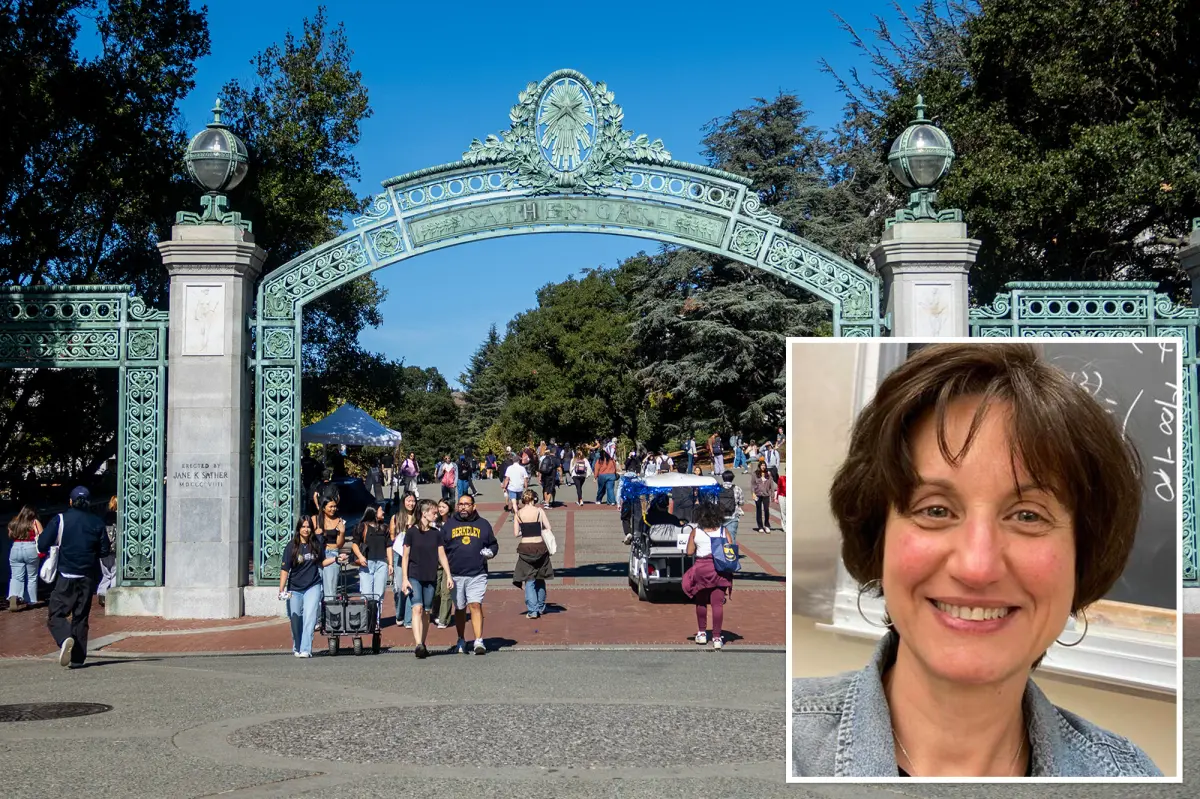
In the hallowed lecture halls of one of America’s most prestigious public universities, a quiet crisis is unfolding—one that has little to do with funding cuts or campus politics and everything to do with the fundamental preparedness of the nation’s brightest young minds. Professor Zvezdelina Stankova, a distinguished mathematician at the University of California, Berkeley, has sounded an alarm that reverberates far beyond the ivory tower. Her message is stark and unsettling: a significant portion of her students, the very individuals who navigated the gauntlet of elite university admissions, are arriving on campus severely unprepared for the academic rigors that await them. These are not students struggling with abstract theorems or complex proofs; they are students who have not yet mastered the foundational building blocks of arithmetic, the basic fractions, and pre-algebraic concepts typically taught to twelve-year-olds. The disconnect between the perceived prestige of a Berkeley education and the reality within its classrooms has become so pronounced that Stankova describes her office hours not as a time to delve into the beauty of integral calculus, but as an impromptu tutoring session for material that should have been mastered a decade earlier.
Stankova’s frustration is palpable, born from a deep passion for her subject and a genuine concern for her students’ futures. “Some students are five to eight years behind in mathematics,” she wrote in a scathing op-ed for the San Francisco Standard. “Office hours that should be spent discussing integrals instead become lessons on fractions and basic algebra you would expect students to learn in middle school.” This is not the complaint of a detached academic bemoaning a lack of rigor; it is the cry of a dedicated educator who has dedicated her life to nurturing mathematical talent. Her own journey is a testament to the power of education: born in communist Bulgaria, she rose through the ranks to earn a PhD from Harvard, becoming a beacon of what focused and demanding instruction can achieve. She has long been an evangelist for her discipline, founding the Berkeley Math Circle and a local math olympiad to inspire high school students. To see the standards of her own institution deteriorate to this point, she argues, has turned the student body into a “laughing stock” and fundamentally betrayed the university’s mission.
At the heart of this controversy lies a single, transformative policy decision: the elimination of standardized testing requirements. In 2020, amidst the chaos of the COVID-19 pandemic and a contentious debate over equity, then-University of California President Janet Napolitano made the controversial call to phase out the SAT and ACT, a decision that would later become a mandatory test-blind policy through 2025. The rationale was to level the playing field for applicants from disadvantaged backgrounds, who might not have access to expensive test prep, or who were disproportionately impacted by pandemic-related disruptions. However, Stankova and thousands of her faculty colleagues see this well-intentioned policy as a catastrophic misstep that has fundamentally hollowed out the academic quality of the incoming classes. They argue that while the intention was to promote equity, the effect has been to admit students who lack the basic skills necessary to succeed, placing them, and the university’s reputation, in jeopardy.
The evidence, according to Stankova, is not anecdotal but empirical. She points to the results of a diagnostic exam administered to incoming Calculus I students—the gateway course for all STEM and business majors. Before the test-optional policy took effect, between 2018 and 2020, a robust 71% of students were deemed “ready or nearly ready” to handle the rigors of college calculus, and fewer than 1% tested below basic algebra proficiency. The data post-2021 tells a far more troubling story. The number of students deemed prepared for calculus plummeted to just 44%. More alarmingly, by the 2022-23 academic year, more than one-third of the students enrolled in Calculus I were described as having “severe math deficits,” with a score of zero becoming the most common result on the diagnostic exam. This stark numerical divide illustrates a chasm in preparedness that has split the lecture hall into two distinct groups: those who are ready to engage with the material and those who are fighting to understand the basic language in which it is written.
The calculus of this situation is not unique to Berkeley. In the wake of the pandemic, many elite institutions—including Harvard, MIT, Stanford, and Yale—suspended their standardized testing requirements. However, almost all of them recognized the invaluable data these tests provided and have since reinstated them. They understood that while standardized tests are imperfect, they serve as a crucial, objective benchmark of a student’s core academic skills, offering a kind of parachute for admissions officers navigating a sea of inflated GPAs and increasingly creative extracurriculars. Berkeley, however, has charted a different course. Stankova notes with frustration that her university has “moved in the opposite direction” of its peers, with no new admissions policy scheduled to take effect before fall 2028. This institutional inertia is especially damning because the consequences are felt not in a boardroom, but in the daily lives of students who have been handed a place at a top-tier university but not the tools to thrive there.
Stankova’s plea is not an abstract policy debate; it is a cry for common-sense reform. “Students don’t have that kind of time: They attend college once,” she wrote, underscoring the urgency of the matter. The cost of this failed experiment is being paid by the students themselves, who may burn through financial aid on remedial coursework, face a crisis of confidence when they fall behind, or be forced to change their career aspirations entirely. By trying to remove a barrier to entry, the university may have inadvertently created a much larger barrier to success. The professor’s appeal is a call to remember that the primary mission of a university is education, and that true inclusivity does not mean lowering the bar, but providing all students with the honest assessment and support they need to clear it. Her argument is a powerful reminder that in the pursuit of a more equitable system, we must not discard the very tools that help us ensure students are set up for achievement rather than failure. The question of what Berkeley will do next is a question not just about admissions criteria, but about the fundamental values it will uphold as one of the world’s leading centers of learning.