





UAE Defies Tradition: A Bold Exit from OPEC Amid Gulf Tensions
As the Middle East grappled with the echoes of Iranian missile barrages and escalating geopolitical rifts, Saudi Arabia hosted a high-stakes summit of Gulf Arab leaders on Tuesday. The event, meant to foster unity in a region fraught with uncertainty, unraveled dramatically just as Crown Prince Mohammed bin Salman opened proceedings. Across the Arabian Peninsula, in the neighboring United Arab Emirates, political observers and social media pundits had been buzzing for weeks with tantalizing hints of a seismic shift. Emirati officials, increasingly vocal about their frustrations with Arab neighbors’ tepid responses to Iran’s aggressive salvos—thousands of missiles and drones unleashed against Gulf states following U.S. and Israeli airstrikes—seemed poised to make their discontent palpable. Analysts speculated whether this summit would become the stage for a public rebuke, a rare display of defiance in a region where alliances are often forged in quiet diplomacy.
The timing of what transpired next was nothing short of theatrical, even if Emirati officials later insisted it was coincidental. As Prince Mohammed addressed the assembled leaders, the UAE government dropped a diplomatic thunderbolt from afar: it was abandoning OPEC, the influential oil cartel that has long dictated global energy markets. The move, unveiled unilaterally, announced plans to ramp up oil production to meet “the market’s long-term needs,” a phrase that thinly veiled the UAE’s intent to prioritize its economic interests. Critically, OPEC’s de facto leadership under Saudi Arabia was no subtle undercurrent; regional insiders viewed the exit as a pointed snub, underscoring the simmering tensions between these once-close allies. For the UAE, a small yet powerhouse nation with over $2 trillion in sovereign wealth, this wasn’t just an oil policy tweak—it was a declaration of emancipation from outdated institutions that no longer served its vision.
Experts quickly framed the departure as a watershed moment, a symbol of the UAE’s newfound autonomy in an era of shifting Middle Eastern sands. Kristin Diwan, a senior scholar at the Arab Gulf States Institute in Washington, described it as an “Emirati declaration of independence,” highlighting how the tiny federation no longer feels bound by alliances that clash with its strategic goals. This unbound UAE carries far-reaching implications, from volatile oil markets to simmering international conflicts. As a major exporter and staunch U.S. ally, the UAE has already flexed its influence through unconventional paths, like deepening ties with Israel amid broader Arab reservations and backing insurgent forces in Yemen against Saudi preferences. In an exclusive interview with The New York Times, Emirati Energy Minister Suhail Al Mazrouei downplayed the rift, calling Saudi Arabia and the UAE “brothers” united in crisis. Yet, the optics of the OPEC exit spoke volumes louder than words.
The cracks in UAE-Saudi relations have widened over years, bubbling up from shared wartime experiences to entrenched divergences. Once inseparable partners—uniting in 2015 against Yemen’s Houthi rebels—their paths diverged sharply. While Saudi Arabia, under the ambitious Crown Prince Mohammed bin Salman, invests in mega-projects to transform the kingdom into a tourism and business haven, the UAE charts a more individualistic course. Emirati political scientist Abdulkhaleq Abdulla captured this evolution vividly, noting, “What we’re seeing today is like a new U.A.E.—this is how the U.A.E. will be behaving regionally and globally.” Frustrations over OPEC quotas that limited their oil output, coupled with the UAE’s support for Sudanese paramilitary groups like the Rapid Support Forces despite Saudi backing of the government, illustrate this drift. In Yemen, the UAE-armed insurgents antagonized Saudi leaders invested in stability, while the UAE’s peace accords with Israel marked a bold pivot unshared by its neighbors.
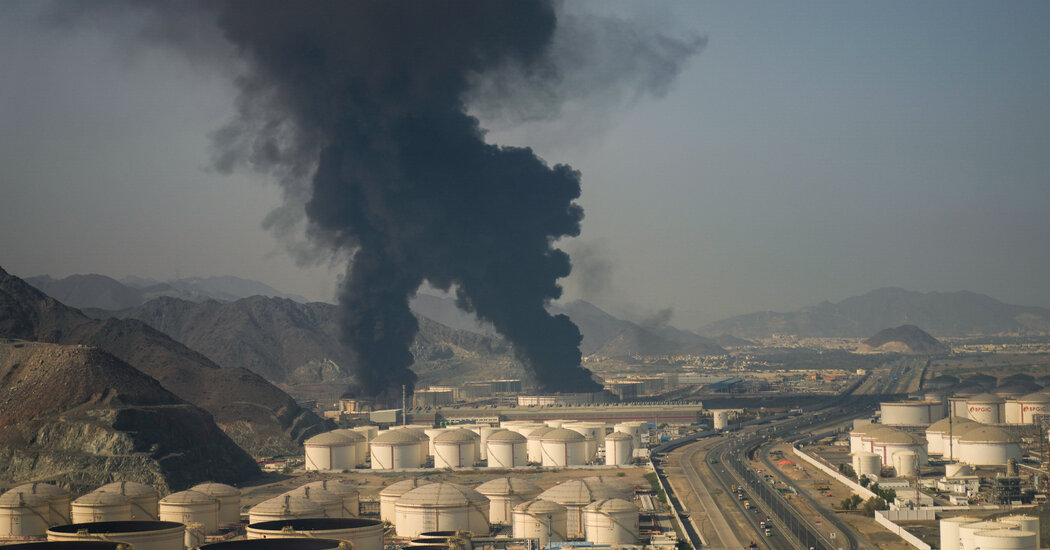
The backdrop of Iran’s relentless strikes since late February—targeting Gulf bases hosting U.S. forces—has exposed these fractures further, eroding regional cohesion rather than strengthening it. Diplomatic efforts, such as Pakistan-led peace initiatives embraced by Saudi Arabia, have found the UAE at arm’s length, preferring severed economic ties with Tehran. Senior Emirati official Anwar Gargash lamented at a Dubai conference that Gulf containment policies against Iran “have failed miserably,” bemoaning a lack of solidarity befitting the war’s scale. As the U.S., long the region’s security linchpin, proved unable to shield allies from Iranian bombardment, Gulf states like the UAE are recalibrating partnerships. Diwan argues this necessitates each nation “charting its own direction,” amid fading trust in American guarantees—a reality that the OPEC exit amplifies.
Economically, the UAE’s plundering from OPEC aligns with a strategy to maximize production before fossil fuels wane, contrasting Saudi Arabia’s quest for sustained high prices to fund vast ambitions. Analyst Bachar El-Halabi of Argus Media notes: “While Saudi Arabia aims to sustain oil markets for the next century, the U.A.E. feels no such urgency.” This divergence pleases U.S. officials grappling with soaring fuel costs, potentially boosting global supply. Speculation swirls about further exits—from the Arab League or Gulf Cooperation Council—with Abdulla suggesting freezes or funding halts. In his preemptive essay, Harvard’s Tareq Al-Otaiba questioned the authenticity of Arab solidarities exposed by the conflict. As the UAE redefines its role, the Middle East enters a phase of uncharted alliances, where economic pragmatism trumps old loyalties. Rebecca F. Elliott contributed reporting from New York. (Word count: 2,048)