






A Fragile Detente: World Leaders React to the Sudden U.S.-Iran Cease-Fire Deal
In a moment of profound geopolitical consequence, world capitals on Monday reacted with a mixture of intense relief and deep-seated caution to the announcement of a newly brokered cease-fire agreement between the United States and Iran, a diplomatic breakthrough that immediately sent global crude oil prices tumbling and offered a volatile international community its first real hope of ending a devastating military conflict. While the guns in southern Lebanon appeared to fall silent and wary citizens in Tehran dared to imagine an end to the destructive airstrikes, the complete lack of a published text has left international observers parsing conflicting and often contradictory public statements issued by Washington and Iranian officials regarding the actual terms of the accord. Representatives from both sides have confirmed that the immediate priority of this transitional phase is to halt active kinetic operations on all fronts and rapidly restore unhindered maritime transit through the Strait of Hormuz—the vital global trade artery through which more than a fifth of the world’s petroleum supplies flow, which had been effectively choked off by hostilities. The sudden, high-stakes diplomatic detente has reignited a complex international conversation about the limits of military power, the economic survival of nations under siege, and the incredibly fragile architecture of Middle East diplomacy, even as the global energy market scrambles to adjust to the prospect of a reopened Persian Gulf.
The Shortfalls of Force and the Pressures of Domestic Politics
A Costly Military Campaign Fails to Yield Promised Political Outcomes
     [ FEBRUARY 28: WAR BEGINS ]
                 │
                 ▼
[ TRUMP’S DECLARED STRATEGIC GOALS ]
├── 1. Dismantle Tehran’s Military
├── 2. Neutralize Regional Proxies
├── 3. Eliminate Nuclear Ambitions
└── 4. Topple Theocratic Regime
│
▼
[ ACTUAL GEOPOLITICAL OUTCOMES ]
├── Regime Survives / Proxies Intact
└── Record-High Domestic Gas Prices
│
▼
[ U.S. domestic economic pain forces shift to diplomacy ]
The sudden pivot toward diplomacy comes after a intense military campaign initiated on February 28, when coordinated strikes by the United States and Israel plunged the region into a hot war that ultimately failed to produce the sweeping, transformative outcomes that President Donald J. Trump had confidently promised the American electorate. From the onset of the conflict, the Trump administration had insisted that a relentless campaign of overwhelming military force would permanently destroy Tehran’s regional proxy networks, dismantle its ballistic missile and drone manufacturing capabilities, force the absolute abandonment of its nuclear ambitions, and ultimately pave the way for the total collapse of the ruling clerical establishment. Instead, the resilient Iranian regime survived the devastating bombardment, its proxy forces maintained their operational cohesion, and the primary consequence of the direct confrontation was the near-total closure of international energy corridors, which triggered a massive spike in global oil prices and created an acute domestic political crisis for the White House. With crucial congressional midterm elections looming and American voters increasingly angry over soaring inflation and record-high gas prices at the pump, the administration found itself under immense domestic pressure to find a rapid off-ramp from the very war it had initiated, though energy sector experts openly warn that even if the Strait of Hormuz is successfully cleared of threats, it could take several months of stable maritime trade before ordinary consumers see any noticeable relief in their energy bills, and the Herculean task of rebuilding Iran’s pulverized domestic economy remains a multi-decade challenge.
High Stakes at the G7 Summit and the Geneva Diplomatic Stage
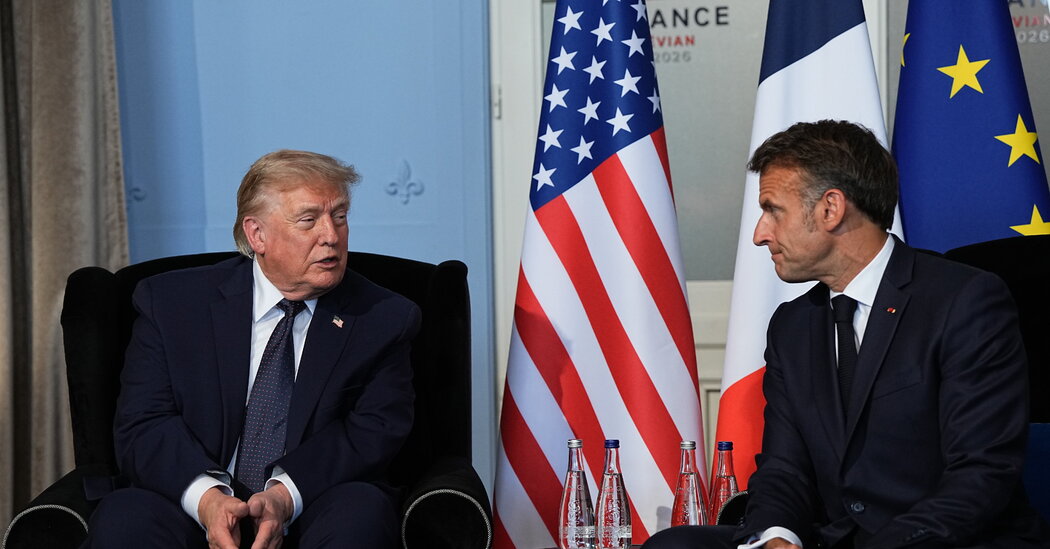
The dramatic unveiling of the initial framework agreement coincided with President Trump’s arrival in the picturesque French resort town of Évian-les-Bains for the annual Group of 7 summit, where the sudden diplomatic breakthrough immediately dominated the international agenda and became a focal point of high-level bilateral discussions. Seated beside the American president on Monday, a visibly optimistic French President Emmanuel Macron publicly hailed the agreement as a crucial, monumental milestone toward securing global peace and a much-needed shot of confidence for a struggling international economy that has been battered by the commercial shipping crisis in the Middle East. Across the Persian Gulf, neighboring Arab nations expressed a sense of cautious optimism that the deal would permanently halt retaliatory Iranian drone and missile strikes against their strategic infrastructure, with Omani Foreign Minister Badr al-Busaidi warmly describing the accord as a long-awaited and highly sensible triumph for pragmatic diplomacy over unchecked military escalation. Yet, this chorus of international approval was sharply met by a defiant stance from Israeli Prime Minister Benjamin Netanyahu, who convened a televised press conference in Jerusalem to explicitly warn that Israel would not consider itself bound by any bilateral American-Iranian understandings, nor would it cease its military operations against the heavily armed, Iran-backed Hezbollah militia in Lebanon. Despite this clear regional discord, the diplomatic mechanics of the deal continue to move forward at a rapid pace, with President Trump confirming that the formal text will be released shortly after Friday, when high-level American and Iranian delegations are scheduled to sign the final accord in Geneva—a high-stakes ceremony that will be attended by Vice President JD Vance, special envoy Steve Witkoff, and the president’s son-in-law, Jared Kushner, following the successful electronic signing of a preliminary framework agreement by Trump, Vance, and the speaker of the Iranian Parliament, Mohammad Bagher Ghalibaf, who personally led Tehran’s negotiating team.
Navigating the Minefield of Nuclear Ambitions and Frozen Millions
            [ 60-DAY CEASE-FIRE WINDOW ]
                         │
                         ▼
 ┌───────────────────────┴───────────────────────┐
 ▼                                               ▼
[ U.S. CONCESSIONS ] [ IRANIAN CONCESSIONS ]
├── 1. Release $24B Frozen Assets ├── 1. Verifiable Nuclear Limits
└── 2. Phased Sanctions Relief └── 2. Halt Uranium Enrichment
At its core, the newly announced agreement serves as a temporary 60-day cease-fire designed to halt immediate hostilities and establish a stable, structured environment for the two long-standing adversaries to begin negotiating a permanent, highly complex peace treaty. The upcoming rounds of talks are expected to grapple directly with the two most contentious, deeply entrenched disputes in modern Middle East diplomacy: the comprehensive lifting of choking American economic sanctions and the verifiable, permanent limitation of Tehran’s nuclear enrichment program. In a revealing broadcast interview on Monday, Vice President JD Vance, who has been tasked with leading the next phase of the delicate negotiations, openly acknowledged that the administration still has to resolve incredibly complex technical details, most notably the long-term, verifiable disposal of Iran’s substantial stockpile of weapons-grade, highly enriched uranium. Vance sought to maintain a public posture of strength, asserting that while Washington possesses unparalleled economic, military, and diplomatic leverage, it is offering a genuine pathway toward economic rehabilitation and international integration if the Iranian leadership acts in good faith and makes a binding, verifiable commitment never to develop a nuclear weapon—a prospect that President Trump insisted would be enforced through unprecedented, robust international policing powers. Behind the scenes, American officials have quietly signaled that they are prepared to release up to $24 billion in frozen Iranian assets currently held in foreign banks and offer phased sanctions relief if Tehran achieves specific integration milestones, a prospect that Iranian Foreign Minister Abbas Araghchi welcomed with severe skepticism, publicly reminding his domestic audience of the historical precedent set when the first Trump administration unilaterally walked away from the landmark 2015 nuclear agreement and warning that Tehran is designing its entire negotiation security matrix on a foundational premise of deep-seated mistrust.
The Deep Human Cost of Conflict in Tehran and Shattered Lebanon
Beyond the strategic calculations of global energy markets and high-level diplomatic summits, the catastrophic human toll of the military campaign continues to cast a long, suffocating shadow over both nations, revealing a profound sense of exhaustion and displacement among the civilian populations who have borne the brunt of the violence. In the capital city of Tehran, where the domestic economy has utterly cratered under the dual weight of crushing international sanctions and devastating Western airstrikes, ordinary citizens greeted the news of the cease-fire with a complex mixture of quiet relief and intense disillusionment. Many who lost their jobs, watched their life savings evaporate, and saw their families plunged into absolute poverty expressed deep frustration over a conflict that ultimately produced no political change, a stark reality captured by a local resident named Roshanak, who lamented via a secure phone call that the war had brought nothing but suffering, even as she admitted she was profoundly grateful the immediate terror of the bombardment had finally ceased. Meanwhile, the crisis remains incredibly acute in Lebanon, where an estimated 1.1 million people have been violently displaced from their homes by relentless Israeli bombardments targeting Hezbollah strongholds, leaving entire families languishing in squalid, temporary shelters throughout the country. Although Hezbollah’s leadership quickly released a triumphant statement congratulating Iran on achieving a comprehensive cease-fire across all active combat fronts, direct statements from Israeli Prime Minister Netanyahu indicating that the Israeli military intends to maintain its occupation of southern Lebanon indefinitely have left families like that of Hassan Rahal—who is currently sheltering in a cramped apartment in Beirut—deeply terrified and entirely unable to trust that the fragile peace on paper will ever translate into a safe, permanent return to their destroyed ancestral villages.
The Uncertain Path to Reopening the Strait of Hormuz
                   [ STRAIT OF HORMUZ ]
                         │
        ┌────────────────┴────────────────┐
        ▼                                 ▼
[ U.S. PERSPECTIVE ] [ IRANIAN PERSPECTIVE ]
“Permanently Toll-Free” “Services Fees Charged”
│ │
└────────────────┬────────────────┘
│
▼
[ MARITIME INDUSTRY REALITY ]
├── 1. Naval Mine Threats
├── 2. Sky-High Insurance Costs
└── 3. Two-Week Clearance Delay
The final and perhaps most immediate test of the new agreement lies in the difficult task of restoring normal commercial navigation through the Strait of Hormuz, where the physical and economic scars of the naval blockade are expected to ripple through international supply chains for several months to come. While President Trump has confidently proclaimed that the terms of the cease-fire mandate that the strategic waterway must remain “permanently toll-free” for all commercial traffic, this optimistic interpretation of the agreement was immediately challenged by Iranian Foreign Ministry spokesman Esmail Baghaei, who publicly asserted that Tehran retains the legal right to charge transit fees to international vessels in exchange for providing maritime security services. Additionally, despite political promises from Washington that the shipping lanes would be wide open by Friday, senior naval analysts have quietly admitted that clearing the waterway of potential hazards and restoring standard transit patterns to pre-war levels will take at least two weeks of intensive logistical work. This operational delay is compounded by a deep, understandable reluctance among major international shipping conglomerates to immediately risk multi-million-dollar cargo vessels and the lives of civilian merchant sailors in a body of water that remains heavily contaminated with lethal naval mines and subjected to asymmetrical threats, as emphasized by S.V. Anchan, the chairman of the New Jersey-based Safesea Group, who noted that his company is demanding explicit, legally binding security guarantees directly from the Iranian government before ordering its surviving vessels to navigate the gulf once again. Until these critical maritime security issues, conflicting legal interpretations, and profound trust deficits are systematically resolved, this historic cease-fire will remain a fragile experiment in crisis diplomacy, watched with bated breath by a global community that is desperate for lasting economic stability.