






Silent Savior in the Strait: How a Navy Sea Drone Rescued a Downed Apache Crew Amid Middle East Tensions
A Dramatic First in Modern Warfare
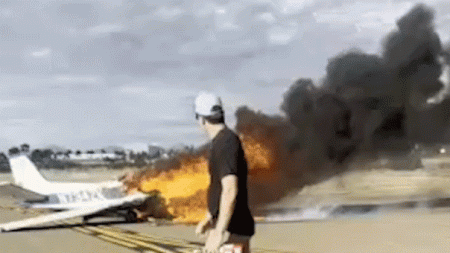
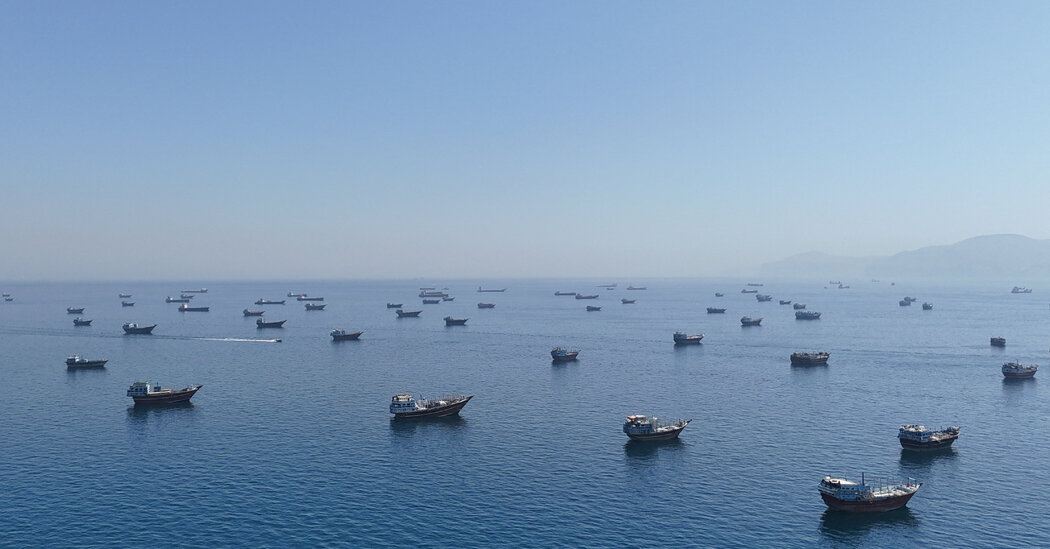
The morning sun had barely crested the jagged horizon of the Omani coastline when the United States military crossed a historic threshold in the annals of naval warfare and rescue operations. Off the coast of Oman, near the highly contested and volatile waters of the Strait of Hormuz, an American AH-64 Apache helicopter gunship went down into the sea while conducting a routine patrol. Amid the immediate chaos of the crash, with a hostile coastline looming nearby and geopolitical tensions in the region stretched to a breaking point, the response was neither a traditional manned patrol boat nor a high-risk helicopter extraction team. Instead, the silent savior that sliced through the waves to rescue the stranded two-person crew was an autonomous surface vessel, marking the first time in history that the United States military has successfully executed a live rescue mission using a remotely piloted sea drone. According to Captain Tim Hawkins, a spokesman for U.S. Central Command, this unprecedented operation was carried out by a U.S. Navy Corsair unmanned surface vessel (USV), operated by the U.S. 5th Fleet’s forward-leaning Task Force 59. While the Apache’s pilot and gunner survived the harrowing crash and were safely transferred to a secondary manned helicopter for medical evaluation, the geopolitical fallout of the downing was immediate. U.S. defense officials quickly pointed to intelligence suggesting the lethal gunship had been brought down by a one-way Iranian attack drone, a claim that Tehran’s state broadcaster vehemently denied, warning western powers against initiating “renewed enemy aggression under the pretext of the crash.” This high-stakes incident does not merely highlight the fragile security environment of the world’s most critical maritime energy choke point; it signals a profound paradigm shift where autonomous assets are no longer just eyes in the sky or explosive weapons of denial, but are now active participants in life-saving combat search-and-rescue (CSAR) operations.
+————————————————————+
| CORSAIR USV SPECIFICATIONS |
+———————-+————————————-+
| Length | 24 feet |
| Propulsion | Diesel fuel |
| Maximum Speed | 35 knots |
| Payload Capacity | 1,000 pounds |
| Operational Range | Over 1,000 nautical miles |
| Manufacturer | Saronic Technologies (Austin, TX) |
+———————-+————————————-+
Anatomy of an Autonomous Rescue
The mechanics of the rescue offer a fascinating glimpse into the operational integration of manned and unmanned systems that the Pentagon has championed for years. The Corsair USV—a sleek, low-profile, 24-foot-long vessel engineered specifically for rugged maritime environments—was selected for the crisis due to a combination of immediate proximity and unique stealth capabilities. Stationed in the area as part of Task Force 59’s recent deployment push that began in late March, the drone was controlled by a human pilot located at a remote operations center, likely hundreds of miles away in Bahrain or stateside. Navigating through the choppy waters of the Gulf of Oman, the autonomous craft closed the distance to the downed crew with a precision that minimized exposure to potential enemy surveillance. Upon reaching the survival raft of the downed Apache’s pilot and co-pilot, the Corsair served as a stable, floating platform where the crew members could climb aboard, shielded from immediate environmental hazards. To ensure the safety of the crew without exposing the autonomous vessel to unnecessary vulnerabilities, the Corsair transported the aviators to a secure, pre-designated maritime rendezvous point, where a traditional, manned military helicopter safely hoisted them aboard to complete the evacuation. Captain Hawkins emphasized that this milestone mission was dictated by “proximity and capability factors,” proving that under the pressure of active operational environments, autonomous systems can make the difference between a successful rescue and a catastrophic capture.
   [ Downed Apache Crew ]
             │
             ▼ (Climbs aboard)
     [ Corsair USV ] ───(Transports to safe zone)───► [ Manned Helicopter ]
                                                             │
                                                             ▼
                                                     [ Safe Return ]
The Rapid Rise of Saronic Technologies
Behind the triumph of the Corsair’s maiden rescue is a story of swift technological disruption within the defense industrial base, spearheaded by Austin-based startup Saronic Technologies. Founded in September 2022, Saronic has bypassed the sluggish bureaucracy traditionally associated with legacy defense contractors to emerge as a prominent force in national security, employing over 1,300 people in less than four years. The company’s meteoric rise is underscored by a massive $392 million production contract with the U.S. Navy, aimed at rapidly scaling the construction of autonomous surface vessels to counter symmetric threats in contested waters. This agile corporate culture is deeply rooted in real-world combat experience; Saronic’s Chief Executive Officer, Dino Mavrookas, spent 11 years as a Navy SEAL, serving on eight combat tours. This deeply personal understanding of the tactical challenges faced by operators on the front lines has clearly influenced Saronic’s design philosophy, prioritizing reliability, high-speed capability, and simplified user interfaces that allow remote operators to execute complex maneuvers under extreme duress. The success of the Corsair near the Strait of Hormuz vindicates the Navy’s decision to bypass traditional acquisition pipelines in favor of venture-backed, specialized defense startups that can design, prototype, and field battle-ready autonomous platforms at a fraction of the time and cost programmatically demanded by older aerospace titans.
                     SARONIC TECHNOLOGIES
                    [ Founded: Sept 2022 ]
                              │
     ┌────────────────────────┴────────────────────────┐
     ▼                                                 ▼
[ 1,300+ Employees ] [ $392M US Navy Contract ]
│ │
└────────────────────────┬────────────────────────┘
▼
[ Corsair USV Production ]
Engineering the Corsair: Built for the Extreme
From an engineering perspective, the Corsair USV is a marvel of medium-class maritime robotics, combining long-endurance propulsion with advanced sensor suites capable of operating in GPS-denied environments. Powered by an efficient diesel engine, the vessel can reach sprint speeds of up to 35 knots, allowing it to respond rapidly to time-sensitive emergencies or intercept moving targets. Its operational range of over 1,000 nautical miles ensures that it can patrol vast swaths of the ocean without the constant need for refueling support, while its robust 1,000-pound payload capacity allows it to carry specialized equipment such as advanced medical kits, thermal imaging cameras, and communication relays. During the rescue off Oman, these technical specifications proved critical; the vessel’s low physical profile made it difficult for adversarial shore-based radars to track, while its high speed allowed it to outpace potential threats in the area. The integration of high-definition optical payloads and satellite-linked navigation systems permitted the remote operator to maintain absolute situational awareness, guiding the drone right to the location of the aviators despite the chaotic sea state. This combination of range, speed, and intelligence-gathering capability positions the Corsair not just as an experimental prototype, but as a fully realized asset capable of executing the military’s most demanding security tasks.
=========================================
CORSAIR USV
[Diesel Power] ———-> Max 35 Knots
[1,000 lbs Payload] —–> Gear/Supplies
[1,000+ NM Range] ——-> Long Patrols
A Global Shift in Unmanned Maritime Strategy
The historic rescue in the Middle East occurs against the backdrop of a broader, global revolution in unmanned systems that is fundamentally rewriting military doctrine from the Black Sea to the Pacific. While high-altitude aerial drones have occupied the public consciousness for decades, the war in Ukraine has dramatically illustrated the asymmetric lethality of maritime and ground-based autonomous systems. Ukrainian forces have successfully used cheap, explosive-laden sea drones to devastate Russia’s Black Sea Fleet, effectively neutralizing major warships and even utilizing autonomous vessels equipped with anti-aircraft missiles to close off airspace to Russian fighter jets. On land, the Ukrainian military has increasingly deployed unmanned ground vehicles to run dangerous logistics missions, evacuate wounded soldiers off the battlefield, and plant mines behind enemy lines. The U.S. Navy’s successful execution of a maritime rescue near the Strait of Hormuz demonstrates that the United States is taking these lessons to heart, evolving its own unmanned doctrine from passive reconnaissance to active, complex utility. By demonstrating that an unmanned vessel can safely interact with and rescue human survivors in a highly contested environment, the military has proven that the future of combat operations relies on a deeply integrated, hybrid ecosystem where machines preserve human life in the most dangerous environments on earth.
┌─────────────────────────────────────────────────────────────────┐
│ GLOBAL DRONE PROPULSION │
├───────────────────┬─────────────────────────────────────────────┤
│ Black Sea Theater │ Ukrainian Sea Drones disrupt major fleets │
├───────────────────┼─────────────────────────────────────────────┤
│ Eastern Europe │ Ground UGVs execute medical evacuations │
├───────────────────┼─────────────────────────────────────────────┤
│ Strait of Hormuz │ US Corsair USV rescues downed Apache crew │
└───────────────────┴─────────────────────────────────────────────┘
Task Task Force 59 and the Future of the Hybrid Fleet
As the U.S. Navy looks to the future, the validation of Task Force 59’s operational model will undoubtedly accelerate the integration of artificial intelligence and robotics across all fleets. Established under the U.S. Naval Forces Central Command in Bahrain, Task Force 59 has spent years quietly laying the groundwork for this moment, logging over 25,000 hours of unmanned surface vessel operations in the Persian Gulf as early as 2022. By establishing a dedicated operational group in January 2024 to focus exclusively on unmanned weapon systems and rescue protocols, the 5th Fleet has successfully transitioned these platforms from experimental laboratory toys to core components of national defense strategy. The successful extraction of the Apache helicopter crew near the Strait of Hormuz serves as a definitive proof-of-concept that will silence critics of the Navy’s autonomous push, showing that USVs can operate reliably in high-threat environments where commanders would hesitate to risk human rescuers. As geopolitical friction points continue to flash across the globe, the lessons learned from this successful rescue will inform the construction of an agile, cost-effective, and lethal hybrid fleet, ensuring that when the next crisis erupts, Uncle Sam’s first responder may very well be a wave-riding, silent autonomous machine.