






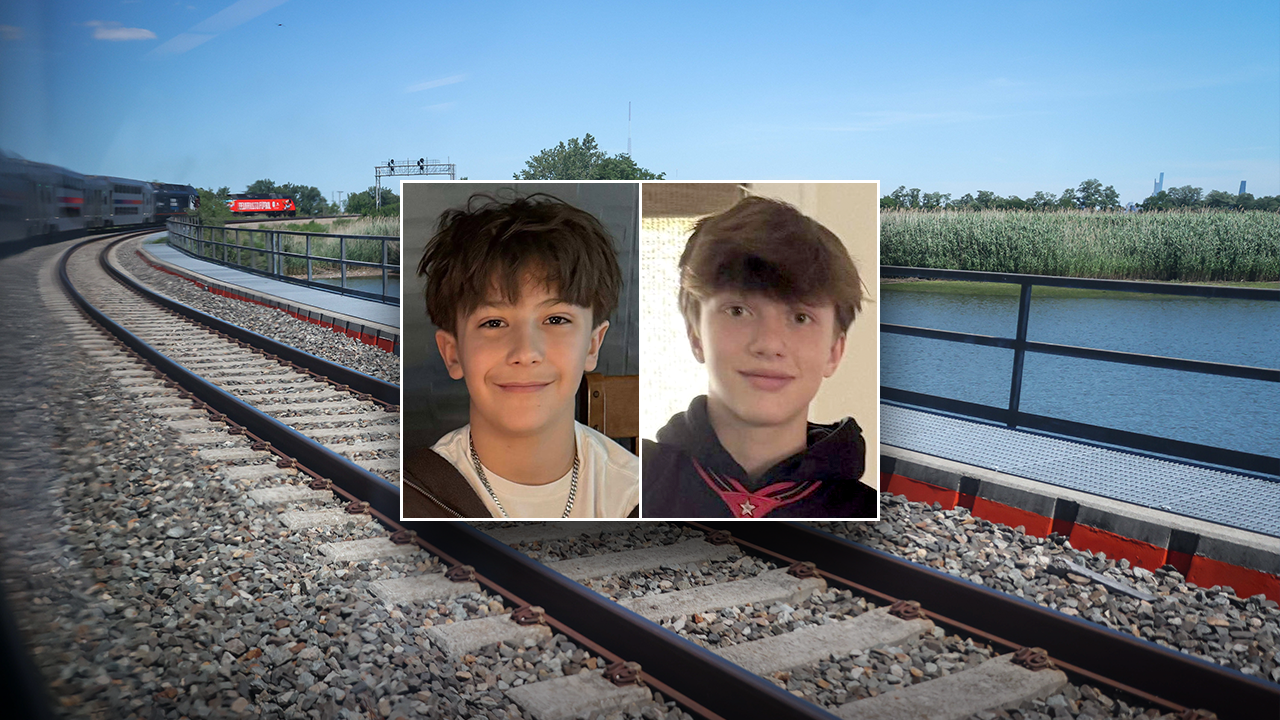
The sudden disappearance of a young child is a parent’s absolute worst nightmare, a harrowing reality that instantly transforms a quiet, comfortable suburban household into a frantic center of panic, desperate prayer, and relentless searching. This chilling scenario unfolded in the peaceful enclave of Montville Township, New Jersey, when three local teenagers walked away from their familiar lives on a chilly Friday afternoon, leaving behind a trail of unanswered questions, fear, and profound worry. To the outside observer, Montville is a serene, picturesque community nestled in Morris County, characterized by tree-lined streets, excellent schools, and a close-knit population where neighbors look out for one another. However, the fragile peace of this suburban haven was shattered at approximately 5:30 p.m. on Friday, when 14-year-old Brayden Morrissey, 14-year-old Dominic Diliberto, and 17-year-old William Connolly vanished from the busy Denville Train Station. The transit hub, which typically serves as a mundane gateway for weary commuters returning home for the weekend, instead became the launchpad for a desperate, multi-state search effort. As night fell and temperatures dropped, the realization that these boys were out in the world alone transformed the incident from a local missing person report into an urgent human drama. It is easy to view such events through the cold lens of police blotters and official statistics, but behind every headline is the agonizing human experience of families frozen in time, staring at empty bedrooms, wondering if their children are warm, safe, or scared. This is not merely a logistical challenge for regional law enforcement; it is a race against time to recover two vulnerable young boys who, for reasons still unknown, decided to step off the edge of their structured lives and into the unpredictable, often unforgiving expanse of the tri-state transit system, leaving their communities praying for their safe return. With each passing hour, the feeling of urgency intensifies, prompting an outpouring of local support and widespread hope for a positive resolution.
To understand the gravity of the situation, one must look closely at the young lives at the heart of this unfolding mystery, particularly the two youngest boys who remain missing out in the world. Fourteen is an age of intense transition, a delicate time when children are caught between the innocence of childhood and the overwhelming complexities of impending adulthood, making them particularly vulnerable to impulsive decisions and the influence of their peers. Brayden Morrissey, just fourteen years old, was last seen wearing a distinctive green hooded sweatshirt, dark sweatpants, and a pair of clean white sneakers—clothing that suggests a casual Friday spent hanging out with friends rather than a planned, long-term journey into the cold night. Alongside him was his friend, Dominic Diliberto, also fourteen, who was cloaked in stark black clothing, a choice of attire that makes him easily blend into the gathering shadows of transit platforms and urban streets. The third member of the trio, seventeen-year-old William Connolly, represented the older, perhaps more mature presence in the group, though still a minor himself in the eyes of the law. As the clock ticked past 5:30 p.m. on that fateful Friday, these three boys stood on the busy platform at the Denville Train Station, surrounded by the rush of weekend commuters, before boarding a train that would carry them far away from the safety of Morris County. Imagining these young boys navigating the complex, cavernous channels of the public transit system on a cold evening evokes a sense of deep empathy and concern, reminding us that beneath any adventurous or rebellious facade lies a child who is fundamentally exposed to the myriad dangers of a world they are not yet fully equipped to handle without parental guidance. Their families remind us that these are not just names on a flyer, but beloved kids whose absence has left a cavernous void in their homes.
The journey took a dramatic and unexpected turn when the trail led law enforcement out of New Jersey and across state lines into the bustling transit corridors of southwestern Connecticut. It was within the bustling, high-traffic confines of the Stamford, Connecticut train station that the Metropolitan Transportation Authority (MTA) police finally made terminal visual contact with the fleeing teenagers, marking a critical pivot point in this rapidly escalating search. Stamford is a major gateway, a sprawling urban transit node where hundreds of trains pass daily, connecting suburban commuters to the heart of New York City and the broader New England region. Amidst the sea of travelers, vigilant MTA officers managed to identify and intercept the group, successfully taking the oldest teenager, seventeen-year-old William Connolly, into protective custody. While William’s safe recovery brought an immediate wave of relief to his anxious family, the encounter quickly turned tense and chaotic when the two younger boys, Brayden and Dominic, made a split-second decision to run. Seizing a fleeting moment of distraction in the crowded station, the two fourteen-year-olds fled from the officers, disappearing into the labyrinthine streets of Stamford and leaving authorities with an agonizingly incomplete rescue. This dramatic flight highlights the desperate, fearful mindset of the young runaways, who, when confronted with the reality of being caught and sent home, chose instead to plunge deeper into the unfamiliar territory of a strange city. This split-second escape raised the stakes of the search to a fever pitch as night once again began to close in, leaving two young lives facing the harsh elements and unknown threats of an urban environment without money, shelter, or any form of adult support. The fact that they crossed into another state demonstrates their determination, but also underscores how quickly runaways can become lost and isolated in the vast commuter network.
In the wake of this dramatic evasion, Montville Township Police Chief Andrew Caggiano has emerged as a steady, guiding voice, coordinating with various regional agencies while shedding light on the psychological landscape of the missing teenagers. Chief Caggiano confirmed to reporters that the evidence suggests the boys left of their own accord, indicating a voluntary runaway situation rather than an abduction or foul play. While this realization rules out some of the most violent immediate scenarios, it does little to ease the profound anxiety of the parents and community, as voluntary runaways are exceptionally vulnerable to exploitation, exposure, and physical harm. The psychology of a teenage runaway is highly complex, often driven by an emotional cocktail of peer pressure, academic stress, or a misplaced desire for independence that blinds them to the immediate dangers of the street. When children run away together, a dangerous herd mentality can develop, where the mutual reinforcement of their shared rebellion prevents them from making the rational decision to seek help or return home. For Chief Caggiano and his dedicated officers, the task is not to punish these boys for their flight, but to wrap them in a blanket of safety and guide them back to a community that is desperately waiting to welcome them home. Police departments across the tri-state area are now on high alert, working under the assumption that these young boys are likely exhausted, frightened, hungry, and increasingly desperate as their resources dwindle. The priority remains abundantly clear: to find them before they make another rash, panic-driven decision that could jeopardize their physical safety or emotional well-being in a world that can quickly become hostile to children wandering the streets on their own. Law enforcement professionals know that the first forty-eight hours are absolutely crucial in these cases, requiring swift and compassionate action before the boys drift further away from safety.
The search area itself presents a daunting geographical challenge, spanning a massive and densely populated transit corridor that stretches from the suburban hills of Morris County to the coastal cities of Connecticut. Montville Township, the boys’ home, is situated roughly thirty miles west of New York City along the vital Interstate 287 corridor, a vantage point that offers easy access to multiple major highways, bus routes, and railway lines that web across the entire New York metropolitan area. This extensive infrastructure, while a marvel of modern commuter convenience, becomes a challenge for search operations, allowing young runaways to travel vast distances in a matter of hours and lose themselves in dense crowds. Because the boys have already shown a proficiency for navigating these train lines, authorities must cast an incredibly wide net, coordinating efforts between local New Jersey police, the MTA, Connecticut state authorities, and transit employees who monitor the stations. Every commuter, ticket agent, and casual bystander along these transit routes represents a potential lifeline, a set of eyes that could spot a green hoodie or a pair of white sneakers on a crowded train platform or busy sidewalk. It is in these critical moments that community vigilance becomes absolutely paramount; the collective awareness of a compassionate public is often the deciding factor in bringing missing children home safely, transforming ordinary citizens into active participants in a vital rescue mission. As the hours tick on, the search depends heavily on the sharp eyes of communities along the rail lines, proving that the safety of our children is a shared responsibility that transcends town borders and state lines, demanding a united effort to ensure these boys are not forgotten or left behind. In today’s digital age, sharing these descriptions on social media can amplify the search across boundaries quicker than any train can travel.
As the search intensifies and hours stretch into days, the emotional toll on the families of Brayden Morrissey and Dominic Diliberto grows exponentially heavier, serving as a poignant reminder of the fragile threads that bind our families and communities together. Every ring of the telephone brings a sudden surge of hope followed by the crushing weight of disappointment, as the parents wait in agonizing suspense for the news that their boys have been found safe and are coming home. The Montville Township Police Department is urging any law enforcement agency, transit worker, or private citizen who makes contact with the boys or has any information regarding their current whereabouts to contact them immediately, as even the smallest, seemingly insignificant detail could prove to be the missing piece of the puzzle that solves this crisis. This is a time for collective empathy, a call for the tri-state community to stand together in solidarity with these families, keeping a watchful eye on train platforms, local parks, convenience stores, and city streets where these boys might seek shelter or sustenance. We must remember that behind the clinical descriptions of clothing and physical statures are two young souls who are loved, missed, and deeply needed back home by those who cherish them and want nothing more than to hold them close once again. With the support of the public and the tireless, round-the-clock dedication of law enforcement, there remains a strong and enduring hope that this frightening chapter will end not in tragedy, but in a warm, emotional reunion where these boys can finally receive the care, safety, and understanding they need to heal, grow, and rebuild their lives. As we hold these families in our thoughts, we are reminded of the power of unity and look forward to the day they are safely embraced at home.