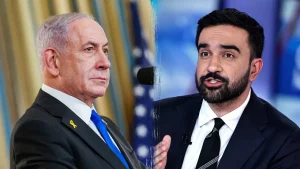






The public square has recently become a theater of mortality, where the frailties of aging politicians are played out on high-definition screens for a global audience to analyze, debate, and lament. We watch in a tense, collective silence as seasoned statesmen freeze mid-sentence at press podiums, struggle to navigate physical staircases, or experience moments of cognitive disorientation during critical legislative debates. These highly publicized events provoke a complex cocktail of public reactions: a mix of human empathy for the inevitable vulnerabilities of old age, partisan frustration over perceived stagnation, and a deeper existential anxiety about who is truly steering the ship of state. Yet, to focus solely on the individual lapses of our most visible public servants is to mistake the symptom for the disease. The striking prominence of gerontocracy in modern politics is merely the visible, glistening tip of a massive demographic and cultural iceberg that lies submerged beneath the surface of our collective awareness. Below this waterline sits a rapidly aging global population, an economic system struggling to redefine retirement, and an institutional landscape that is structurally paralyzed and deeply resistant to generational renewal. The silver-haired faces on our television screens are not outliers; they are a highly visible mirror reflecting a society that has forgotten how to grow old gracefully, how to pass the torch of leadership, and how to prepare the next generation to inherit the earth.
To truly understand this phenomenon, we must first humanize the individuals at the center of the storm rather than dismissed them as mere obstacles to progress. For many of these long-serving leaders, their entire adult lives, personal identities, and sense of self-worth have been entirely synonymous with public service, political influence, and the exercise of power. In a modern culture that often evaluates a person’s dignity almost exclusively by their productivity and professional status, stepping down from a position of authority is often viewed not as a hard-earned reward, but as a form of social and psychological death. There is a deep, quiet tragedy in watching public servants struggle to release their grip on power, precisely because our institutions offer so few dignified pathways for elder statesmen to transition into honored, Advisory, or mentorship-oriented roles. Consequently, we witness a painful paradox: the very leaders who once pioneered transformative changes in their youth become historical anchors in their sunset years, unable to voluntarily exit the stage. This personal reluctance to step aside collides directly with the urgent aspirations of younger generations who find themselves locked out of decision-making spaces. This cultural bottleneck prevents the natural, healthy flow of leadership transition, transforming what should be a seamless passing of the baton into an ideological battleground filled with resentment, alienation, and a profound distrust of institutional authority.
Beyond the gilded halls of congresses and parliaments, the vast, submerged mass of the demographic iceberg reveals a society-wide transformation in how we define work, life, and community longevity. Historically, societies were structured around a demographic pyramid, with a broad base of young people supporting a smaller number of elders. Today, declining birth rates and unprecedented medical breakthroughs have inverted this pyramid into an unstable, top-heavy column, marking a historic shift that is reshaping the global labor market and corporate boardrooms. It is not just our political bodies that are graying; it is our judiciary, our academic institutions, our corporate boards, and even our local civic organizations. In almost every sector, older workers are remaining in their positions far longer than previous generations, sometimes motivated by the intellectual stimulation and social connection of work, but just as often compelled by systemic economic precarity, evaporating retirement safety nets, and the relentless rise in the cost of living. This prolonged retention of senior labor creates a cascading gridlock across the economy, where entry-level opportunities dry up, promotional pathways stagnate, and the fresh, innovative viewpoints necessary to navigate modern challenges are systematically delayed. Thus, the political gerontocracy we criticize is a faithful replica of the corporate and institutional gridlock occurring in communities worldwide, where a legacy generation retains economic and professional dominance well into their golden years.
This demographic stagnation breeds a profound sense of cultural and political alienation among younger generations, who feel that the rules of their future are being written by leaders who will not live to see their long-term consequences. The daily realities, anxieties, and priorities of a young adult entering today’s precarious gig economy—faced with astronomical housing costs, rising inflation, and the impending ravages of climate change—are fundamentally disconnected from the historical experiences of octogenarian leaders whose formative years were shaped by the post-war economic boom. This is not simply a casual difference of opinions, but a profound divide in lived reality; the blistering pace of digital technology, artificial intelligence, and global interconnectedness requires a level of agility and lived fluency that is difficult to sustain after decades spent inside insulated corridors of power. As a result, critical issues of existential urgency, from digital privacy rights to student debt relief and environmental preservation, are often met with outdated legislative templates and a frustrating lack of urgency from leaders who struggle to comprehend the modern digital landscape. This dynamic leaves the youth with the destabilizing impression that the democratic process is not an instrument for collaborative future-building, but rather an outdated, backward-looking estate planning mechanism designed to protect the status quo.
It is highly tempting to blame individual leaders for selfishness or vanity, but this superficial perspective overlooks the deeply entrenched structural scaffolding that actively incentivizes and maintains this system of gerontocracy. Our modern political and economic frameworks are engineered to favor incumbency above all else, utilizing established donor networks, campaign finance mechanisms, and structural barriers to systematically suppress young, diverse challengers. In many ways, our modern institutions have abandoned the ancient, sacred tribal practice of intentional, systematic succession planning, choosing instead to treat any transition of power as an exceptional crisis rather than a predictable, healthy organ of organizational life. Culturally, we lack the imagination to establish graceful exits; we do not cultivate community spaces where older leaders can transition into revered advisory roles where their deep institutional memory can guide and empower, rather than dominate, the incoming generation. Instead, we have constructed a highly competitive, winner-take-all environment where one must either hold absolute power or fade into complete social irrelevance. This systemic design flaw virtually guarantees the kind of stubborn holdouts and abrupt, painful leadership declines we see today across our societal landscape.
Resolving this tension requires us to reject divisive, ageist rhetoric that pits generations against one another, and instead cultivate a collaborative spirit of intergenerational alliance that leverages the unique strengths of every age group. True societal resilience is never achieved by discarding the old in a naive worship of the young, but by fostering a harmonious synthesis where the hard-won wisdom, historical perspective, and comparative peace of our elders are actively merged with the imaginative energy, digital fluency, and moral urgency of our youth. To achieve this healthy equilibrium, we must structurally redesign our institutions by introducing robust, formal mentorship pipelines, transparent succession planning protocols, and modern wellness evaluations that ensure leadership remains vibrant, representative, and dynamic. By reimagining our communities not as segregated generations competing for scarce resources and influence, but as an interconnected ecosystem where each age cohort prepares the soil for the next, we can melt the icy barriers that currently divide us. In doing so, we can construct a future that honors the rich legacy of our past while eagerly, safely embracing the vital promise of our tomorrow.