






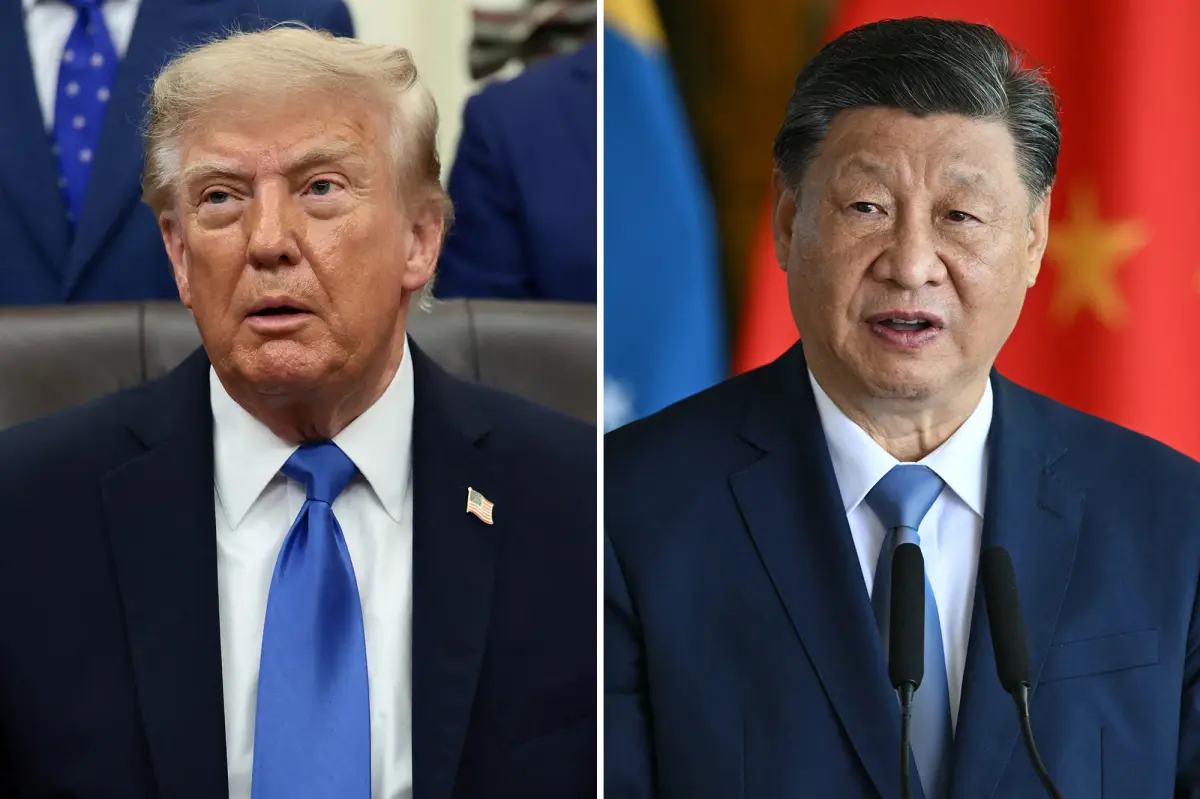
Aboard Air Force One, with the hum of engines filling the cabin and a small pool of reporters gathered around him, President Donald Trump delivered one of those off-the-cuff remarks that tend to define his public persona. The question was about a troubling new report: Chinese entities had allegedly provided Iran with high-resolution satellite imagery of a U.S. military base in Jordan—the same base that Tehran later struck with missiles, killing three American troops. The implications were serious, even explosive. But Trump did not respond with outrage or diplomatic caution. Instead, he shrugged. “They basically do what we do,” he said. When asked whether China spies on the United States, he didn’t deny it, didn’t deflect, didn’t retreat into talking points. He simply acknowledged the obvious, adding, “You know what they say? That China spies on us. I say you’re right, and we spy on them, too.” It was a moment of startling candor from a president who has often blurred the line between diplomacy and blunt talk, and it instantly reframed a potentially damaging national security story as just another chapter in the world’s oldest spy game. For Trump, it seemed, there was nothing shocking about one nation gathering intelligence on another—especially when his own country does the same. The remark was vintage Trump: unfiltered, disarming, and utterly indifferent to the conventions of presidential speech.
The report in question, published by The Wall Street Journal, painted a far more sobering picture. According to U.S. officials, Chinese entities supplied Iran with high-resolution satellite imagery of Muwaffaq Salti Air Base in Jordan, a facility used by American forces in the region. That imagery, officials said, was linked to Iran’s July 17 missile strike on the base—an attack that claimed the lives of three U.S. troops. For the Pentagon and intelligence community, it was a chilling development: for the first time, there was clear evidence that support from Chinese entities to Iran during the ongoing conflict had directly contributed to the deaths of American servicemembers. The officials who spoke to the Journal described it as the clearest indication yet of how Beijing’s relationship with Tehran, and the flow of technology and data between them, could have lethal consequences for the United States. Yet even with that stark assessment, the officials stopped short of accusing the Chinese government of direct involvement. They did not identify the specific entities believed to have provided the imagery, nor did they say the attack was orchestrated or approved by Beijing. That distinction mattered, and it left the situation in a murky, diplomatically sensitive gray zone—one in which the facts were grave, but the chain of responsibility was not entirely clear.
Trump’s reaction, however, suggested he was not interested in turning the episode into a major confrontation with China. When asked whether he planned to raise the issue with Chinese President Xi Jinping during the upcoming visit to Washington, Trump offered a surprisingly measured assessment of his Chinese counterpart. “Xi has behaved reasonably well,” he said, “and we behave reasonably well.” It was a far cry from the kind of harsh rhetoric Trump has often reserved for China on trade, technology, and military competition. Instead, he seemed eager to keep the relationship on an even keel, at least for the moment. That may reflect his broader approach to foreign policy, which has always been transactional and personal. For Trump, the summit with Xi was an opportunity to talk about trade deals, tariffs, and the broader balance of power—not to get bogged down in a dispute over satellite imagery, especially one that involved non-governmental entities. By framing the espionage as mutual and normal, he effectively drained the report of its most inflammatory implications. If everyone spies on everyone else, then no one can be truly indignant. That rhetorical move, while simplistic, served a purpose: it allowed Trump to acknowledge the story without accepting any political damage, and it preserved room for a cordial meeting with Xi at the White House.
At the heart of the episode is an uncomfortable truth about the modern world: intelligence gathering and surveillance are not limited to traditional spy agencies anymore. Satellite imagery, once the exclusive domain of superpowers with advanced space programs, is now commercially available from a range of providers around the world. Chinese entities, whether state-owned companies, private firms, or something in between, are major players in that market. That means the tools of military reconnaissance can be purchased, leased, or shared in ways that were unimaginable just a generation ago. It also means that a country like Iran, which is heavily sanctioned and isolated from many Western technology markets, can still gain access to high-resolution images of sensitive military sites through non-Western suppliers. The result is a blurring of lines between commerce, espionage, and warfare. When a satellite company in one country sells imagery to an adversary of another country, and that imagery is used to plan a deadly strike, the responsibility becomes diffuse. Is the company at fault? Is the government that allowed the sale to happen at fault? Or is it simply the nature of a globalized world, where information flows freely and every nation acts in its own interest? Trump’s answer to those questions was essentially: don’t overthink it. We do it, they do it, and that’s just how the world works. But for the families of the three American troops who died in the attack, the calculus is not so abstract. Their loved ones are gone, and the circumstances surrounding their deaths now include a troubling international dimension that raises questions about who, ultimately, should be held accountable.
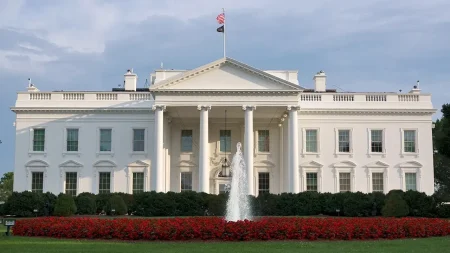
The political and diplomatic tightrope here is delicate. On one hand, the United States has every reason to pressure China to prevent its companies from aiding Iran, particularly when such aid leads to American casualties. On the other hand, accusing Beijing of complicity in a deadly attack could derail the fragile rhythm of U.S.-China relations, a relationship that affects everything from the global economy to climate policy to military stability in the Pacific. Trump’s comments reflect that tension. He did not defend China, but he also did not condemn it. He did not promise consequences, but he did not rule them out. He simply acknowledged the reality of mutual espionage and moved on. That may frustrate those who want a stronger response, but it is consistent with a president who has always preferred personal relationships and deal-making over moral condemnation in international affairs. It also leaves room for Xi’s upcoming visit to proceed without the shadow of a scandal hanging over the summit. The White House, for its part, did not immediately respond to requests for comment, which is perhaps telling. In a situation this sensitive, silence can be a strategy—a way of allowing the story to fade into the background while officials manage the diplomatic calendar behind closed doors. The summit is scheduled for September 24, and much remains uncertain about what will be accomplished, but at least for now, both sides seem determined to avoid turning the satellite imagery report into a full-blown crisis.
As Xi prepares to set foot in Washington, the broader implications of this moment are hard to ignore. The relationship between the United States and China is one of the defining rivalries of the twenty-first century, marked by competition in trade, technology, military power, and influence across the globe. But it is also a relationship built on a certain amount of mutual understanding—an unspoken acknowledgment that both nations have intelligence services, both engage in espionage, and both protect their own interests above all else. Trump’s comments captured that understanding with remarkable simplicity. “They basically do what we do,” he said, and in that short sentence, he summed up a worldview in which morality takes a backseat to realism. Whether that approach is wise or dangerous is a matter of debate. Critics would argue that drawing moral equivalence between the United States and China on spying ignores the fact that Chinese entities may have helped Iran kill American soldiers. Supporters would argue that Trump is simply being pragmatic, refusing to overreact to a report that may involve companies acting outside government control. Either way, the episode is a reminder that in the modern era, espionage is not a game of shadowy agents and dead letter boxes—it is a vast, commercialized enterprise involving satellites, data, and global supply chains. And sometimes, that enterprise has deadly consequences. For now, the world waits to see how Trump and Xi will navigate this delicate moment. But if Trump’s words aboard Air Force One are any indication, the conversation will likely be less about moral outrage and more about power, interests, and the enduring truth that nations, like people, watch each other closely—and always have.