


Trump’s High-Stakes Gambit: Canceling Peace Talks Amid Iran Standoff
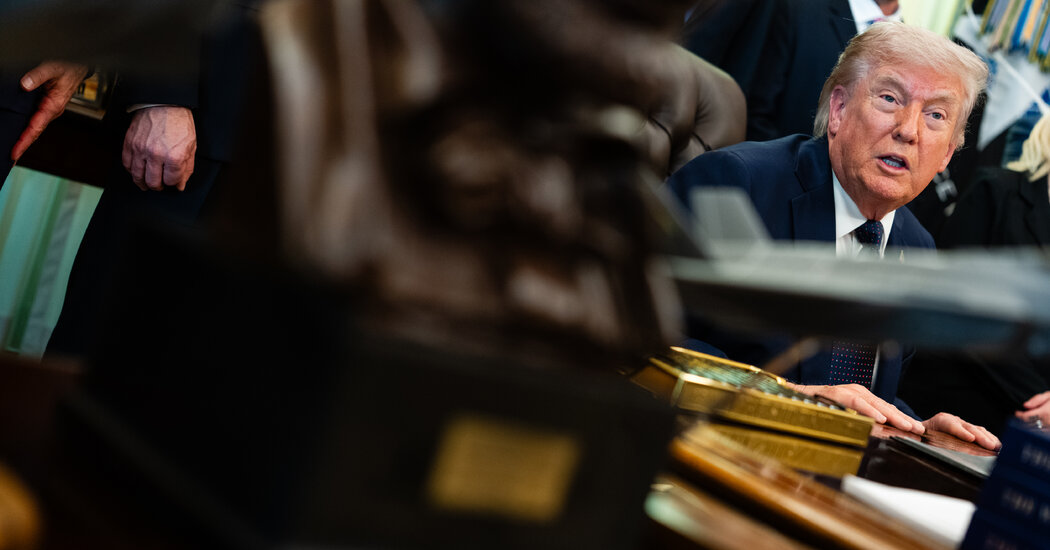
In a bold move that underscored his brash negotiating style, President Donald Trump abruptly canceled a high-level delegation’s scheduled trip to Pakistan on Saturday, derailing potential talks aimed at ending a mounting crisis with Iran. Just as Special Envoy Steve Witkoff and the president’s son-in-law, Jared Kushner, were poised to board planes for an arduous 18-hour journey to Islamabad—accompanied by top aides to Vice President JD Vance—Trump intervened with a characteristic flourish. “I’ve told my people a little while ago, they were getting ready to leave, and I said, ‘Nope, you’re not making an 18-hour flight to go there. We have all the cards,’” the president declared in a statement. This decision came right on the heels of Iranian officials concluding their own negotiations there without any clear breakthroughs, signaling a deepening impasse in a conflict that’s already dragged on for over a month. As global tensions flare in the Middle East, Trump’s action raises questions about whether his administration is prioritizing leverage over dialogue in what could become a prolonged standoff with one of America’s most formidable adversaries.
Pakistan has emerged as an unlikely mediator in this fraught drama, serving as the linchpin in attempts to foster direct U.S.-Iranian dialogue. The delegation was assembled to pursue concrete outcomes, including Iran’s potential surrender of its nuclear stockpile and commitments to scale back its nuclear program—a goal that’s eluded Western negotiators for more than a decade. Vice President Vance’s previous foray to Islamabad yielded little fruit, highlighting the entrenched challenges. Officials in Islamabad, keen on stabilizing regional dynamics, have hosted rounds of talks under the guise of neutral facilitation, but the abrupt cancellation exposes underlying frustrations. Iranian Foreign Minister Abbas Araghchi and his team wrapped up their sessions in Pakistan on Friday without announcing any substantive progress, and Iran’s foreign ministry had already stated upfront that no bilateral U.S.-Iran meetings were on the agenda. This setup, meant to bridge divides, now underscores the perils of shuttle diplomacy in such volatile territories, where trust is scarce and motivations intersecting yet divergent.
At the heart of the deadlock are intractable disputes over Iran’s nuclear ambitions and control of key maritime chokepoints, issues that have simmered since failed nuclear agreements under past administrations. The U.S. administration’s aspirations extend beyond mere cease-fires; they demand not just a halt to enrichment activities but the outright handover of enriched uranium stockpiles, a non-starter for Tehran. Overlaying this is the tug-of-war for dominion over the Strait of Hormuz, a vital artery through which roughly a fifth of the world’s oil flows daily. Iran’s grip on this strategic waterway has allowed it to throttle shipping routes, inflating global oil prices and sending ripples through economies worldwide. Previous diplomatic overtures have stalled here, with neither side willing to cede ground. Analysts note that Trump’s unilateral extension of an earlier cease-fire—sparing Tehran from military escalation—was pitched as an olive branch, inviting fresh proposals. Yet, the canceled trip suggests impatience in Washington, where the narrative of “having all the cards” reflects a calculation that time favors American interests in squeezing Iran economically and strategically.
Recent maneuvers on the negotiating front reveal a pattern of cautious back-and-forth that has yet to ignite progress. Iranian officials’ hasty exit from Pakistan, accompanied by Araghchi’s evasive commentary on aims, leaves the door ajar for continued indirect exchanges. Just this week, the United States forwarded a detailed written proposal to Iran, outlining potential frameworks for agreement that touch on everything from nuclear safeguards to regional security concerns. This document, reportedly comprehensive, tries to navigate the minefield of Iran’s enrichment program—the very core of Western worries about proliferation—and the disposition of its amassed uranium. While not fully disclosed publicly, insiders describe it as an attempt to reboot talks frozen by mutual recriminations. However, Iran’s theocratic regime, bolstered by its resilience after significant blows, shows no signs of yielding easily. The absence of a planned direct meeting underscores how intermediation through Pakistan has become the default pathway, one fraught with pitfalls in a region where alliances shift like desert sands.
The broader implications of this diplomatic chess game can’t be overstated, especially given the U.S. military’s demonstrated might in recent skirmishes. American forces have conducted precision strikes on thousands of Iranian-linked targets, crippling elements of Tehran’s naval capabilities and eliminating key figures, including top military leaders. Yet, despite these setbacks, Iran’s grip on power remains unbroken, its forces maintaining a chokehold on the Strait that continues to disrupt supply chains and exacerbate inflationary pressures. Oil markets have bucked wildly, with prices spiking as a result, threatening economic recovery worldwide. Trump’s latest gambit—eschewing the overture of face-to-face talks—could embolden hardliners in Iran while galvanizing allies concerned about prolonged unrest. For Pakistan, this episode might strain its delicate balancing act between regional powers, potentially complicating its own security calculus. As the Middle East watches, the question looms: Is Trump’s tough stance a strategic pivot toward victory, or a risky gamble that prolongs chaos?
Looking ahead, experts in international relations are dissecting Trump’s strategy as a mix of brinkmanship and calculated opportunism, reminiscent of his approach to past negotiations like the Iran nuclear deal under Obama. Foreign policy analysts point out that by holding firm and forcing opponents to make the first move, as evidenced by telling negotiators to await calls from Islamabad, Trump is inverting traditional diplomacy. This could pressure Iran into concessions, or conversely, lead to escalations if Tehran perceives weakness in Western resolve. The extended cease-fire, while providing breathing room, has not fostered goodwill; instead, it has highlighted asymmetries where U.S. technological superiority contrasts with Iran’s strategic depth in a war of attrition. Historians draw parallels to the Cold War, where standoffs over proxies often dragged on without resolution, eroding economies and lives. As the world economy teeters on the edge—reeling from oil shocks and supply disruptions—the need for a sustainable agreement grows urgent. Yet, with Iran’s leaders doubling down on their narrative of resistance and the U.S. asserting dominance through force rather than compromise, the path to peace remains obscured. Observers speculate that future rounds, if they materialize, might pivot toward multilateral forums, but for now, Trump’s cancellation serves as a potent reminder: in high-stakes geopolitics, possession of the cards doesn’t guarantee a winning hand. The coming weeks will test whether this bold play pays dividends or backfires spectacularly, shaping the trajectory of Middle East stability for generations.