

Fragile Peace: Trump’s Cease-Fire Extension in Lebanon Offers Temporary Relief but Sparks Doubts
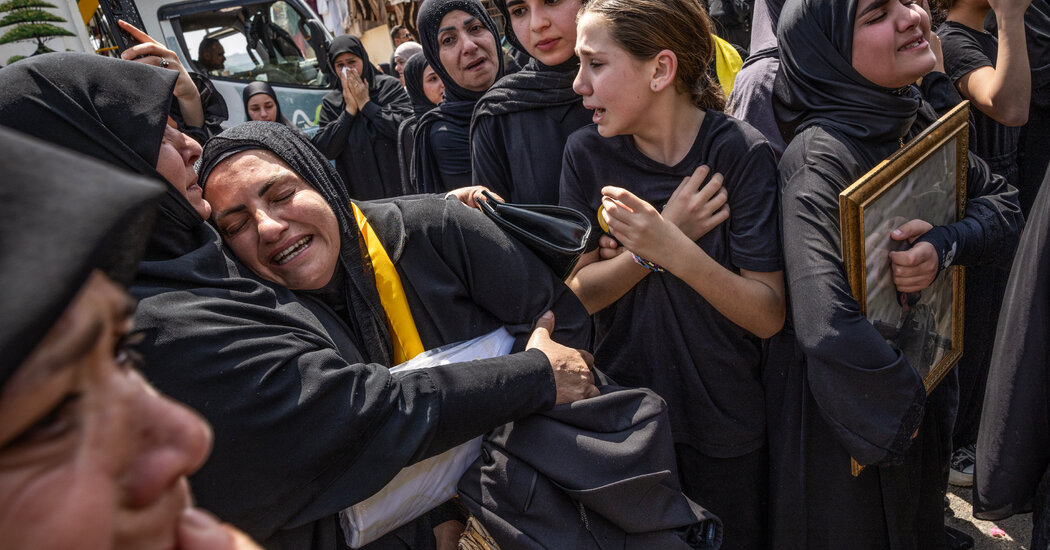
In a move aimed at stabilizing a volatile region, President Donald Trump announced on Thursday a three-week extension to the ongoing cease-fire in Lebanon, providing a much-needed breather in a conflict that has exacted a devastating toll. The pause in hostilities comes after Israel and the Hezbollah militant group, backed by Iran, had waged a fierce exchange that has claimed nearly 2,500 lives, uprooted hundreds of thousands of families, and left homes, bridges, and essential infrastructure in ruin. This extension, brokered through U.S. diplomatic channels, halts the large-scale aerial bombardments that characterized the recent fighting, offering a sliver of hope for the war-weary populace scarred by displacement and loss. Yet, as the dust settles on this latest accord, questions linger about its durability and true impact on the ground, where the echoes of artillery and sleepless nights persist.
The fragility of this truce is evident in the muted responses from the parties involved. Despite rare diplomatic discussions held in Washington earlier, neither Israel nor Lebanon has issued public statements on the extension. Hezbollah, which was not a direct participant in the U.S.-mediated talks, has indicated a grudging willingness to adhere to the terms, contingent on Israel’s compliance. Analysts view this arrangement not as a robust cessation of hostilities but as a precarious de-escalation, one that could unravel at any moment. David Wood, a seasoned Lebanon analyst at the International Crisis Group, succinctly captures the sentiment by calling it “not so much a cease-fire as a limited de-escalation.” This perspective underscores the underlying tensions, where the agreement’s survival depends on mutual restraint rather than enforced peace, highlighting how the conflict’s dynamics continue to simmer just beneath the surface of official calm.
Under the specifics of the truce, as outlined by the U.S. State Department when it was initially unveiled in mid-April, Israel retains the prerogative to defend itself against imminent or ongoing threats. This provision has been invoked to justify persistent military actions within Lebanon, particularly in the southern regions that serve as Hezbollah’s stronghold. Here, the group wields significant influence, garnering widespread local support amid its long history of resistance. Israeli forces have concentrated strikes in this area, reflecting a strategic focus that mirrors their operations elsewhere in the region. Over the past weeks, they’ve demolished infrastructure and expanded their physical presence, occupying substantial swathes of territory in what appears to be a deliberate effort to reshape the landscape. Just last Saturday, the Israeli military reported targeting rocket launchers beyond their occupied zone in southern Lebanon and reiterated warnings to displaced residents to steer clear of controlled areas, illustrating the ongoing nature of these encroachments that test the truce’s boundaries daily.
The human cost of these violations is starkly evident in reports of civilian casualties. An Israeli strike on Saturday claimed at least four lives in the southern town of Yohmor, according to Lebanon’s state news agency, which cited the health ministry. Israel has yet to comment on the incident, leaving a void filled by Hezbollah’s defiant actions. The group has continued its skirmishes, launching attacks on Israeli positions and claiming victories such as downing reconnaissance drones. Ali Fayyad, a prominent Hezbollah-affiliated lawmaker, issued a scathing critique on Friday, dismissing the extension’s value amid relentless Israeli assaults. “It holds no meaning,” he declared, lambasting the accord for imposing negligible constraints on Israel. This rhetoric points to a deepening distrust, where each side interprets the cease-fire through its own lens of survival, complicating prospects for a lasting resolution.
Broader geopolitical threads weave into this Lebanese standoff, amplifying its precariousness. The cease-fire is intricately tied to discussions between the United States and Iran, raising concerns that any impasse there could ignite renewed fighting here. Mr. Wood notes that the truce hinges heavily on President Trump’s personal focus, emphasizing how his influence drove the initial pause to avoid derailing Iranian negotiations. Echoing patterns from the last nominal truce in late 2024, Israel ramped up strikes on Hezbollah’s infrastructure, a tactic that degraded the group’s capabilities but did not eradicate its will to resist. When the U.S.-Israeli confrontation with Iran escalated, Hezbollah surprised observers by unleashing rocket barrages into northern Israel, proving its resilience. Paul Salem, a senior fellow at the Middle East Institute, suggests Hezbollah’s current strikes serve a dual purpose: asserting their right to retaliate against occupation and pressuring for a comprehensive cease-fire akin to those in 1996 or 2006. This strategy underscores a calculated gamble, aiming to force concessions from Israel and its allies through sustained pressure, even as the risk of escalation looms large.
The Israeli approach in Lebanon draws parallels to its operations against Hamas in Gaza, where declared cease-fires have coincided with ongoing military maneuvers, territorial occupations, and destructive strikes. Experts highlight how Israel’s demolition of southeastern Lebanese villages appears modeled on its Gaza campaign, signaling an intent to redraw borders and diminish militant capabilities permanently. On Friday, Israel escalated this pattern by urging evacuation from Deir Aames, a southern town outside its established six-mile defense line, before launching airstrikes. This move, justified by claims of prior Hezbollah rocket firings from the area, sparked fears of expanding hostilities beyond the cease-fire’s parameters. For displaced communities, the reality on the ground starkens the gap between diplomatic announcements and lived experiences. Kamil Mohamed Mansour, an 78-year-old refugee from Tallouseh now sheltering in a Beirut stadium tent, encapsulates this disillusionment: “What cease-fire are you talking about? I’ve lost everything and am sitting here alone.” His words, spoken on a balmy afternoon amid the makeshift camp’s clamor, reflect a broader narrative of shattered lives, where proclamations of peace feel hollow without tangible security. As the three-week window ticks on, the fragile truce serves as both a lifeline and a potential tinderbox, reminding the world of the delicate balance required to avert another flare-up in this embattled corner of the Middle East. The stakes could hardly be higher, with Lebanon’s stability hanging in the balance alongside regional ambitions that extend far beyond its borders. Observers will watch closely as negotiations unfold, hoping for a pathway to genuine cessation that honors the human suffering endured thus far.