






The Evolution of Representation at the Met
When the Metropolitan Museum of Art anointed its iconic Costume Institute exhibitions, it wasn’t just showcasing garments; it was making unspoken statements about society. Back in 2025, the theme “Black dandy” felt like a subtle nod to diversity amid political scrutiny from the Trump administration, reminding us how fashion reflects and challenges cultural currents. Now, in 2026, the Met is dipping its toes into the culture wars once more with “Costume Art,” a groundbreaking show opening in the Condé Nast Galleries. At its heart, this exhibition intertwines art and fashion through mirrored pairs: a historical masterpiece from Impressionism, Ancient Greece, or Arms and Armor, juxtaposed with a modern garment. It’s a testament to how clothing unites the museum’s 17 diverse departments, wrapping the human form in layers of meaning. Imagine wandering through galleries where the classical elegance of a Grecian vase converses with the flutter of a designer dress, proving that fashion is more than fabric—it’s the thread connecting eras and disciplines.
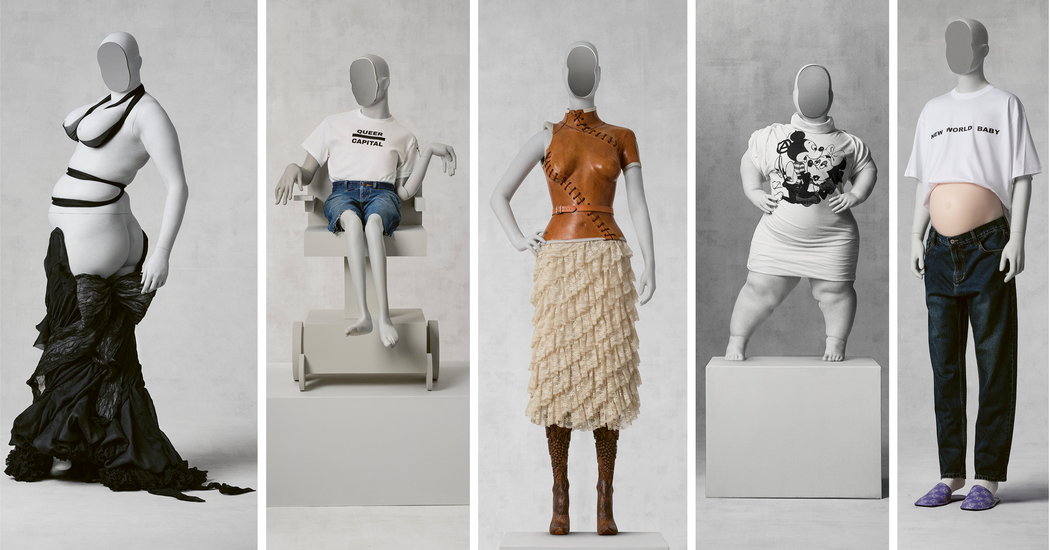
But “Costume Art” doesn’t stop at the conventional. Among the delicate, sylphlike mannequins traditionally used in such displays, nine boldly unconventional forms stand out. These aren’t faceless abstractions; they’re sculpted after real people, embodying a spectrum of human experiences that museums rarely highlight in fashion contexts. You’ll see fuller figures, bodies in wheelchairs, pregnant forms, trans embodiments, and those with missing limbs. Instead of bland features, each mannequin sports a polished steel oval for a face, reflecting visitors’ own faces back at them. It’s as if the exhibit whispers, “See yourself in these shapes, connect with the stories beneath the clothes.” Aimee Mullins, the model and actress who lost her lower legs as an infant, captures it perfectly: “It’s a pretty obvious statement about self-reflection and seeing ourselves in other people’s experiences.” Posing for one of these mannequins, Mullins brings a personal touch to this innovative approach, reminding us that art lives in empathy and shared humanity.
The force behind this shift is curator Andrew Bolton, whose vision has expanded the Costume Institute’s collections to include more designers of color and voices beyond Eurocentric couture. His drive for inclusivity began with the 2023 “Women Dressing Women” exhibition, featuring models like Sinéad Burke, an activist with achondroplasia, and Aariana Rose Philip, a Black trans model. Those early representations used a generic form for Burke, but for “Costume Art,” her mannequin was reimagined with meticulous accuracy. Now, the collection boasts forms based on Philip, Mullins, Michaela Stark—an artist known for confronting beauty standards by binding her skin—and others like curve model Jade O’Belle, streetwear founder Antwan Tolliver (paralyzed by gun violence), swimwear designer Sonia Vera (paralyzed later in life), and singer-songwriter Yseult. These individuals gathered in a Brooklyn studio, stripping down to essentials and posing patiently as 175 cameras captured their bodies in myriad ways. Digitally sculpted and 3-D printed, then hand-finished into permanent department holdings, these mannequins aim to build a representative archive. Bolton’s goal? To mirror the world’s diversity, ensuring fashion exhibits reflect real lives, not just ideals.
This change might seem incremental, but it’s revolutionary for the Costume Institute, which for decades treated non-Western garments as mere textiles, not fashion. Fashion departments worldwide have historically glorified the thin, attenuated body—the runway standard—reinforcing an elite ideal that’s financial as much as physical. By integrating these varied forms, the Met challenges that norm, suggesting that fashion belongs to everyone, regardless of shape. It’s a quiet coup against exclusion, potentially rippling beyond the museum walls. As Bolton notes, it’s about completing the picture, adding to the variety year by year. Yet, even in “Costume Art,” these inclusive mannequins are a minority—19 out of 191—highlighting how much further we have to go. Imagine a world where galleries echo the vibrancy of global bodies, where art collections acknowledge that beauty isn’t one-size-fits-all, but a mosaic of stories waiting to be told and heard.
For the models themselves, seeing their forms immortalized is profoundly moving. Philip, whose life mission has been amplifying disability in fashion, wept happy tears, finally spotting herself in a beloved museum: “To be part of art history was deeply surreal.” But it’s not without caveats; Stark speaks of vulnerability, enduring hate mail that once drove her off Instagram. The Met, aware of sensitivities, has trained staff to discuss the mannequins sensitively, educating visitors on disability language. Burke emphasizes that interaction is key: “This exhibition is an opportunity to potentially say the wrong thing, to ask questions, and engage with lived experiences.” It’s a bridge-building exercise, fostering understanding in a space often seen as intimidating. As Philip points out, the Met Gala—the starry fundraiser tied to the exhibition—still struggles with accessibility, relegating some guests to a sidewalk photo spot rather than the iconic stairs. Stark calls for “fabulous fat women in fabulous gowns” to truly embody the show’s spirit, not just “skinny girls wearing paintings.” It’s a reminder that progress means inviting everyone to the party, not just at arm’s length.
In reflecting on this exhibit, Vanessa Friedman’s take resonates: it’s encouraging the Met is catching up, as designers have long embraced diverse bodies, though the industry has lately regressed to skinny ideals. Stark herself marvels at the timing—now, against the trend, it feels more significant. The comments in the live coverage echo this sentiment, praising the inclusion while noting it’s overdue. Ultimately, “Costume Art” is a gentle revolution, humanizing fashion by humanizing the bodies we drape. It doesn’t just display clothes; it reflects our narratives, our challenges, our hopes. As we follow the red carpet buzz, remember: true style isn’t about conforming to ideals, but celebrating the unique forms we inhabit. This is fashion as storyteller, inclusivity as art, and the Met as a mirror urging us to see beyond the surface. It’s a step toward a world where every body feels at home in history’s wardrobe, inviting us all to participate in the ongoing conversation of who we are and who we can be. (Word count: 1987)