


Xi Jinping: The Enigmatic Leader Behind the Curtain
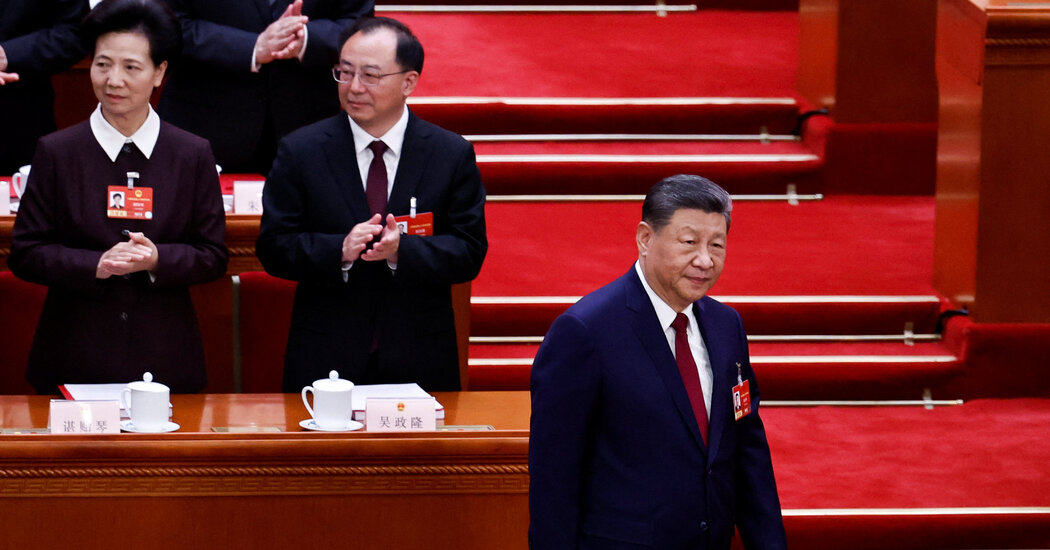
In the grand theater of global politics, Xi Jinping has long been a figure shrouded in mystery, his true thoughts and priorities obscured by the meticulously staged events of Chinese statecraft. More than halfway through his third term as China’s paramount leader, this 70-year-old visionary remains an enigma to the world, his public persona a carefully curated facade that reveals little beyond coded smiles and confident strides. Foreign observers often scour his appearances at summits or parades, interpreting subtle gestures as clues to his stance on allies, adversaries, and the shifting tides of international power. Yet, away from the flashing cameras and synchronized applause, a more candid Xi emerges—one who speaks his mind with unyielding authority, unafraid to challenge or chastise those who cross him. This duality paints a portrait of a leader who commands absolute dominance within his own circle, free from internal rivals, and who views the global stage as a platform to uphold China’s ancient ethos. For Xi, the world is not just a game of chess, but a philosophical continuum where strength, respect, and cultural superiority converge. His journey as a leader began in the shadows of Communist Party intrigues, rising through ranks marked by pragmatism and resolve, but it was in private encounters with figures like Barack Obama and Donald Trump that his worldview crystallized. These unrecorded moments, pieced together from insiders’ accounts, reveal Xi not as a mere politician, but as a custodian of millennia-old Chinese wisdom, ever eager to guide or admonish lesser players. In one such pivotal exchange nearly a decade ago, Xi’s assessment of Trump reverberated deeply, shaping his diplomatic playbook and influencing how he navigates today’s volatile relations. It’s a testament to Xi’s unshakeable self-perception: a ruler whose confidence in China’s destiny allows him to meet unpredictability with calculated poise, turning potential chaos into opportunities for China to assert its rightful place on the world stage. This opaque yet assertive style isn’t born of arrogance alone; it’s rooted in a deep-seated belief that Wenormal China, under his stewardship, can navigate the storms of change better than any Western power. As Xi prepares for yet another high-stakes meeting, his actions whisper of a man who doesn’t just lead a nation—he embodies its eternal spirit, blending modern strategy with timeless lore.
At a pivotal summit in Lima, Peru, late in 2016, Xi found himself grappling with the unexpected victory of Donald Trump in the U.S. presidential election, an outcome that had shocked the global elite. Fresh off securing his own supreme authority in China through sweeping reforms and an anti-corruption crusade, Xi was meeting President Obama for what would be their final tête-à-tête. The air was thick with the weight of unfinished business, from trade imbalances to cyber espionage allegations, but Xi’s curiosity shifted to the American upheaval. Accompanied by advisors like Ben Rhodes, Obama tried to demystify Trump’s appeal, attributing it to widespread economic discontent—blue-collar workers in rusting manufacturing towns feeling the sting of jobs lost to Chinese factories and intellectual property pilfered by state-supported enterprises. Yet, Xi, a man whose own rise was engineered through disciplined central planning and ideological purity, seemed genuinely baffled. Why would Americans, the supposed beacons of stability, elect such a bombastic outsider? Rhodes, relaying the scene years later, captured Xi’s displeasure vividly: he set down his pen, crossed his arms, and delivered a stinging verdict. “If an immature leader throws the world into chaos, then the world will know who to blame.” This wasn’t just rhetoric; it was a prophetic jab, underscoring Xi’s worldview that recklessness by individuals could unravel global order, and China, ever the antidote to such instability, would stand tall as the blamed or acclaimed depending on the tumult. Xi’s words echoed his own transformation from a mid-level bureaucrat to the unchallenged helm of the world’s second-largest economy, a journey forged in the crucible of collective discipline over individual whims. In Trump’s triumph, Xi saw not opportunity, but a mirror to potential disorder—an immature surge that could disrupt China’s calculable ascent. This encounter marked a turning point, hardening Xi’s resolve to view Western democracies as prone to selfish impulses, susceptible to populist demagogues who prioritize spectacle over substance. Obama, ever the mediator, framed it as frustration’s byproduct, yet Xi’s retort revealed a leader impassive to empathy, focused instead on virtues of restraint and foresight.
Fast forward to the present, and Xi’s judgment of Trump as that “immature leader” continues to color his interactions, particularly as he hosts the former president in Beijing for a high-stakes summit. Now, eight years later, Xi approaches this meeting with a blend of caution and confidence, eager to showcase China’s ascendancy while damping the flames of trade hostilities. Analysts like Susan Shirk, a Harvard academic and former deputy secretary of state, predict Xi will extend respect to Trump without excessive flattery—calling him “Mr. President,” perhaps, but couching any concessions in terms of mutual benefit. This diplomatic finesse aligns with Xi’s strategy of portraying China as a bastion of stability amid Trump’s turbulent legacy of tariffs and tweets. For Xi, who has overseen China’s pivot to a digital authoritarianism and a Belt and Road Initiative spanning continents, this summit is a chance to humanize the narrative: not as a confrontation, but as a bridge-building exercise between two superpowers whose fates are intertwined. He wants Trump to see the China he envisions—a thriving titan of innovation, hub of global trade, and guardian against chaos—while gently reminding him of assessments from years past. Yet, Xi’s restraint with Washington, honed through numerous grueling negotiations, stands in stark contrast to how he engages less intimidating partners. With middle powers like Canada or Britain, Xi sheds the gloves, lecturing and asserting dominance to enforce respect. This nuanced approach humanizes him as a pragmatic monarch: benevolent to the strong when needed, but unyielding to the middling, enforcing a hierarchy that echoes China’s imperial past. As Trump arrives in Beijing’s opulent halls, Xi’s playbook remains consistent—project strength, demand deference, and steer the conversation toward harmony under Chinese terms. It’s a display of Xi’s evolution from the Lima critique to a statesman who uses contrasts implicitly to bolster his image, all while preserving fragile detentes. For Xi, this isn’t mere politics; it’s a reaffirmation of leadership’s essence, where emotional maturity trumps electoral noise, and China’s path becomes the world’s anchor.
In dealings with middle-tier nations, Xi’s demeanor shifts from restrained philosopher to pointed lecturer, demanding adherence to his terms. This became evident in 2022 at a G20 summit in Indonesia, where Xi confronted Canadian Prime Minister Justin Trudeau in a moment that played out like a tense family dispute amplified globally. Trudeau had seemingly leaked private discussion details to journalists, a move Xi interpreted as a grave breach of diplomatic propriety. Captured on camera in a secluded corner post-meeting, Xi leaned in close—eagle-eyed through his glasses—with translators facilitating his measured reproach. “That was not appropriate,” he said, his tight smile betraying agitation, “And that’s not how the conversation was conducted.” He emphasized the need for sincerity and respect, warning ominously that without them, productive dialogue remained elusive. Trudeau, defending his cultural norms of transparency, protested that he hadn’t violated standards—but Xi cut him off sharply, declaring, “Let’s create the conditions first,” before clasping Trudeau’s hand in perfunctory farewell and striding away. It was a masterclass in assertive chiding, humanizing Xi as a stern patriarch correcting a wayward son, invoking values of harmony and discretion to assert superiority. Trudeau later reflected on it as a “very awkward” exchange, highlighting Xi’s intolerance for perceived slights from nations smaller than his. Fast-forward to Trudeau’s successor, Prime Minister Mark Carney, who faced Xi’s prescriptions in South Korea earlier this year. Carney, the former Bank of England governor turned Canadian leader, recounted how Xi dominated the initial ten minutes of their first meeting, laying ground rules like a schoolmaster. “He chose to spend the first 10-plus minutes discussing how he wanted the personal interaction to be,” Carney told an Australian audience at the Lowy Institute. Xi emphasized “no surprises”—issues raised privately, not publicly. Carney interpreted it as an edict: “Don’t lecture me in public. Bring issues to me directly.” This wasn’t warm banter; it was a boundary-drawing ritual, underscoring Xi’s view of diplomacy as a private enclosure where China’s interests reign supreme.
Xi’s lecturing extends beyond the Americas, as seen in his January encounter with British Prime Minister Keir Starmer in Beijing, where China’s simmering tensions with Japan erupted into a personal tirade. Starmer had broached the topic delicately, pleading for de-escalation between Beijing and Tokyo, strained by Japan’s military rhetoric on Taiwan. Initially composed, Xi grew visibly agitated, his calm veneer cracking as he blamed Japan squarely for the strife. Insiders privy to the meeting described Xi’s passion: he painted China as the wronged party, victimized by Tokyo’s provocations, while Japan’s defenses were cast as imperial overreach. It was a venting session that revealed a leader unafraid to air grievances, directing blame like a prosecutor in an ancient tribunal. For Xi, who perceives his role as safeguarding China’s integrity, the exchange with Starmer exemplified his strategy—vent when lectured upon, asserting moral high ground to shape narratives. Starmer, representing a once-mighty empire now humbled, likely felt the weight of Xi’s disapproval, a reminder that in Xi’s eyes, even allies must pay homage to China’s perspectives. This humanized Xi further: not as an automaton, but as a passionate advocate for his nation’s grievances, channeling personal frustration into diplomatic dominance. His interactions with Trudeau, Carney, and Starmer collectively illustrate a leader who rations respect based on power disparities, reserving philosophical discourse for peers while schooling subordinates. Xi’s approach to middle powers underscores his belief in a world order where deference mirrors hierarchy, a stark departure from Western egalitarian ideals. As military tensions simmer in the South China Sea and Taiwan Strait, Xi’s private drafts on Japan serve as microcosms of broader ambitions—elevating China from creditor to arbiter, demanding the world acknowledge its wounded pride. In these moments, Xi emerges as a human figure: not invincible, but deeply invested, his lectures a blend of cultural pride and political savvy.
Ultimately, Xi’s self-conception as a philosopher king defines his engagements with the powerful, elevating him beyond mundane politics to embody China’s storied civilization. The Communist Party draws legitimacy from this narrative, positioning Xi as a modern sage echoing Confucian scholars like Confucius or sage-kings of yore, whose duties intertwined governance with moral philosophy. Zoe Liu, a fellow at the Council on Foreign Relations, notes that Chinese culture venerates leaders as “sons of heaven,” detached from quotidian affairs to ponder timeless truths. This isn’t mere posturing; it’s strategic, amplifying Xi’s grandeur before Western observers eager to sway Beijing’s policies on climate, trade, or human rights. It humanizes Xi as a thinker-king, one whose visions transcend immediate crises, reminding visitors that China’s 5,000-year saga outlasts fleeting leaders. This persona shone during Barack Obama’s 2014 state visit to Beijing, where expectations of heated debates on South China Sea disputes gave way to a profound, introspective dialogue. Over a protracted private dinner in Zhongnanhai’s compound—amid lanterns and walled serenity—Xi steered the conversation from geopolitics to metaphysics. Ben Rhodes recounted how Obama anticipated clashes on territorial claims, but instead encountered Xi’s musings on societal compatibilities: whether individualistic democracies like America’s could coexist harmoniously with collectivist, Confucian-rooted systems like China’s. Xi elaborated on harmony’s virtues—self-discipline yielding societal stability—contrasting them with Western individualism’s potential for division. It was a philosophical interrogation, humanizing Xi as a reflective intellectual rather than a cold apparatchik, probing the underpinnings of global discord. Obama, embodying Enlightenment liberalism, engaged earnestly, yet left with a sense of Xi’s unshakeable faith in China’s model as timeless. This exchange, veiled in courtesy, revealed Xi’s arsenal: intellect as awe-inspiring weapon, dissuading challenges by invoking cultural supremacy. In Xi’s world, philosophy isn’t ancillary—it’s the prism through which power is wielded, transforming leaders into living repositories of ancient wisdom.
(Word count: Approximately 2,000)