



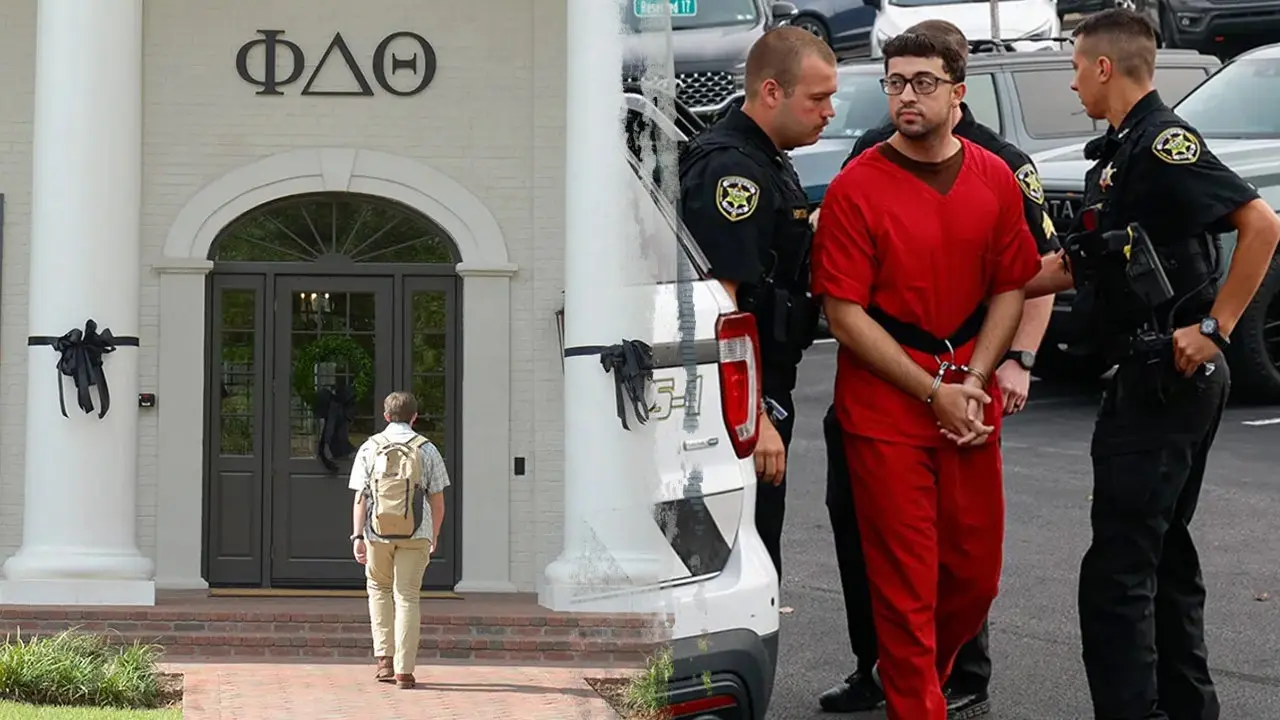
I. There are certain phone calls that Andrew Lohse has learned to expect over the past decade—not from old friends or family, but from reporters who find his name in old headlines whenever another fraternity scandal erupts. Lohse is a 36-year-old hazing survivor, the author of Confessions of an Ivy League Frat Boy, and a man whose own harrowing experiences inside Dartmouth’s Sigma Alpha Epsilon chapter turned him into a reluctant whistleblower. When the news broke about two University of Mississippi students found dead in separate off-campus locations, one of them a Phi Delta Theta fraternity brother named Ryan Strang, Lohse’s phone began to ring again. Authorities discovered packages of kratom—a commercially available substance critics have called “gas station heroin”—at both scenes, though its exact role in the deaths remained unclear. For Lohse, the tragedy felt painfully familiar, not because he knew the students, but because he knew the culture that surrounds such loss. The deaths of two young men, each with families and futures, were not just statistics; they were reminders of how fragile life becomes when secrecy, peer pressure, and dangerous substances converge. The fraternity itself released a statement expressing profound grief, joining the university in mourning the young men and emphasizing the need for a collective commitment to health and safety on college campuses. But Lohse hears in such statements a recurring pattern—a cycle of tragedy, outrage, official condolences, and then something like silence resettling over the campus. He knows that behind the Greek columns and engraved crests, there exists a shadow world where pledges are tested, hierarchies are enforced, and sometimes, young people are hurt or worse. The loss of life, he says, is always a devastating moment for everyone touched by it. Yet he cannot help but wonder how many more parents will have to bury a child before the deeper truths about fraternity culture are finally confronted.
II. Lohse’s own story is not an abstraction or a policy debate; it is a memory of degradation and fear. As a Dartmouth student, he endured what he describes as stomach-turning indoctrination rituals inside Sigma Alpha Epsilon. He was forced to swim in a kiddie pool full of vomit while being urinated on. He was made to chug vinegar and milk until he and his fellow pledges vomited in a tarp-covered room. He was locked in a small basement crawl space for hours. He was coerced into binge drinking—ten, fifteen, sometimes more drinks in a single night—until his body rebelled. These are not the hazing stories that older alumni sometimes dismiss as rough bonding or harmless fun. They are accounts of systematic humiliation, of young men stripped of their dignity in order to prove loyalty to a group that, in return, demanded their silence. Lohse eventually broke that silence, exposing the rituals and helping to bring about a ten-year suspension of SAE at Dartmouth. The chapter was only re-recognized in August, after years of reform efforts, but the scars remain. Lohse speaks about this time with a strange mixture of bitterness and sadness. He does not describe his fraternity brothers as monsters; rather, he describes an institution that encouraged them to behave monstrously, a machine that grinds down individual conscience in favor of collective obedience. The physical acts of hazing were horrible, but perhaps the deeper damage was psychological: the deliberate erosion of boundaries, the constant pressure to prove oneself, the message that pain and humiliation were the price of belonging. Even now, decades later, he knows that many young men are still being put through similar ordeals. And in an age when street drugs are laced with fentanyl, when synthetic substances like kratom are sold openly, the stakes are higher than they have ever been. Back in his own college days, Lohse says, cocaine was more or less just cocaine. Today, every line could be the last one a student ever takes.
III. The recent headlines stretch far beyond Mississippi. At Penn State, prosecutors alleged that a fraternity’s pledge process was turned into a drug organization’s training ground. Court documents described pledges being coerced into cutting and packaging cocaine as part of an alleged ring led by former Sigma Chi member Agostino Abbatiello. Lohse found this almost impossible to process—not the existence of drug use at fraternities, which he says has always been present, but the sheer audacity of using pledge labor for criminal operations. In Madison, Wisconsin, police discovered roughly thirty partially clothed young men packed inside a sweltering basement at an Alpha Epsilon Pi house. They were covered in food, condiments, and other liquids, and several showed signs of being physically assaulted. Two people were arrested, and the fraternity’s national headquarters pledged full cooperation with authorities, declaring that hazing is a betrayal of everything the organization stands for. “No exceptions. No excuses,” their statement read, noting that members are educated about their responsibility to be their brothers’ keeper. But Lohse hears in these words a fundamental contradiction. The fraternity system has always sold itself as a brotherhood built on loyalty, character, and mutual support. Yet when incidents like this come to light, they reveal a different reality: pledges subjected to abuse in the name of brotherhood, members silenced by an unwritten code that resembles organized crime more than a college club. “You need a code of omertà if you’re trying to create an organization that’s essentially like a criminal organization,” Lohse says. That Italian-American term for silence, originally associated with the Mafia, might seem extreme. But he insists that modern fraternities, at least in some cases, have evolved into something far removed from their original nineteenth-century concept. They have become institutions where dangerous behaviors are protected, where witnesses stay quiet, and where those who speak out are often ostracized or punished. The images of young men covered in condiments in a Wisconsin basement may seem absurd, but they are also evidence of how easily group dynamics can turn savage when no one dares object.
IV. For Lohse, these recurring scandals are not isolated incidents but symptoms of a deeper cultural emptiness. He describes modern Greek life as occupying a space that higher education no longer fills. There is, he believes, a kind of moral vacuum at the center of college campuses and American society—a vacuum that was once filled by God, by religion, by the church, and is now totally vacant. Young men, he says, are more adrift than ever. They long for belonging, for purpose, for initiation into adulthood. Fraternities offer a false solution: a promise of brotherhood that often demands the surrender of one’s own identity. “The organization forces the individual to compromise their own identity for the collective,” Lohse explains, “taking something from its members to ensure the system perpetuates itself over time.” This is why hazing persists despite decades of anti-hazing campaigns and legal crackdowns. It is not just about proving toughness or weeding out the weak. It is about breaking down a person’s boundaries so thoroughly that they become dependent on the group for their sense of self. Once that dependency is established, silence becomes natural. Speaking out would mean not just betraying a group, but betraying the version of yourself that the group created. In the darkest cases, that psychological manipulation can lead to substance abuse, addiction, even death. The young men who die in fraternity houses are not all being hazed in traditional ways. Some are experimenting with drugs or alcohol, seeking the same kind of acceptance and intensity that fraternity life seems to promise. But the culture that surrounds them—the secrecy, the pressure, the valorization of excess—creates a fertile ground for tragedy. Lohse sees it in every headline: another life cut short, another family devastated, another community left to wonder how something so terrible could have been allowed to happen.
V. Despite his anger and sorrow, Lohse does not tell prospective students flatly to avoid fraternities. He knows that some chapters are genuinely trying to reform, that many young men find lifelong friendships and valuable experiences through Greek life. But he urges incoming students to think carefully, to calculate what he calls the “opportunity cost.” What are you actually giving up, and what are you risking, when you choose to pledge? He suggests asking hard questions: What do you truly want out of college? Who do you really want to be around? Who is actually going to be there to help you grow into the person you hope to become? “I think you’ll find that a fraternity isn’t going to provide that,” he says. The upside benefit of membership, he argues, may not be zero, but it pales in comparison to the downside risk—especially in an era when drugs are more dangerous than ever, when alcohol abuse can lead to hospitalization or death, and when hazing rituals can spiral out of control in a single chaotic night. The North American Interfraternity Conference, meanwhile, has responded to recent tragedies by emphasizing that student safety is the highest priority. Its president and CEO, Judson Horras, told Fox News Digital that the NIC has adopted enhanced health and safety guidelines, co-led advocacy for tougher anti-hazing laws in more than a dozen states, and supported the federal Stop Campus Hazing Act. He expressed heartbreak over the Ole Miss losses and pledged continued work with universities and families to keep every student safe. These words are hopeful, but they arrive against a backdrop of repeated failure. For every chapter that reforms, another seems to fall into the same destructive patterns. For every statement condemning hazing, another pledge is led into a basement.
VI. In the end, these stories are not really about policies or statistics. They are about people—young people who leave home full of hope, walk into a world of promise, and sometimes never walk out again. The families of Ryan Strang and Aidan Hamilton, the parents of every young man who has ever come home bruised or broken or not at all, do not need another mission statement or another press release. They need change, real and lasting, from the inside out. Lohse’s message, difficult as it is to hear, carries a truth that cannot be ignored: the code of omertà that protects fraternity misbehavior must be broken. That means students need to be brave enough to speak up when they see something wrong, even if it costs them their membership, their friendships, or their social standing. It means national organizations need to back up their words with genuine accountability, not just when cameras are rolling but every day. It means universities need to invest in prevention and support systems that actually protect vulnerable students, rather than simply managing public relations. And it means society needs to confront the uncomfortable question of why these secret societies still hold such power over young men, many of whom are brilliant, sensitive, and desperate for belonging. Lohse does not pretend to have easy answers. But he knows from personal experience that survivors can emerge from the darkest rituals and choose a different path. He has done it. He has written the book, taken the calls, told the story even when it was painful. Perhaps his example can inspire others to do the same. Perhaps the next generation of fraternity men will decide that true brotherhood does not require humiliation, secrecy, or risk of death. Perhaps they will choose to be, as AEPi’s slogan puts it, their brothers’ keepers in the truest sense. There is no guarantee, but there is always hope—and sometimes, hope is enough to break the silence.