





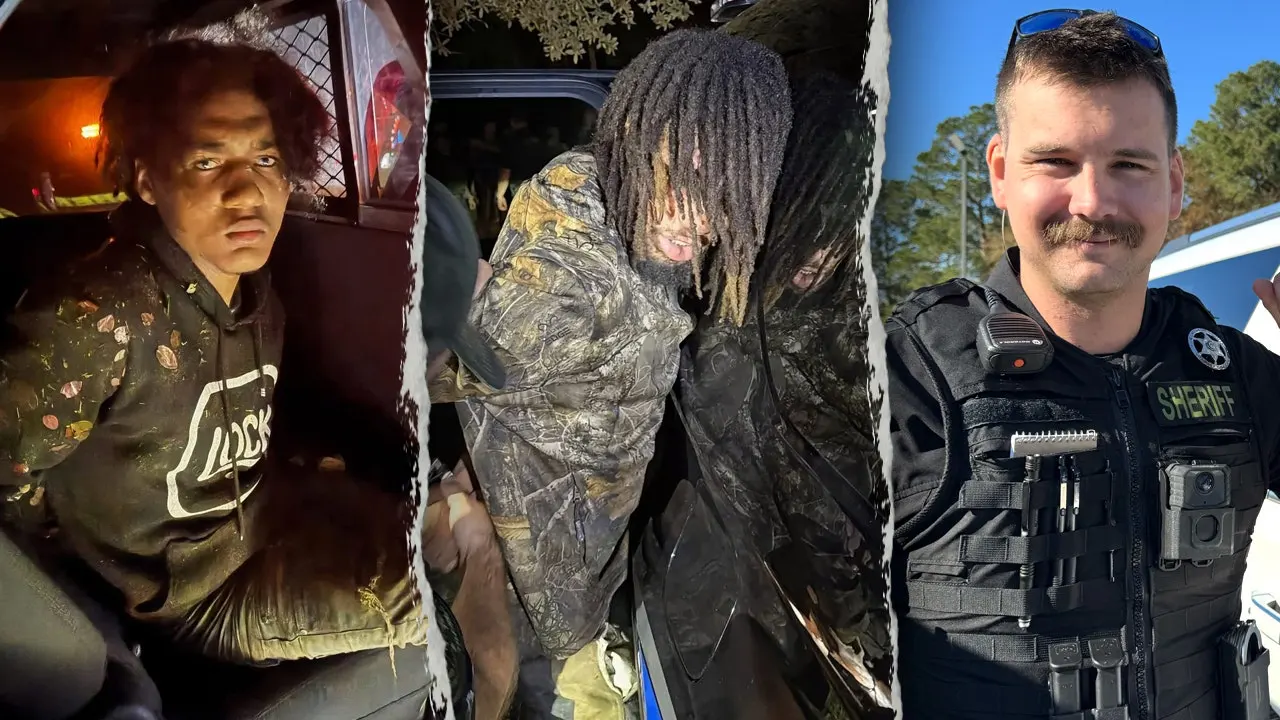
The quiet, tight-knit town of Mendenhall, Mississippi, was forever changed on June 3, when a senseless act of violence shattered the peaceful lives of Billy and Virginia Carol Blair. Billy, age 74, and Virginia, age 71, were a devoted elderly couple who had spent decades building a life of quiet dignity, warmth, and deep connection to their local community. They were peaceful neighbors, loving constants in the lives of their children and grandchildren, and a testament to the enduring beauty of a long marriage lived with grace. Their sudden silence on that warm June afternoon immediately sparked a deep sense of dread among family members, who grew increasingly frantic when repeated phone calls went unanswered. This mounting anxiety prompted a call to the Simpson County Sheriff’s Office for a welfare check, bringing deputies to the Blairs’ doorstep around midday. What those officers encountered was not a simple domestic emergency, but a horrific scene of active violence that immediately deteriorated into a chaotic gunfight. Inside the home was 17-year-old Cordarius Hobbs, an armed teenager who had allegedly burglarized the residence and brutally taken the lives of the defenseless couple. As deputies attempted to enter, Cordarius opened fire on them, turning a quiet neighborhood street into a terrifying active shooter zone and sealing the tragic fate of the beloved Blair couple, whose lives were stolen in an instant of unimaginable cruelty.
The shock of the double homicide sent ripples of grief and confusion throughout the entire state of Mississippi, as community members struggled to comprehend how a teenager could commit such a heinous act. At just 17 years old, Cordarius Hobbs now faces a mountain of severe legal charges that reflect the sheer scale of the violence he allegedly unleashed. He has been charged with two counts of capital murder, one count of burglary, four counts of aggravated assault with a deadly weapon, four counts of aggravated assault on a law enforcement officer, and two counts of aggravated assault on individuals over the age of 65. For the family of Billy and Virginia Blair, no amount of legal prosecution can fill the agonizing void left in their hearts, nor can it erase the terrifying memory of how their loved ones’ lives were stolen from them in the sanctuary of their own home. The local sheriff’s deputies, too, were left grappling with the psychological weight of the encounter, recognizing how easily they could have lost their own lives in the hail of gunfire that greeted them at the front door. Yet, as the community began the long and painful process of mourning and searching for answers, they had no idea that this single family’s destructive path was far from over, and that another tragedy involving the suspect’s brothers was lurking just days away on the horizon.
Just five days later, on June 8, the dark shadow of violence stretched into neighboring Covington County, where a dedicated young deputy named Yates Rodney was beginning what he assumed would be a routine patrol shift. Deputy Rodney, who had been with the sheriff’s department for only six months and had recently celebrated his wedding, was a man full of youth, hope, and a deep-seated desire to protect the community he called home. On that afternoon, Rodney initiated a standard traffic stop for a simple seatbelt safety violation, completely unaware of the dangerous lineage of the two young men sitting inside the vehicle. The occupants were Cortavious and Cortavion Hobbs, the older brothers of the teenage double-murder suspect, Cordarius Hobbs. In the beginning, the interaction carried a deceptive air of normalcy and friendliness; the brothers were returning from a fishing trip, and their demeanor was described by authorities as warm, light-hearted, and entirely cooperative. But this pleasant outer shell quickly evaporated when Deputy Rodney spotted a marijuana blunt inside the vehicle. When the deputy began questioning the men about the drugs, the atmosphere shifted instantly, changing from lighthearted banter to a thick, suffocating tension that signaled imminent danger.
Terrified of being caught and harboring their own dark histories, the Hobbs brothers made the reckless decision to flee, initiating a high-speed pursuit that tore frantically down the rural Mississippi roads. Deputy Rodney, committed to his duty, pursued the fleeing vehicle for two to three miles through the countryside, a chase that finally culminated when the brothers’ car slid off the road and became hopelessly trapped in deep, thick mud. But rather than surrendering in the face of defeat, the brothers allegedly chose a path of absolute destruction. As Deputy Rodney approached the stranded vehicle, gunfire erupted from the mud-slicked car, and a bullet struck the young officer in his shoulder. The physical impact was immediate and catastrophic; the projectile tore through his body, nicking his lungs and causing severe, irreversible damage to his spine. In that single, violent moment, the trajectory of a young man’s life, career, and marriage was irrevocably shattered. The frantic silence of the rural landscape was broken by the sound of sirens rushing to save one of their own, as Rodney was airlifted to a medical facility where doctors would later deliver the heartbreaking prognosis that the young deputy would never walk again.
The devastating diagnosis of permanent paralysis cast a heavy shroud of sadness over Deputy Rodney’s family and the entire law enforcement community, highlighting the profound, everyday risks faced by those who wear the badge. At just twenty-four years old and newly married, Rodney and his bride were supposed to be planning their future, dreaming of building a home, raising children, and growing old together in the community they loved. Instead, they find themselves thrust into a grueling, lifelong journey of physical therapy, emotional healing, and adapting to a world of severely limited mobility. In response to the tragedy, a deep well of community support has sprung up, including a GoFundMe campaign designed to help the young couple navigate the astronomical medical bills, specialized equipment, and home modifications they will desperately need in the years ahead. While Rodney begins this grueling uphill battle, his attackers, Cortavious and Cortavion Hobbs, face severe justice, having been arrested and charged with attempted capital murder and hindering prosecution, with Cortavion facing an additional charge of felony fleeing. The revelation that both brothers already possessed extensive juvenile criminal records served as a frustrating reminder of a broken system that failed to intervene before their behavior escalated to near-fatal violence.
Ultimately, the tragedy of these two closely linked events leaves the state of Mississippi mourning a devastating loss of life and innocence, caused by three brothers from a single family who brought unimaginable ruin to so many. Within a single, horrific week, Cordarius, Cortavious, and Cortavion Hobbs destroyed the lives of a beloved elderly couple, permanently altered the future of a heroic young deputy, and left two families completely shattered by grief. Yet, in the face of such profound darkness, the communities of Mendenhall and Covington County have refused to be defined by the violence that visited them, choosing instead to unite in a powerful display of resilience, love, and mutual support. As the legal system begins the slow process of holding the brothers accountable for their heinous actions, the community remains focused on honoring the legacy of Billy and Virginia Blair, while standing shoulder-to-shoulder with Deputy Yates Rodney and his brave young wife. The road to recovery for the survivors is unimaginably long and fraught with difficulty, but the enduring strength of the community serves as a reminder that even in the wake of the deepest cruelty, human connection, compassion, and the pursuit of justice will always have the final word.