





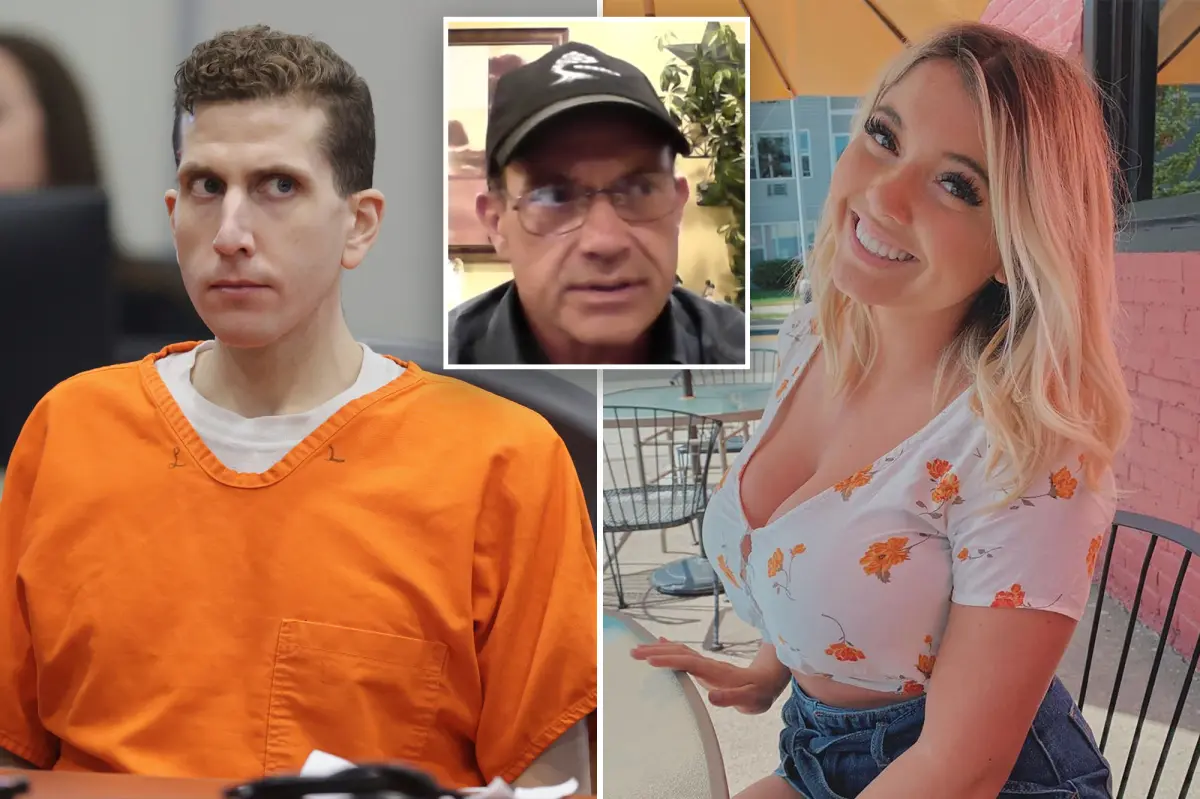
The tragedy that struck the quiet, close-knit college town of Moscow, Idaho, in the dark early hours of November 2022 left an indelible, agonizing mark on the hearts of families who lost their vibrant, promising young children to an unspeakable act of violence. For multiple years, the grieving families of Kaylee Goncalves, Madison Mogen, Xana Kernodle, and Ethan Chapin carried a mountain of soul-crushing grief, searching for a path to justice through an agonizingly slow and highly scrutinized legal process that kept the eyes of the entire nation transfixed. That elusive resolution seemed to finally arrive in July of 2025, when the accused killer, Bryan Kohberger—a former criminology doctoral student whose arrest had shocked the academic world—entered a surprise guilty plea. By doing so, he avoided the looming threat of a capital punishment trial and accepted a sentence of life in prison without the possibility of parole. For the victims’ families, particularly Steve Goncalves, the outspoken and fiercely devoted father of Kaylee, the plea agreement was a deeply bittersweet milestone; while it shielded them from the brutal emotional devastation of a prolonged, public trial, it also meant the murderer would spend the rest of his natural life behind bars. However, the fragile peace that had slowly begun to settle over this battered Idaho community was suddenly and violently shattered just one year later. Kohberger, now thirty-one years old, filed a shocking legal petition to challenge his conviction and completely withdraw his guilty plea, igniting a fresh wave of public outrage and deep personal torment for the families. Yet, instead of retreating into despair or letting the news break his spirit, Steve Goncalves responded to this latest development with a profound, defiant resilience that captured the nation’s attention once again. Rather than fearing the prospect of a restarted legal battle, Steve openly declared that he would welcome a potential retrial with open arms. Speaking with raw, unfiltered sincerity on national television, he framed the unfolding circus not as a setback, but as a long-awaited, righteous opportunity to finally face the accused murderer head-on in a court of law and secure a verdict that fully reflects the gravity of the horrific crimes committed against his daughter and her friends.
At the absolute center of this sudden, polarizing legal upheaval is Bryan Kohberger’s stunning assertion that he was actively manipulated, deceived, and coerced into admitting guilt, a claim that has been met with widespread public skepticism and profound anger from the victims’ circles. In his formal legal petition, Kohberger boldly argues that his decision to accept the life sentence was not a legally sound or voluntary admission of guilt, but rather the direct result of “false promises and blatant disinformation” fed to him by his own defense team during a period of intense isolation and psychological pressure. According to court documents highlighting his appeal, the convicted killer paints a self-serving picture of a defense team that allegedly utilized extreme scare tactics to push him toward a plea deal. He claims his attorneys detailed the horrific, claustrophobic conditions of an actual eight-by-eight-foot death row cell, leveraging his deep fears of execution and confinement to convince him that his very survival depended entirely on signing away his rights. Furthermore, Kohberger has boldly asserted that his “actual innocence” remains his absolute truth, suggesting that there was a critical, “exculpatory discovery” waiting in his case file that should have been fully litigated before he was pressured into surrendering. This rhetorical pivot has struck many legal analysts as highly calculated and deeply manipulative, especially given Kohberger’s background as an advanced criminology student who possessed an intimate, academic understanding of criminal psychology and the complex inner workings of the American judicial system. To the families of the victims, this sudden claim of being uninformed, tricked, and weak is a deeply insulting attempt to rewrite the historical narrative of his confession, presenting himself as a victim of state overreach rather than the cold-blooded architect of a slaughter that devastated four families and forever terrified an entire generation of college students.
Responding to these extraordinary claims with the characteristic courage that has defined him since the tragedy occurred, Steve Goncalves did not mince his words, revealing the depths of a father’s enduring anger and protective instinct during an emotional interview on NewsNation. Steve admitted that while many would view the potential overturning of a plea deal as a nightmare scenario that drags everyone back to square one, he views the situation through an entirely different, combat-ready lens. “Some people want the second bite of the apple, but I would love to have the second shot at the accused murderer,” he stated with steady resolve, emphasizing that he is entirely unafraid of a full-scale courtroom battle. To Steve, a trial is not a painful burden to be avoided at all costs, but a righteous path to holding Kohberger accountable to the absolute maximum extent of the law, free from the compromises and hand-shakes of a plea bargain. “I would love for us to be able to reline him up and hold him accountable to the full extent of what he’s done,” Steve added, expressing the visceral need for finality and uncompromised justice. Yet, even as he expressed a personal willingness to return to the active courtroom, Steve voiced a deep, empathetic concern for the local Idaho community that has already sacrificed so much of its peace and financial resources in the name of justice. He pointed out the bitter irony that Kohberger was not a member of their state, nor a part of their tightly-knit local community, but an outsider who brought unimaginable terror to their doorstep and forced the state to expend vast amounts of resources to prosecute him. “This guy wasn’t even a member of our society… and we’ve really just been totally put through the wringer having to defend this loser,” Steve lamented, expressing a protective duty toward his neighbors and stating that he feels he cannot keep asking his community to bear the ever-increasing emotional and financial costs of shielding themselves from this relentless threat.
The wider Goncalves family echoed Steve’s defiant stance, releasing a blistering public statement that compared the convicted killer to a persistent, irritating pest, branding him “the mosquito you can’t seem to swat.” With remarkable unity and courage, the family announced that they are “100 percent ready” to go to trial, expressing absolute confidence that if the case is presented before an impartial jury, Kohberger will inevitably receive the death penalty he managed to escape by pleading guilty the first time around. They fiercely dismantled Kohberger’s newly manufactured narrative of victimhood, noting that during the two long years he and his legal counsel had full access to the evidence discovery, he never once cried wolf, claimed to be uninformed, or argued that his constitutional rights were being trampled upon. The family scoffed at the petition as a “disgrace” and an “absolute waste of time and taxpayers’ money,” viewing it as a desperate ploy by a cornered man to regain control over a narrative he voluntarily surrendered. Kaylee’s mother, forty-eight-year-old Kristi Goncalves, spoke of the profound exhaustion of having her family’s private grief continually paraded in the public eye due to what she described as Kohberger’s manipulative “judicial games.” She emphasized that the American public has watched their family endure unimaginable, public torment for years, and firmly stated that there is absolutely no legal or moral merit to Kohberger’s desperate attempt to undo his conviction, which she views as nothing more than a cynical exercise in legal theater designed to inflict further pain on those he already broke.
Beneath the complex layers of legal maneuvering, media statements, and high-stakes courthouse drama lies the devastating, physical reality of the horrific crime that occurred on that cold November night. By accepting the July 2025 plea deal, Kohberger was able to completely avoid a trial that would have laid bare the gruesome, step-by-step details of the murders, saving himself from the public exposure of his motives and the precise actions he took inside the off-campus home. The autopsy reports compiled by Dr. Veena Singh, the chief medical examiner of Spokane, paint a hauntingly graphic and deeply disturbing picture of the sheer violence visited upon the victims, highlighting the devastating physical toll of the assault. All four students—Kaylee Goncalves, Madison Mogen, Xana Kernodle, and Ethan Chapin—lost their lives to multiple, catastrophic sharp-force injuries inflicted with terrifying precision and force. The physical evidence revealed that Kaylee Goncalves suffered not only these severe stab wounds but also blunt-force injuries to her face, along with agonizing physical signs of asphyxia, indicating a desperate, violent struggle for survival in her final moments. By pleading guilty, Kohberger kept the precise motivation behind his monstrous actions permanently shrouded in shadow, leaving the grieving families without clear answers as to why their bright, universally loved children were targeted. For these families, the physical details of the autopsies serve as a constant, harrowing reminder of the unimaginable brutality their children faced, rendering Kohberger’s current attempts to claim innocence and play the victim even more intolerable and grotesque.
As the legal system prepares to review Kohberger’s highly controversial petition, the enduring saga of the Idaho student murders stands as a powerful testament to the heavy emotional toll that the pursuit of justice extracts from victims’ families and the public alike. The prospect of a retrial brings with it a complex cocktail of emotions: a desperate hope for absolute justice, a profound exhaustion at the thought of revisiting the crime scene photos, and a deep-seated anger at a legal system that allows a self-confessed mass murderer to continue playing games with the lives of those he destroyed. Families like the Goncalveses are forced to walk an unimaginable tightrope, balancing their desire to protect their community from further financial and emotional strain with their instinctual, parental drive to ensure their daughter’s killer receives the absolute harshest punishment available under the law. Kristi and Steve Goncalves, along with the families of Madison, Xana, and Ethan, remain steadfast anchors of strength, standing as a united front against a killer who seeks to exploit legal loopholes for his own benefit. Ultimately, whether this petition is swiftly dismissed by a judge or leads to a highly anticipated, emotionally exhausting trial, the legacy of the four young souls lost in Moscow will not be defined by the actions of the man who took them. Instead, it will be defined by the relentless, unbreakable love of the families who refuse to stay silent, ensuring that the memory of their children remains bright and cherished, while demanding that true, uncompromised justice is finally served.