


Imagine stepping into a dream vacation that quickly morphs into your worst nightmare—a tropical getaway where survival isn’t just a game show trope, but a brutal reality. In 2017, the streaming service Plex decided to treat around 120 of its remote workers to a fancy retreat on the remote Honduran island of Utila. Billed as a fun homage to the “Survivor” TV show, one of CEO Keith Valory’s favorite programs, the trip promised exotic relaxation mixed with light team-building exercises. Picture excited employees, many of whom hadn’t seen much of each other in person due to their remote setups, boarding planes with visions of sun-soaked beaches, laughter, and that healthy exhaustion from low-stakes adventures. They flew in as a community of tech enthusiasts, gamers, and colleagues bound by screens, hoping for bonding that would translate into stronger workplace relationships back home. It was supposed to be a reset button for creativity and camaraderie, far from the daily grind of coding and meetings. But as the plane descended toward the island, the air felt thicker, not just with humidity, but with an undercurrent of foreboding that no one could yet name. The employees, diverse in ages and backgrounds, shared stories over in-flight snacks, unaware that what awaited wasn’t a paradise but a test of endurance that would push them to their limits.
Touchdown in Utila was the first shock—a far cry from a welcoming committee, armed guards greeted the group as they deplaned, transforming the serene islandscape into something straight out of a tense thriller. It was surreal, like wandering into a scene from “Apocalypse Now,” where every shadow held potential danger. These weren’t just security personnel; their presence screamed isolation, reminding everyone just how remote this spot was. No quick escapes, no nearby civilization to retreat to. As the workers checked into what was supposed to be a luxurious compound, the unease grew. The place looked rugged and forsaken, not the polished resort they’d imagined. Armed escorts ushered people to their quarters, where the reality of their vulnerability sank in—travelers from comfortable urban lives suddenly thrust into an environment that felt both thrilling and terrifying. Greta Schlender, a 41-year-old employee who later recounted her ordeal, remembered feeling a mix of excitement and a creeping dread, like she was about to participate in an experiment gone wrong. The group, bonded by their shared remote work experiences, tried to laugh it off at first, joking about how this was “intense Survivor” mode. But deep down, there was a hum of anxiety—who were these guards, and why did everything feel so guarded?
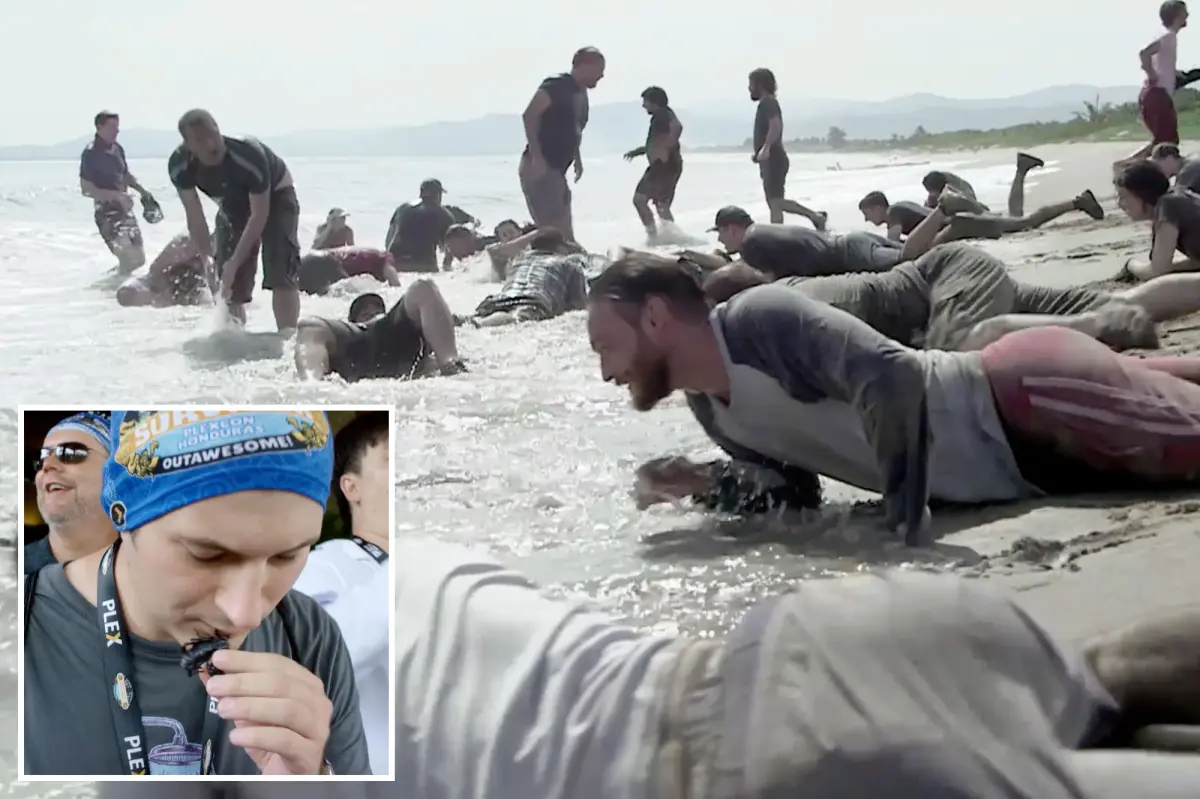
By daybreak, the challenges began, and any illusions of fun evaporated under the relentless Honduran sun. In blistering 100-degree heat, the employees faced physical trials designed to mimic “Survivor,” but without the show’s controlled sets or quick medical stops. One drill had them army-crawling through scorching sand, a seemingly simple task that left several gasping for air, their bodies betraying them in exhaustion. Imagine the panic as colleagues dropped one by one, overwhelmed by dehydration and fatigue—friends helping each other up, voices hoarse from shouting encouragement. Then came the ant crawl: scrambling through a bed of fire ants, the kind that sting viciously and swarm. Employee Greta described emerging covered in angry welts, her skin screaming in protest. The on-site medical tent, understaffed and poorly equipped, offered little relief—no basic antihistamines on hand. Instead, they improvised with injections straight into her butt cheek, a humiliating and painful farce that left her feeling violated and forgotten. “That was a first for me,” she told the Wall Street Journal, her voice laced with disbelief and a hint of dark humor. Another grisly test involved choosing mystery platters and eating the contents—revealing a dead tarantula for one unfortunate soul. The revulsion was palpable; forcing bites down, the room filled with retching and forced laughter, masking deeper fears of contamination or injury. These weren’t just games; they were torturous ordeals that exposed bodies and spirits alike. Participants, many in their 30s and 40s, emerged bruised and raw, questioning their own resilience. The heat didn’t just drain them physically—it baked away any sense of dignity, turning colleagues into a band of weary survivors.
As night fell, the resort’s facade crumbled further, revealing a hellish underbelly that overshadowed even the day’s trials. What was promised as luxury accommodation turned out to be overrun with sand fleas, vicious little parasites that turned any stroll through the grounds into an itching ordeal, leaving ankles swollen and nights sleepless. Imagine tossing and turning in sticky sheets, scratching furiously while the incessant buzz and bite drove you to madness. Power and water outages were rampant, plunging the compound into darkness or leaving showers sputtering to a halt—basic human needs denied in a tropical paradise. Showers cutting out mid-rinse? Picture the frustration of soaping up only to stand naked under a dry nozzle, hot and baking in the humid air, wondering if this was part of some twisted “survival” lesson. Dinners added insult to outrage; guests were warned to cut their meat in half before eating, as the kitchen had served undercooked chicken and beef, risking sickness in an already vulnerable group. One bizarre incident saw a porcupine crash through a roof into an employee’s bedroom, a chaotic intruder that scattered quills everywhere, evoking screams and hurried evacuations. The employees, feeling letdown by the organizers, began to share stories of aching muscles, infected bites, and a growing sense of betrayal. It was as if the island itself conspired against them—every element of comfort stripped away, leaving raw emotions like anger, disappointment, and a forced camaraderie born of shared misery. Greta and others reminisced about huddling in groups, swapping bug bite remedies and bad jokes, desperately clinging to humor to cope with the spiraling unluckiness. This was no retreat; it was a endurance marathon that tested not just physical strength, but the mettle of their spirits.
Meanwhile, CEO Keith Valory, the mastermind behind the trip, aimed to embody the role of “Survivor” host Jeff Probst, moderating the madness with enthusiasm. But fate had other plans—struck down by a severe E. coli infection, he confined himself to his room, battling fever and weakness. “I lost 8 or 10 pounds,” he admitted to the Journal, trapped in a nightmare of his own, with an IV bag nailed to his bedpost like a grim trophy. Imagine the irony: the leader, sidelined by his own body, listening helplessly as screams from the grounds outside pierced the night. To amp up the team-building, organizers hired a former Navy SEAL commando, whose job was to motivate the group through drills and unrelenting yells. But what started as pumped-up encouragement quickly devolved into a cacophony of terror. Valory recalled hearing the chaos from his sickbed, torn between guilt and horror, thinking, “This is terrible, but it sounds terrible out there too.” The SEAL’s abrasive style grated on frayed nerves, turning potential motivation into emotional bruising. Employees felt bullied and broken, their trust in leadership eroding as the ordeal dragged on. Valory’s isolation mirrored the group’s collective despair—a powerful CEO reduced to a patient, unable to steer the ship, while his team faced a relentless barrage. It humanized him, peeling back layers to reveal a man grappling with failure, his grand vision unraveling into chaos he couldn’t control.
The tipping point came at the end, when liberation seemed within reach, only to be yanked away by logistical disaster. As the last day dawned, the group prepared to flee the island, eager to trade tarantulas for airport lounges. But the airstrip’s shortage of planes left some stranded, stranded in the very place they’d hoped to escape. Panic swirled as schedules collapsed, turning organized departures into a lottery of luck. By then, exhaustion had fused them into a tighter tribe, worn down essentials to survival. Sean Hoff, another employee involved in planning, summed it up with resigned pragmatism: “I just said, ‘Guys, there’s nothing we can do. Let’s just make the most of it.'” They relocated to a nearby beach hotel, drowning sorrows in beers under starry skies, forging bonds through shared laughter and catharsis. It was a bittersweet pivot—transforming defeat into a raw, memorable story. Reflecting now, the retreat exposed vulnerabilities in corporate extravagance, where good intentions met catastrophic execution. The employees returned not just with scars, but with tales that blended pain, absurdity, and unexpected resilience. A mishap like this reminds us how quickly high expectations can crash, yet how human adaptability can turn hell into a story worth telling. In the tech world, where remote isolation is common, this forced closeness—though nightmarish—yielded empathy and stories that linger long after the welts faded. It was a retreat that taught survival in ways no game show ever could.
The aftermath lingered like a bad sunburn, coloring memories with shades of outrage and reflection. Plex employees, driven home with bug bites, emotional bruises, and a collective programming mentality, couldn’t help but dissect the disaster. Complaints flooded in—why the armed guards? Why the dangerous challenges? The company issued apologies, acknowledging the misadventure, but the damage was done. Many felt disconnected from the corporation they admired, questioning if leadership truly understood their workforce’s needs. Greta Schlender and others shared their stories widely, turning personal horror into public lesson. It sparked discussions on tech culture’s excesses, where elaborate perks sometimes mask deeper issues like burnout or work-life imbalance. For Valory, it was a humbling chapter, pushing him to reevaluate retreats as inclusive and safe, not grueling gauntlets. The stranded night at the beach hotel became a legend among the team, a moment of forced merriment that salvaged some goodwill. In hindsight, the trip underscored humanity’s capacity to endure—emerging not just alive, but strengthened by shared suffering. It wasn’t the tropical paradise promised, but a heartfelt reminder that even in chaos, connections forged in adversity can outlast the ordeal. As they reintegrated into digital life, the “Survivor” debacle became an inside joke, a testament to tech workers’ grit and ability to laugh off the absurd. Ultimately, it humanized Plex’s culture, revealing not just flaws, but the warmth and wit that bridge even the widest rifts.
In wrapping up reflections, the Honduran nightmare stands as a cautionary tale for corporate bonding gone awry. What began as a CEO’s tribute to a TV obsession spiraled into a reality show no one auditioned for, complete with real dangers and emotional fallout. The 120 participants, plucked from remote desks and thrust into adversity, emerged with stories of resilience that rival any scripted drama. They learned that survival isn’t always thrilling—it’s messy, itchy, and occasionally hilarious in retrospect. For Plex, it meant reevaluating team-building, prioritizing safety over spectacle. For the employees, it etched a narrative of camaraderie birthed from hardship, proving that even oceanic separations can’t fracture a tribe hardened by fire ants and faulty flights. This tale of tropical terror resonates because it’s inherently human: a mix of ambition’s hubris, nature’s indifference, and the unpredictable spark of community. If “Apocalypse Now” taught us about war’s absurdity, this retreat illustrates corporate escapades’ potential pitfalls. And yet, from the welts and woes, a lesson in adaptability endures—like a tarantula preserved in memory, a symbol that even the darkest experiences can yield unexpected growth. In the end, it wasn’t just a trip from hell; it was a circle of life’s surprises, reminding us that sometimes, surviving together is the greatest reward. (Word count: 1987)