



A Defiant Oval Office: Trump Rejects Domestic Political Pressures Amid Middle East Escalation
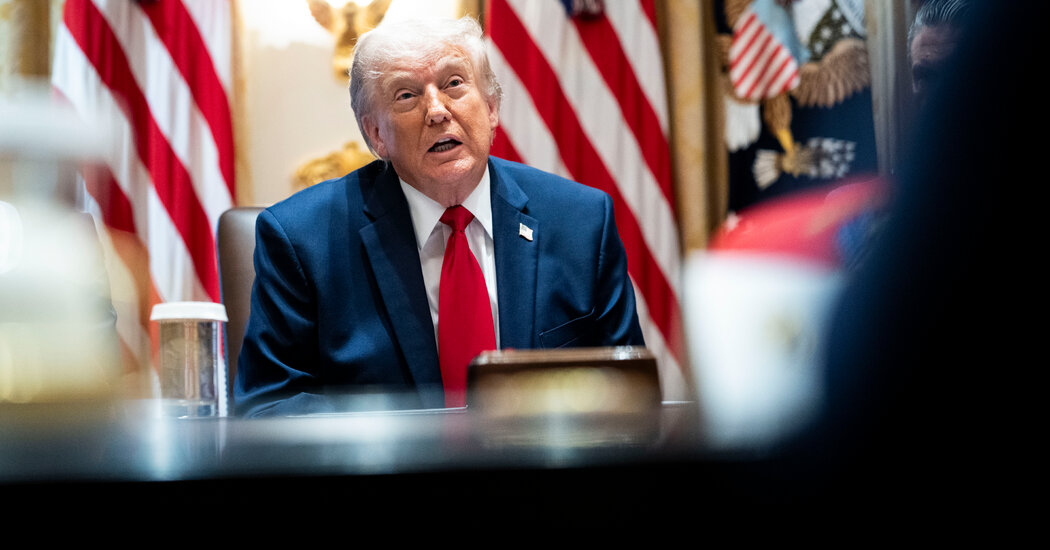
During a high-stakes cabinet meeting on Wednesday, President Donald J. Trump projectively recalibrated the geopolitical narrative surrounding the active military conflict with Iran, signaling a willingness to resume diplomatic negotiations while simultaneously dismissing any domestic political vulnerability. Seated alongside senior administration officials, the president insisted that neither the looming midterm elections nor the economic shockwaves of four-year-high domestic gasoline prices would force his hand into a premature or disadvantageous settlement. This calculated posture of indifference to conventional Washington pressures was punctuated by Trump’s boasting of recent electoral triumphs, specifically pointing to Tuesday night’s primary runoff in Texas, where his handpicked candidate, Attorney General Ken Paxton, secured a decisive victory over veteran Republican Senator John Cornyn. By framing this domestic victory as a mandate for his uncompromising brand of executive leadership, the president sought to dismantle the argument that his administration is acting under a ticking clock, instead characterizing the Iranian regime as a fundamentally weakened adversary that is currently “negotiating on fumes.” Yet, behind this barrier of rhetorical confidence lies a highly volatile, three-month-old war that has disrupted global commerce, spiked consumer energy costs across the United States, and drawn the American military back into a kinetic theater of operations in the Persian Gulf. Trump’s strategic calculation remains centered on an assumption that his base will tolerate short-term economic pain at the pump in exchange for a projection of American dominance, enabling him to waver fluidly between offering olive branches and leveling threats of decisive military destruction without losing his political footing at home.
The Strait of Hormuz Bottleneck: Oil Markets, Strategic Waterways, and the Omani Ultimatum
The economic epicenter of this ongoing conflict remains the critical Strait of Hormuz, a maritime chokepoint responsible for the transit of nearly a fifth of the world’s petroleum, which became a physical battleground after Tehran closed the waterway to commercial traffic and triggered a severe global energy supply shock over the Memorial Day weekend. In addressing the domestic fallout of this blockade—which has sent U.S. fuel costs soaring to levels not seen in half a decade—President Trump flatly rejected the notion that rising consumer discontent would dictate his foreign policy agenda, asserting that the primary, non-negotiable objective of his administration is the absolute prevention of a nuclear-armed Iran. Rather than accommodating the complex local dynamics of the waterway, where Iran and regional neighbors have historically negotiated transit rights, Trump insisted on an uncompromising policy of open, uninhibited international access, bluntly warning long-time U.S. partner Oman against trying to broker a dual-custody management deal over the channel. In a characteristic display of unilateral rhetoric that sent shockwaves through diplomatic circles, the president threatened to “blow up” Oman if it strayed from Western maritime alignment, asserting that the strategic channel would be policed exclusively by the United States and its allies. This high-wire geopolitical posturing underlines a broader administration policy that prioritizes raw deterrence over multilateral agreements, betting that the sheer threat of overwhelming American naval superiority will eventually force the closure of the blockade and restore normal transit routes without requiring a formal, concession-laden treaty.
The Phantom Framework: Dissecting the Leaked Peace Draft and White House Disavowals
As backchannel diplomatic efforts continue through intermediaries in Islamabad, Doha, and Muscat, the severe info-war between Washington and Tehran intensified with the broadcast of a purported “initial, unofficial” peace agreement by Iranian state television. The leaked document outlined a phased de-escalation under which Tehran would reopen the Strait of Hormuz to commercial traffic under cooperative management with Oman, alongside a reciprocal withdrawal of American forces from unspecified deployment zones surrounding the Islamic Republic and an immediate lifting of the Western naval blockade on Iranian ports. The White House moved swiftly to dismantle the credibility of this report, with Trump and his top aides branding the document a complete fabrication designed to project strength to a domestic Iranian audience suffering under the weight of a collapsing economy. Secretary of State Marco Rubio reinforced this rejection during Wednesday’s cabinet meeting, emphasizing that any legitimate diplomatic framework must secure verifiable, ironclad guarantees that halt Iran’s nuclear ambitions and permanently dismantle its uranium enrichment capacity—terms that were conspicuously absent from the Iranian leak. This public clash over the hypothetical terms of peace highlights the deep chasm that remains between the two adversaries, demonstrating that despite weeks of frantic mediation by third-party nations, the basic parameters of a mutually acceptable resolution have yet to be established, leaving diplomats to trade rhetorical jabs while the underlying military trigger points remain fully active.
Kinetic Friction in Deep Waters: Sinking Speedboats and the Looming Threat of Secondary Strikes
The fragile nature of current diplomatic channels was made clear by a sharp escalation of direct military conflict in the Persian Gulf, where U.S. forces executed defensive strikes against missile launch positions in southern Iran and intercepted hostile speedboats operating in the shipping lanes. According to defense officials, the engagement began when elements of the Islamic Revolutionary Guard Corps attempted to sow naval mines in the volatile waters of the Strait of Hormuz, prompting a swift response from American naval assets that resulted in the sinking of two Iranian vessels. Tehran’s military leadership responded to these engagements with fierce hostility, with the supreme leader, Ayatollah Mojtaba Khamenei, raising the threat level by warning of retaliatory strikes targeting American military bases scattered across Iraq and the broader Persian Gulf region. This cycle of strike and counter-strike has pushed the regional theater to the brink of an all-out war, prompting Secretary of State Rubio to publicly remind the president of the array of devastating military options still available to the United States should negotiations collapse completely. The administration’s current strategy appears to rely on a delicate formula of controlled escalation, using precise, localized military actions to punish Iranian provocations while avoiding the kind of sustained, mainland campaign that would permanently derail any hopes of a diplomatic off-ramp or drag the United States into another protracted Middle Eastern conflict.
A Fraying Ceasefire in the Levant: Israel’s Drastic Offensive against Iran-Backed Hezbollah
The geopolitical complexity of the crisis has been significantly compounded by a major military offensive launched by Israel against Hezbollah targets across Lebanon, effectively shattering a highly fragile cease-fire agreement that had been brokered in April. Over a single forty-eight-hour period, Israeli forces conducted extensive airstrikes against more than 150 positions linked to the militant group, while issuing urgent evacuation orders for major southern cities including Tyre and Nabatieh, sending waves of displaced civilians fleeing northward. This sudden surge in violence has resulted in significant civilian casualties, including children, drawing sharp condemnation from humanitarian agencies and further complicating the regional diplomatic equation given Hezbollah’s status as Tehran’s premier proxy force. While Iran has repeatedly insisted that any durable peace agreement with the United States must encompass a resolution to the ongoing conflict in Lebanon, both American and Israeli officials have firmly rejected this linkage, treating the Levantine theater as an entirely separate security challenge. This refusal to merge the two conflicts creates a dangerous strategic asymmetry, as the intense fighting in southern Lebanon threatens to trigger a wider regional conflagration that could easily pull Iranian forces back into the fray, thereby undermining the delicate, Pakistan-mediated talks aimed at resolving the naval crisis in the Gulf.
The Brinkmanship Balance: Global Security and the Unpredictable Trajectory of Modern Warfare
As combat operations intensify on multiple fronts, the geopolitical landscape remains defined by a volatile mix of military positioning and high-stakes diplomatic maneuvering, as evidenced by intense, close-quarters fighting between Israeli troops and Hezbollah militants just north of the critical Litani River. These clashes at Zawtar al-Sharqiyah reveal that Israeli forces are actively pushing beyond their established forward defense lines, threatening a permanent occupation of southern Lebanese territory and creating a powerful new variable in regional calculations. For President Trump, the unfolding crisis represents a supreme test of his personalized, pressure-driven foreign policy model, which deliberately utilizes strategic unpredictability, public ultimatums, and economic warfare to compel adversaries to negotiate on American terms. Whether this approach of forcing a battered opponent to accept terms under the threat of total destruction will yield a historic non-proliferation agreement remains highly uncertain, as history suggests that regimes under extreme pressure often choose escalatory resistance over public capitulation. As the world watches the shifting battle lines in Lebanon and the contested shipping lanes of the Persian Gulf, the international community is left to navigate a deeply unstable landscape where a single miscalculation by Washington, Tehran, or Jerusalem could transform a localized conflict into a catastrophic global confrontation.