


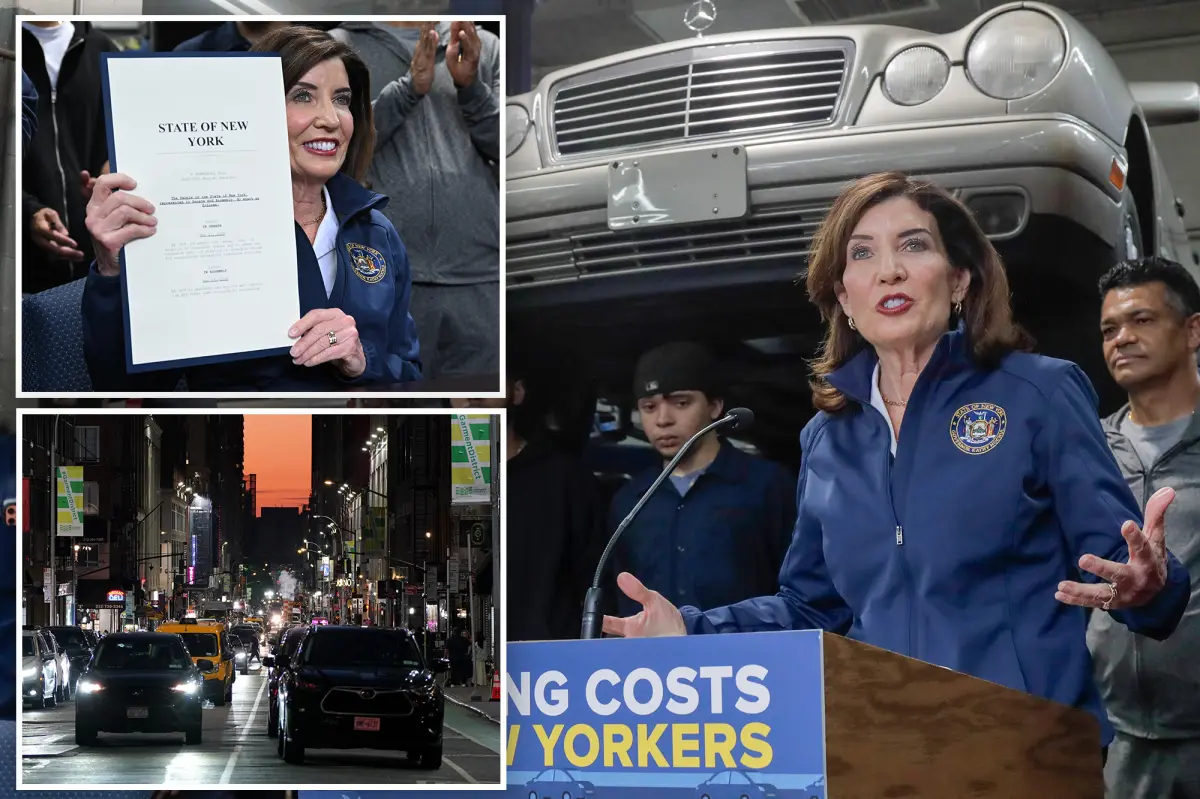
For millions of New Yorkers, owning a car is not a symbol of luxury but a daily necessity—a critical tool for navigating life, accessing stable employment, and keeping families connected across the vast geography of the state. Yet, maintaining a vehicle in the Empire State has become an increasingly heavy, exhausting financial burden, primarily driven by auto insurance premiums that have skyrocketed far beyond the national average in recent years. Statistics from the governor’s office reveal a harsh, undeniable reality: New York drivers pay an average of more than $4,000 annually for car insurance, a figure that is a staggering $1,500 higher than what the typical American driver pays. In an era marked by persistent global inflation, surging grocery prices, and escalating rent, this extra financial strain has forced many working-class households into making incredibly difficult trade-offs just to stay afloat. Recognizing this growing pocketbook crisis, Governor Kathy Hochul announced a series of significant car insurance reforms incorporated into the recently finalized state budget, promising that these measures would put “real money back in people’s pockets.” During a celebratory press event in New York City, Hochul highlighted a study by the nonpartisan Citizens Budget Commission, which estimated that the new legislative package could slash annual auto insurance bills by roughly ten percent. For an ordinary driver currently paying a $4,000 premium, this reform translates to an immediate savings of around $400 per year—cash that could easily cover a week of groceries, several tanks of gas, or a monthly utility bill. However, while the governor confidently framed this as a monumental, hard-fought victory for working-class New Yorkers, she also introduced a sobering dose of reality: because of the complex, bureaucratic timeline required for insurance companies to adjust their pricing structures and secure state approval, it could take anywhere from a year to two years before motorists see these savings reflected on their monthly bills.
The journey to securing these reforms was defined by months of intense political warfare, highlighting the deeply polarized interest groups that constantly vie for influence within Albany’s legislative halls. Governor Hochul chose to make rewriting the state’s auto insurance laws a central, unyielding priority during her high-stakes negotiations with Democratic majorities in the state Senate and Assembly. This ideological legislative struggle was so contentious that it directly contributed to lawmakers blowing past the state’s official April 1 budget deadline, leaving New York without a spending plan for weeks as negotiations remained frozen over policy details. At the heart of the gridlock was a fierce lobbying campaign waged by trial lawyers, who adamantly opposed any structural alterations to the state’s civil justice system, viewing them as threat to courtroom access. To break the impasse and deliver a functional budget, Hochul ultimately had to make a painful concession, abandoning her highly publicized push to eliminate the state’s “joint and several liability” system. Under this long-standing legal doctrine, multiple defendants in a personal injury lawsuit can be held individually responsible for paying an entire financial judgment, regardless of how minor their actual fault was in causing the accident. Hochul had initially sought to dismantle this rule to protect public entities, small businesses, and large corporations from being targeted by opportunistic lawsuits simply because they possess deep pockets. While dropping this specific proposal was a bitter pill to swallow, particularly for massive corporate entities like FedEx and key state infrastructure partners who hoped for legal relief, the governor successfully preserved several other foundational reforms, framing the final compromise as a major blow against systemic insurance fraud and predatory legal practices that ultimately harm the public interest.
To truly understand how this budget deal will impact the lives of everyday New Yorkers, one must examine the specific regulatory teeth embedded within the legislative package. This historic reform package attacks the root drivers of runaway insurance premiums through five distinct policy changes aimed at reigning in exaggerated claims and systemic inequities that have historically plagued the market. First, the law establishes a significantly more restrictive “serious injury threshold,” meaning that plaintiffs seeking damages for pain, suffering, or emotional distress must present rigorous, objective medical proof of a severe, life-altering injury rather than relying on subjective complaints. Second, the legislation caps potential damage awards for individuals who are found to be predominantly at fault for causing a car crash, terminating an era where negligent drivers could sue their own victims for massive financial windfalls. Third, in a bold move to enforce personal accountability on New York roads, the law strictly limits total insurance liability payouts to $100,000 for any driver who was operating an uninsured vehicle, driving while intoxicated, or fleeing the scene of a felony, even if they were not the primary cause of the accident. Fourth, the budget introduces a landmark ban on discriminatory rate-setting practices, prohibiting insurance conglomerates from calculating premiums based on arbitrary demographic markers such as a driver’s occupation, level of education, homeownership status, or zip code—a practice that historically penalized low-income and minority communities who reside in specific neighborhoods through no fault of their own. Finally, the state has empowered prosecutors with robust new statutory tools to aggressively pursue the white-collar criminal rings that mastermind and organize lucrative staged-accident schemes, rather than merely punishing the desperate individuals hired to drive the vehicles in these fraudulent collisions, ensuring the law targets the true perpetrators of fraud.
The passage of these sweeping policy changes has ignited a ferocious debate over the boundaries of consumer protection, corporate greed, and civil justice in New York, with both sides arguing they represent the true interests of the average citizen. Supporters of the overhaul, led by the Lawsuit Reform Alliance of New York, have openly celebrated the budget deal as a long-overdue disruption of a predatory legal business model that has thrived for decades. Alliance Executive Director Tom Stebbins publicly commended Governor Hochul for standing strong against the immense political pressure of the trial lawyer lobby, asserting that the previous legal environment actively incentivized frivolous lawsuits that ultimately raised the cost of living for everyone in the state. According to reformers, a vast network of predatory “billboard lawyers” has historically exploited legal loopholes to secure massive, unnecessary payouts, driving up insurance premiums for honest citizens while lining their own pockets with hefty contingency fees. On the opposite side of this ideological divide, the New York State Trial Lawyers Association (NYSTLA) expressed deep distress over what they characterize as a dangerous rollback of essential consumer rights and safety protocols. The trial lawyers’ lobby contends that the newly enacted caps and injury thresholds fundamentally blame injured New Yorkers for accidents that would never have occurred if not for the blatant negligence of corporate entities or bad drivers. NYSTLA argues that the true driver of high insurance premiums is not victim litigation, but rather the unchecked greed of insurance corporations that utilize a highly profitable strategy of “delay, deny, and defend” to avoid paying legitimate claims, urging that the state should focus on regulating corporate behavior rather than restricting access to the courtroom.
Among the public entities most profoundly impacted by this legislative restructuring is the Metropolitan Transportation Authority (MTA), the cash-strapped agency responsible for keeping New York City’s massive, complex transit network moving under incredibly difficult financial conditions. The MTA’s sprawling fleet of city buses operates daily on highly congested, chaotic urban streets, making minor traffic incidents and collateral collisions an inevitable reality of daily operations. Under the previous legal landscape, the public transit agency was routinely targeted by aggressive personal injury lawsuits, even in situations where professional bus drivers had exercised perfect caution and private motorists were entirely to blame for causing the collision. Because of its status as a public entity with theoretically limitless taxpayer backing, the MTA became a prime target for creative litigators seeking high payouts under the state’s joint and several liability rule. MTA Chief Executive Officer Janno Lieber had previously raised the alarm about this unsustainable, costly dynamic, noting that predatory lawsuits were draining millions of vital capital and operational dollars that should otherwise go toward upgrading subway signals, maintaining tracks, and improving transit service for millions of daily city commuters. Although Governor Hochul was forced to abandon her specific effort to reform joint and several liability during late-night budget compromises, the finalized budget’s alternative restrictions—especially the heightened serious injury threshold and caps on damages for partially at-fault plaintiffs—still represent a crucial life jacket for the struggling transit agency. By discouraging speculative, highly exaggerated claims, these reforms are projected to significantly reduce the MTA’s annual legal liabilities, preserving precious public resources that can be reinvested directly into improving the safety, reliability, and efficiency of New York’s public infrastructure.
Ultimately, the true success of these historic car insurance reforms will be measured not in the hallowed political chambers of Albany, but in the monthly checkbooks of normal New York families who are incredibly tired of being squeezed by an exceptionally high cost of living. While the promise of a ten-percent reduction in average premiums represents a genuine ray of financial hope, the projected delay of one to two years before these changes take effect underscores the slow, often frustrating nature of systemic legislative reform in a complex economy. For the working mother driving her children to school in Queens, or the freelance delivery driver navigating brutal upstate winters to make ends meet, relief cannot come soon enough, and waiting multiple years for a lower bill is a challenging reality to accept during an ongoing economic squeeze. Nevertheless, the restructuring represents a vital step toward creating a more equitable, fair insurance market, dismantling historic and deeply unfair pricing structures that penalized otherwise safe drivers simply based on where they lived or what level of education they managed to achieve. As the state Department of Financial Services begins the arduous, complex process of implementing these new rules and increasing its regulatory oversight of insurance company profits to prevent greed, the eyes of the public will remain firmly fixed on the final results. New Yorkers are cautiously optimistic that these hard-fought legislative changes will finally disrupt the cycles of insurance fraud and predatory litigation that have plagued the state for decades, holding both companies and lawyers accountable. Only time will tell if this ambitious, hard-won budget deal will deliver the lasting, tangible relief promised by Governor Hochul, or if the deeply entrenched interests of the insurance and legal industries will find new ways to bypass these reforms at the expense of everyday consumers.