




The Hormuz Dilemma: Inside the Blustering Diplomacy and High-Stakes Brinkmanship of the U.S.-Iran Maritime Standoff
The Disputed Blueprint and the Battle for the Strait of Hormuz
Iranian state television on Wednesday sent shockwaves through international diplomatic circles by broadcasting the specific details of what it characterized as an “initial, unofficial document” designed to establish a comprehensive framework for an agreement between Tehran and Washington to reopen the heavily contested Strait of Hormuz to global shipping traffic. The White House, however, moved with lightning speed to shut down the mounting speculation, with administration officials immediately dismissing the report as a “complete fabrication” and leaving international observers deeply divided over whether the two long-standing adversaries are on the cusp of a breakthrough or locked in a cycle of mutual deception. According to the state broadcaster, Islamic Republic of Iran Broadcasting (IRIB), the preliminary pact would require Tehran to cease its hostile interceptions and allow commercial marine traffic to resume unhindered through the strategic waterway, in direct exchange for the immediate termination of the aggressive U.S. naval blockade that has paralyzed Iranian ports. This sudden media announcement arrives after days of intense, neck-and-neck maneuvers where both governments have alternated erratically between threatening devastating military strikes and extending subtle, backchannel diplomatic olive branches. By framing the leaked draft as a sweeping strategic victory, Tehran’s state apparatus has sought to project domestic strength and establish a rhetorical high ground, even while cautiously advising its public that the deal remains in a highly volatile, non-final stage. The unfolding drama underscores the immense difficulty of navigating a peaceful resolution in one of the world’s most perilous maritime chokepoints, where a single miscalculation could easily transform a delicate propaganda war into an all-out regional conflagration.
Untangling the Logistics of the Proposed Framework and Oman’s Mediating Role
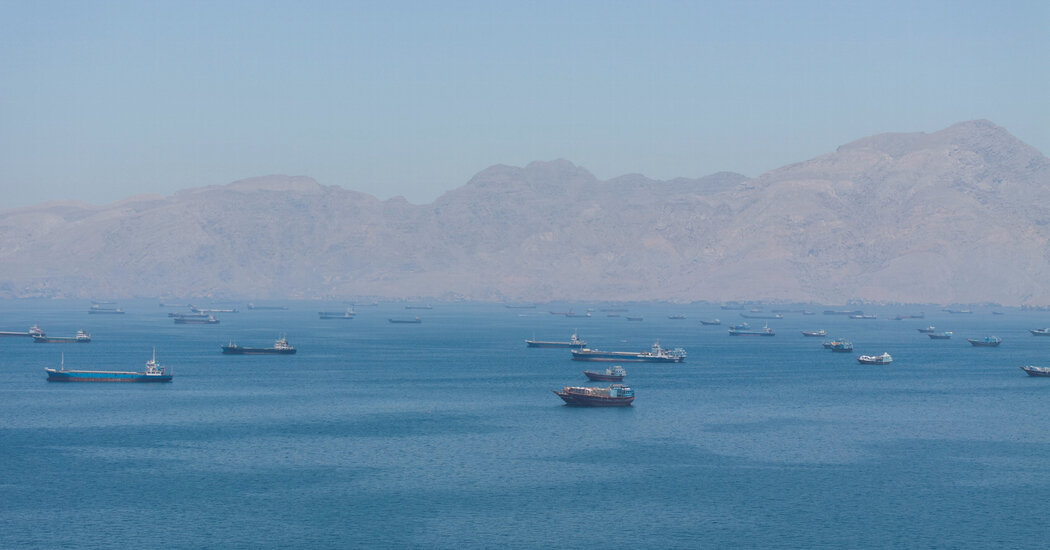
Under the precise terms of the framework outlined by the state broadcaster, global maritime commerce would be slated to return to its stable, prewar baselines within a mere month of the agreement’s formal execution, providing a desperate sigh of relief to international shipping conglomerates currently forced to pay exorbitant war-risk insurance premiums. Most notably, the document stipulates that the day-to-day management and operational security of the Strait of Hormuz would be handled through a joint cooperative framework between the Iranian government and the Sultanate of Oman, a quiet but influential Gulf nation that has historically maintained close ties to Washington while acting as a trusted diplomatic bridge to Tehran. Yet, the brief television report was highly conspicuous for what it chose to omit: out of the five core structural disputes that have gridlocked international negotiators for months, the reopening of the crucial waterway was the sole issue defined in the broadcast. The vital chokepoint, through which approximately one-fifth of the world’s liquefied natural gas and petroleum flows daily, has been effectively shuttered by Iranian naval assets since early March, sending shockwaves through global energy markets. Remarkably, the leaked framework made absolutely no reference to the looming question of Iran’s contested nuclear program, its rapidly growing stockpile of highly enriched uranium, or the stringent international oversight mechanisms that the West insists must accompany any permanent relief from crippling economic sanctions.
The Geopolitical Maze of Demilitarization and the U.S. Regional Footprint
Perhaps the most controversial and highly speculative clause within the leaked Iranian draft is a purported pledge from Washington to systematically “withdraw its military forces from the areas surrounding Iran,” a sweeping and highly ambiguous phrase that deliberately leaves the exact geographic borders of such a demilitarized zone entirely undefined. The United States currently maintains a sprawling, deeply entrenched military footprint throughout the Middle East, including thousands of active-duty troops stationed at permanent tactical bases in neighboring Iraq, strategic airbases in Qatar and Kuwait, and the formidable headquarters of the U.S. Navy’s Fifth Fleet in Bahrain. Diplomatic mediators who have spent months shuttling between capitals to facilitate these backchannel negotiations have expressed profound skepticism regarding this clause, arguing that it is militarily and politically inconceivable that the Trump administration would agree to dismantle its pre-existing regional architecture. Recognizing this immense narrative gap, the state television report openly acknowledged that “whether this includes forces newly deployed to the region or only permanent base personnel remains subject to intense negotiation.” Ultimately, the document suggests that if a final, binding agreement can be secured within an ambitious sixty-day window, the resulting treaty would then be codified and permanently guaranteed under a formal United Nations Security Council resolution, providing both sides with the multilateral legal coverage required to sell the compromise to their respective, ultra-hawkish domestic constituencies.
Oil, Blockades, and the High Economic Stakes of Global Maritime Chokepoints
The intense global urgency to resolve this standoff rests on the severe economic pain being inflicted daily upon both the Iranian state and the broader global economy, a reality driven home by the crippling U.S. naval blockade that has systematically choked off Iran’s primary oil export terminals and commercial hubs. By effectively shutting down the Strait of Hormuz in March, Tehran deployed its most potent asymmetric weapon, successfully retaliating against American pressure but simultaneously triggering a severe disruption in global energy markets that has strained supply chains from East Asia to Western Europe. For Iran, the blockade on its ports has pushed its domestic economy into hyperinflation and sparked widespread social unrest, making the lifting of maritime restrictions a matter of systemic regime survival rather than simple diplomatic preference. Conversely, Washington is under immense domestic and international pressure to lower global fuel prices and reassure key allies—particularly in Europe and Asia—who view the prolonged closure of the Persian Gulf as a threat to their national security. The proposed sixty-day timeline to achieve a United Nations Security Council resolution represents a calculated attempt by mediators to build a structured bridge out of this economic abyss, offering Iran a clear, legally binding pathway to escape financial ruin in exchange for relinquishing its strangling grip on the world’s most critical energy artery.
Trump’s Pendulum Diplomacy: Between Redlines and Reassurance
Compounding the immense complexity of these negotiations is the highly volatile strategic posture of the Trump administration, which has spent the last week vacillating wildly between public declarations of constructive diplomatic progress and dark, bellicose warnings of imminent military devastation. This pendulum-like approach to foreign policy has kept both allies and adversaries off-balance, reflecting a deep-seated division within the administration between pragmatic national security advisers seeking a diplomatic off-ramp and ideological hawks who view the current crisis as a golden opportunity to force a total collapse of the Iranian regime. By refusing to confirm or deny the existence of backchannel talks while simultaneously blasting the state television leak as a fabrication, Washington is engaged in a sophisticated game of psychological warfare designed to maximize its leverage at the negotiating table. This dual-track strategy of applying maximum economic and military pressure while simultaneously keeping the door to a grand deal cracked open has defined the administration’s approach to Middle Eastern diplomacy, forcing Tehran to constantly reassess Washington’s true redlines. The resulting diplomatic environment is one of extreme, unpredictable friction, where official government statements often contradict secret intelligence briefings, leaving the international community to decipher whether the two sides are genuinely marching toward a grand bargain or merely stalling for time.
A Fragile Equilibrium on the Brink of Escalation
The sheer fragility of this diplomatic dance is starkly illustrated by the explosive kinetic engagements that continue to unfold on the waters of the Persian Gulf, proving that despite the talk of treaties and frameworks, the theater of war remains highly active. Just this past Monday, American military commanders confirmed that U.S. naval assets and strike aircraft had executed targeted, high-precision strikes on Iranian missile launch installations and specialized coastal vessels that were actively attempting to lay sophisticated naval mines within the international shipping lanes. The response from Tehran was characteristically fierce, with high-ranking Iranian officials convening a televised press conference on Tuesday to formally accuse the United States of flagrantly violating the terms of the fragile, April-brokered cease-fire agreement while vowing to deliver a crushing and asymmetrical military response to any further Western aggression. This high-octane cycle of strike and counter-strike reveals the razor-thin margin for error that defines the current standoff, where a single stray missile or a misidentified vessel could instantly invalidate weeks of painstaking backchannel diplomacy. As the sixty-day clock theoretical framework ticks in the background, the world is left to watch a high-stakes geopolitical drama where the prospect of a historic maritime peace treaty is constantly overshadowed by the very real, looming threat of a devastating naval war.