






The 10-Million Threshold: Inside Switzerland’s High-Stakes Battle Over Population Growth, Prosperity, and National Identity
The Whispering Valleys of Zurich and the Limits of Alpine Growth
For over half a century, within the shadowed, pine-scented quietude of his workshop in the small village of Bauma, just outside the bustling financial orbit of Zurich, seventy-nine-year-old artisan Walter Nef has coaxed delicate wooden toys and smooth, architectural cheese boards from the trunks of local maple trees. Yet, as the gentle curl of wood shavings falls to his floor, the world outside his window has steadily grown louder, crowded out by the persistent hum of commuter traffic, the rhythmic clanging of towering construction cranes, and a palpable density that has slowly crept into this once-secluded valley. Mr. Nef’s quiet observation that Switzerland—a nation celebrated for its pristine Alpine vistas, punctual transport, and carefully balanced social fabric—is rapidly approaching capacity is no longer merely a local lament, but the driving force behind a crucial national referendum aimed at capping the resident population at ten million. Driven by the unique mechanics of Swiss direct democracy, which empowers citizens to bypass parliament and force nationwide ballot measures by gathering just 100,000 signatures, this impending vote has thrust the country into a profound existential debate that echoes the ballot-box populism of American states like California. For supporters like Mr. Nef, the choice is not framed by the standard, heavy-handed rhetoric of border control, but by a more progressive-sounding concern for ecological sustainability, quality of life, and the physical limits of public infrastructure. He views the nation as a living organism whose metabolic limits are being dangerously tested, arguing with the quiet conviction of an old-world craftsman that unrestrained expansion is fundamentally incompatible with the preservation of the country’s celebrated social stability and natural beauty.
Green Strategies and Populist Roots: Rebranding the Migration Debate
                ┌──────────────────────────────────────┐
                │      Swiss People's Party (SVP)      │
                │       "Sustainability" Campaign      │
                └──────────────────┬───────────────────┘
                                   │
            ┌──────────────────────┴──────────────────────┐
            ▼                                             ▼
┌───────────────────────────┐ ┌───────────────────────────┐
│ Centrist Appeal │ │ Traditional Base │
├───────────────────────────┤ ├───────────────────────────┤
│ • Crowded public transit │ │ • Alarmist rhetoric │
│ • Escalating rent prices │ │ • Refugee statistics ads │
│ • Traffic gridlock │ │ • Hardline nationalism │
└───────────────────────────┘ └───────────────────────────┘
This constitutional initiative represent the latest chapter in a broader European backlash against immigration, a political wave that has propelled right-wing, populist parties to historic gains across the continent. Yet, in Switzerland—a highly developed nation boasting four official languages and a society built on successive waves of foreign labor for nearly two and a half centuries—this debate has taken on a highly strategic twist. The initiative was championed by the right-wing Swiss People’s Party (SVP), a powerful political force known for its history of provocative, anti-immigrant campaigns, including a highly controversial and successful 2009 ban on the construction of mosque minarets. For this campaign, however, the party has executing a highly calculated political pivot, trading its traditional nationalist imagery for the vocabulary of environmentalism and urban planning by branding the population cap as a “sustainability initiative” designed to protect the country’s delicate ecosystems. By focusing on crowded public transit, gridlocked highways, and astronomical housing costs, the SVP has successfully appealed to centrist, moderate voters who might otherwise reject the party’s more hardline policies. Dr. Stefanie Bailer, a distinguished political scientist at the University of Basel, points out that while the SVP historically weaponized raw fear to mobilize its base, this green-friendly rebranding has allowed the party to capture a much broader, eco-conscious demographic. However, this eco-friendly veneer remains highly controversial; beneath the polished rhetoric of resource conservation, the party continues to leverage old anxieties, as evidenced by controversial, high-profile billboards in major transport hubs like Zurich Central Station that present highly inflated statistics regarding asylum seekers and domestic crime rates, revealing the persistent tension between the campaign’s moderate packaging and its populist core.
The Demographic Paradox: Targeting the Engine of Swiss Prosperity
The primary paradox of this fiercely contested referendum is that while public anxiety is often directed toward asylum seekers, the vast majority of the modern population growth in Switzerland is driven by highly educated, high-earning European professionals—specifically doctors, engineers, and scientists from Germany, France, and Italy who have fueled the nation’s advanced industries. This dynamic represents a significant shift from previous migration waves, such as the post-WWII influx of Italian guest workers, the refugees fleeing the Yugoslav wars in the 1990s, or the brief spike in Syrian asylum seekers in 2015. Instead, over the past quarter-century, Switzerland’s population has expanded by more than twenty-five percent to its current 9.1 million, a rapid growth rate driven largely by the country’s lucrative job market and high quality of life. In stark contrast to neighboring Germany or France, out of the millions of foreign nationals currently residing in Switzerland, only a tiny fraction—approximately 89,000—are registered refugees, while nearly two million are permanent European residents working in the country’s premier pharmaceutical, technology, and financial sectors. Economists and business lobby groups have issued urgent warnings that a rigid population cap would trigger a severe, self-inflicted labor crisis, precisely as the nation’s highly skilled baby boomer generation reaches retirement age. Prominent Swiss business leaders, such as David Allemann, co-founder of the global running shoe brand On, have publicly argued that Switzerland’s economic success relies on pairing local ambition with international expertise, warning that cutting off access to global talent would ultimately stifle the innovation that supports the country’s high standard of living.
   ┌─────────────────────────────────────────────────────────────┐
   │             Swiss Permanent Resident Breakdown             │
   ├─────────────────────────────────┬───────────────────────────┤
   │ European Professionals          │ ██████████████ 2,000,000  │
   │ Registered Refugees             │ █ 89,000                  │
   └─────────────────────────────────┴───────────────────────────┘
The Microcosm of Prosperity: Innovation, Rents, and the Fifteen-Dollar Shake
To understand how this foreign expertise directly drives the Alpine economic model, one only needs to step inside the sleek, seventeen-story glass headquarters of the sports brand On, rising above the industrial-chic skyline of Zurich’s west side. Within this vertical village, where the primary language spoken in the dining halls is a tapestry of accented English, more than 1,200 employees representing over one hundred different nationalities collaborate on high-performance athletic gear. The advanced engineering behind their most innovative manufacturing processes was developed by a German specialist, while the expert guide leading visitors through the corporate campus is a young French engineer—a clear testament to how the country’s open-border agreements with the European Union have allowed local businesses to recruit top-tier talent. Yet, the high-flying, international lifestyle nurtured within these glass towers has also accelerated the domestic cost-of-living anxieties driving the support for the population cap. At the company’s chic organic cantina, a single protein shake costs roughly fifteen Swiss francs—approximately mid-teens in US dollars—a striking example of the dizzying price levels that everyday Swiss citizens face. In major economic hubs like Zurich and Basel, finding an apartment has become an exhausting, hyper-competitive struggle as real estate supply fails to keep pace with demand, leaving citizens to navigate a landscape dominated by rising rents and the constant drone of construction equipment, a visible tension that turns the beautiful train commute through the countryside into a daily reminder of a country struggling to accommodate its rapid growth.
Finding the Equilibrium: Infrastructure Fatigue and the Voice of the Center
              ┌──────────────────────────────────────┐
              │      Moderate Case for the Cap       │
              └──────────────────┬───────────────────┘
                                 │
     ┌───────────────────────────┼───────────────────────────┐
     ▼                           ▼                           ▼
┌──────────────────┐ ┌──────────────────┐ ┌──────────────────┐
│ Infrastructure │ │ System Balance │ │ Quality of Life │
├──────────────────┤ ├──────────────────┤ ├──────────────────┤
│ Strained SBB │ │ Restoring supply │ │ Retaining local │
│ rail network and │ │ demand equilibrium│ │ community fabric │
│ highway systems │ │ in housing market│ │ amidst push for │
│ under capacity │ │ │ │ rapid expansion │
└──────────────────┘ └──────────────────┘ └──────────────────┘
For moderate, middle-class voters who back the initiative, these mounting daily frustrations have converged into a powerful argument that Switzerland must temporarily slow its rate of expansion to protect its world-class infrastructure from collapse. This perspective is championed by centrist political figures like Heidi Z’graggen, a widely respected Swiss senator from the moderate Center Party, who argues that the debate is not rooted in traditional anti-immigrant sentiment, but in a pragmatic concern over public spending and physical resources. She emphasizes that the astronomical costs of expanding the national railway network, widening major highway systems, and building new housing have placed an unsustainable burden on public systems, making a temporary stabilization of the population necessary to restore balance. Back in his workshop in Bauma, Walter Nef echoes this sentiment, embodying the nuanced, paradox-rich attitude of Swiss conservatives; he speaks warmly of his own assistant, an immigrant from Albania, and expresses deep pride in his country’s multilingual, multicultural identity, yet remains convinced that unrestrained growth will overwhelm the nation’s community-driven way of life. For Mr. Nef, the fundamental question facing voters is a philosophical one: whether a small, landlocked Alpine republic can retain its unique character and high quality of life if it continues to prioritize corporate expansion and rapid population growth over localized, sustainable development.
The Geopolitical Edge: A Trojan Horse and the Shadows of Global Isolation
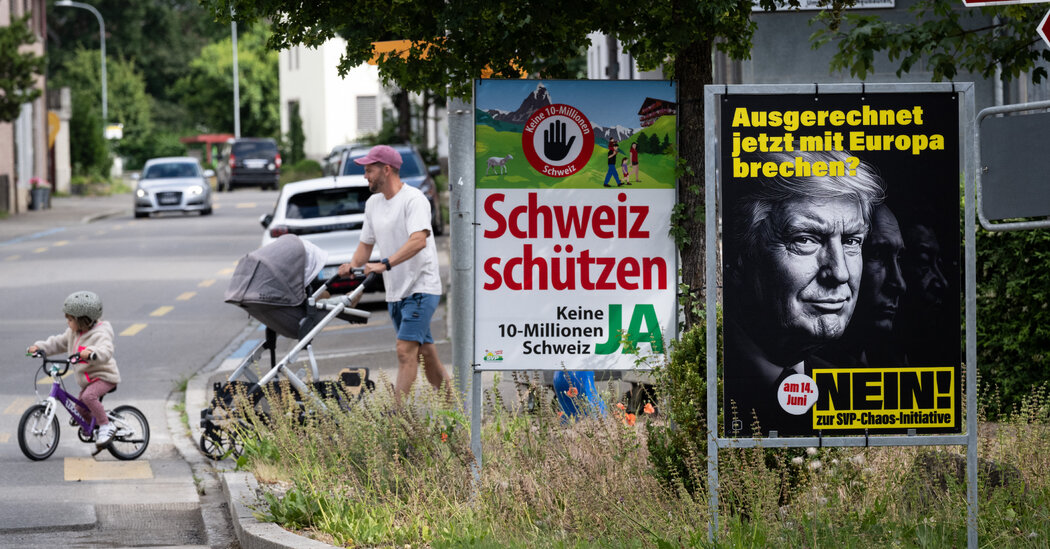
Against these appeals for local conservation, opponents of the initiative warn that the proposal is a dangerous distraction that masks its true geopolitical intent: a calculated attempt to dismantle Switzerland’s vital partnership with the European Union. Critics argue that the proposed population cap is a political maneuver designed to appeal to anxieties about visible overcrowding, while its actual legislative consequence would be the forced cancellation of the landmark Agreement on the Free Movement of Persons. This pivotal treaty allows Swiss citizens to live and work anywhere in the EU while granting reciprocal rights to European professionals—a cornerstone of Swiss integration with its neighbors, France, Germany, and Italy. Senator Andrea Caroni, a representative from the pro-business Free Democratic Party, has declared the initiative a “Trojan Horse” engineered by Euroskeptics to force a clean break from Brussels, a move that could isolate the Swiss economy at a time of deep global instability, marked by shifting trade relationships with the United States. For immigrant communities, this highly charged national debate has generated a painful sense of alienation and vulnerability. Basel state politician Mustafa Atici, who immigrated from Turkey and built a successful political career, notes that the continuous weaponization of migration in national discourse damages the social fabric by alienating the very people who drive the nation’s healthcare, construction, and academic sectors. As the campaign reaches its final days, the visual landscape of Switzerland’s cities has transformed into a battleground of political imagery: while the SVP prints stark, raised-fist warning posters in Sunday newspapers, opponents in cities like Basel have responded with dramatic street posters depicting the faces of Donald Trump, Vladimir Putin, and Xi Jinping, warning voters that approving the population cap would isolate the peaceful, prosperous nation from Europe and leave it vulnerable in an increasingly unstable world.