





The Battle for Britain’s Soul: Andy Burnham’s Westminster Return Sparks a High-Stakes Labour Leadership Crisis
The Makerfield Earthquake: Andy Burnham Reclaims a Seat in Parliament
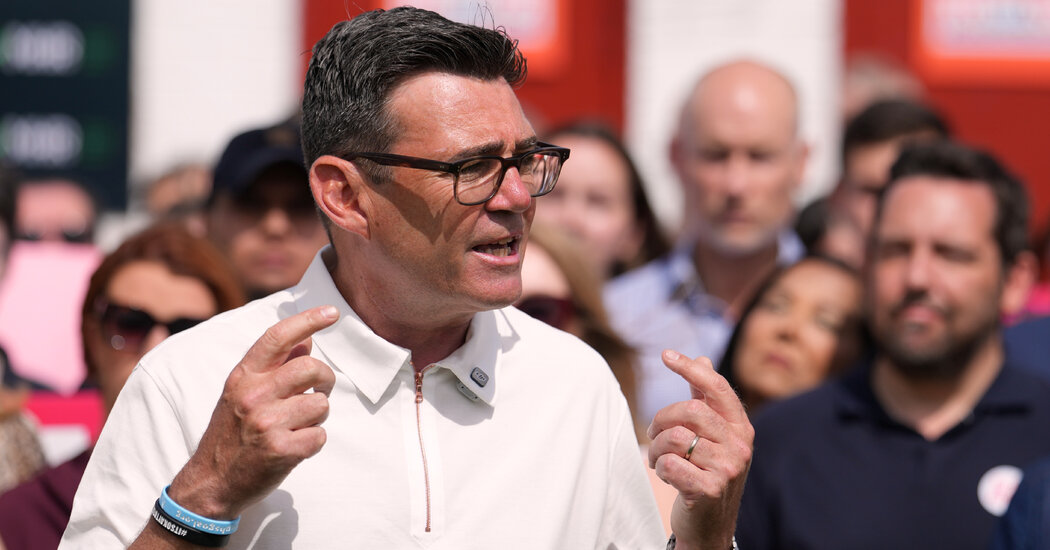
The damp, mist-shrouded streets of Makerfield—a historic constituency in Greater Manchester defined by its proud heritage of coal-mining villages, tight-knit market towns, and working-class resilience—became the unexpected epicenter of a British political earthquake on Thursday, as Andy Burnham secured a resounding victory in a pivotal by-election. The current Metro Mayor of Greater Manchester, widely regarded as one of the most formidable and recognizable figures in contemporary British politics, effortlessly dismantled his competition, reclaiming a seat in Westminster and instantly upending the fragile balance of power within the ruling Labour Party. When the final ballots were tallied under the fluorescent lights of the local leisure center early Friday morning, election officials announced that Burnham had captured an overwhelming 24,937 votes, securing a commanding majority of approximately 55 percent of the total electorate. His nearest rival, Rob Kenyon of the populist, right-wing Reform UK party, finished a distant second with 15,696 votes, representing a hard-fought 34 percent. Secure in his triumph, Burnham stood at the podium with a beaming, confident gaze that transcended the immediate room, signaling to observers nationwide that this local victory was merely the first, calculated step in a broader, highly anticipated campaign to challenge Prime Minister Keir Starmer for the leadership of the Labour Party and, ultimately, the keys to 10 Downing Street.
A Mandate from the Margins: Burnham’s Warning of a “Final Chance” for Labour
“We must hear it, we must act upon it, and we must get it right. There will be no second chance. But it is a chance now… to build a new politics.”
— Andy Burnham, MP for Makerfield
Taking the stage to deliver his victory address, a triumphant Burnham did not limit his remarks to local platitudes; instead, he delivered an impassioned, nationally directed manifesto that contrasted sharply with the cautious, technocratic messaging synonymous with the current party leadership. Addressing an energized crowd of supporters and national media crews, Burnham declared that the electors of Makerfield had “voted for change, they have voted for more power for the north, they have voted for hope,” explicitly framing his return to Parliament as a direct vehicle for this regional awakening. In a pointed, unmistakable broadside directed at Keir Starmer and the party’s metropolitan inner circle, Burnham issued a stark ultimatum, warning that British democracy was standing on the precipice of a profound transformation that the current government could no longer afford to ignore. He passionately remarked that this victory represented a final opportunity for the Labour Party to reconnect with its traditional, post-industrial base, which has grown increasingly alienated by the perceived indifference of the London-centric Westminster establishment. By positioning himself as the authentic voice of the neglected provincial North, Burnham sought to draw a clear line between his optimistic, localized brand of democratic socialism and the uninspiring fiscal conservatism of the Starmer administration, asserting that failure to deliver tangible material improvements to working-class communities would result in the permanent demise of the party’s historic electoral coalition.
Downing Street on the Defensive: Starmer’s Defiant Stand Against Impending Chaos
The political tremors radiating from the Makerfield count were felt instantly in Whitehall, prompting a swift and defensive counter-offensive from Prime Minister Keir Starmer as he attempted to project authority over a restless parliamentary party. Appearing on the BBC’s flagship morning news program, a visibly tense Starmer offered his formal congratulations to Burnham on the victory but quickly pivoted to a stern, uncompromising rejection of any potential challenge to his premiership. Starmer warned viewers and restive backbenchers alike that initiating a divisive internal leadership contest at a time of national economic precariousness would plunge the United Kingdom into a state of structural “chaos” from which it might not easily recover. Defiantly digging in his heels, the Prime Minister insisted that he would not walk away from his mandate and vowed to aggressively contest any formal challenge to his position, asserting his intent to lead the party into the next general election regardless of the internal dissent brewing within his ranks. Despite this display of public resolve, senior Labour strategists privately acknowledge that Starmer’s domestic position has grown perilously weak, as a series of policy reversals, persistent public-sector strikes, and a failure to meaningfully revive the national economy have contributed to some of the lowest public approval ratings experienced by any sitting Prime Minister in modern British history.
The Populist Undercurrent: Reform UK’s Resilience and the Fractured Right
While Burnham’s victory was decisive, the electoral dynamics in Makerfield highlighted the persistent, volatile undercurrent of populist anger that continues to reshape the landscape of British politics. Reform UK, the insurgent right-wing party led by the charismatic Nigel Farage—a close ally of former U.S. President Donald Trump—poured significant resources into the constituency, hoping to capitalize on local frustrations regarding high immigration rates, public service decay, and the perceived stagnation of the post-Brexit British economy. Although Rob Kenyon’s second-place finish failed to deliver the sensational upset his party had predicted, his capture of over a third of the electorate marked a significant improvement over Reform’s performance in the general election two years prior, cementing the party’s status as the primary challenger to Labour in northern, working-class communities. Kenyon’s surging campaign was ultimately undermined by the presence of a spoiler candidate from Restore Britain, a marginal, far-right faction that criticized Reform UK for being insufficiently radical and managed to siphon away 3,111 crucial votes. While the combined total of these right-wing factions would still have fallen short of Burnham’s impressive majority, the high concentration of populist votes served as a stark reminder of the fragile peace in the region, prompting Burnham to argue that his progressive, economically populist platform remains the only reliable bulwark against the kind of toxic, deeply divided, and dark politics that has recently characterized the polarized electoral landscape of the United States.
The “King in the North” Returns: Burnham’s Devolutionary Blueprint for Power
The dramatic narrative of Andy Burnham’s return to the House of Commons represents a captivating evolution in the career of a politician who has spent years systematically dismantling the traditional Westminster mold in favor of a decentralized, regional power base. Once a consummate London insider who held high-profile cabinet positions as Health Secretary and Chief Secretary to the Treasury under Gordon Brown, Burnham’s trajectory shifted dramatically following his successive defeats in the 2010 and 2015 Labour leadership contests, prompts that led him to abandon parliament in 2017 to run for the newly created position of Metro Mayor of Greater Manchester. Far from fading into political obscurity, Burnham utilized the mayoral office to reinvent himself as a powerful, autonomous executive—affectionately nicknamed the “King in the North” by both allies and commentators—who gained national acclaim for his fierce defense of northern businesses during the federal government’s pandemic lockdowns and his successful efforts to bring the region’s fragmented public transit network under localized, public control via the “Bee Network.” By marrying his extensive knowledge of Westminster’s bureaucratic machinery with the real-world executive credibility of running a massive municipal economy, Burnham has constructed a unique, highly appealing alternative blueprint for national governance that champions regional devolution, affordable public services, and massive state-directed infrastructure investments as the primary remedies for the UK’s structural stagnation.
A Nation at a Crossroads: The Impending Ideological Civil War for Britain’s Future
As political columnists and nervous members of Parliament begin calculating the precise timing of a potential leadership challenge, the United Kingdom finds itself standing at a profound ideological and systemic crossroads, weary of the relentless cycle of political instability that has plagued the nation for nearly a decade. The central question now facing the Labour Party—and by extension, the broader British electorate—is whether the country’s deep-seated social inequities and economic paralysis should be addressed through Keir Starmer’s centralized, risk-averse technocracy, or through Andy Burnham’s decentralized, devolutionary, and hope-centered social democracy. While the parliamentary mechanisms required to trigger a formal vote of no confidence in a sitting prime minister remain complex and difficult to coordinate, Burnham’s physical presence on the green benches of the House of Commons provides a visible, highly organized focal point for a growing coalition of disillusioned backbenchers, trade union leaders, and local government officials who believe that Starmer’s cautious path leads inexorably to a crushing electoral defeat. Ultimately, the significance of the Makerfield by-election extends far beyond the geographical borders of Greater Manchester; it marks the official opening salvo in an existential struggle to determine not only the immediate leadership of the Labour Party, but the fundamental direction of the British state as it struggles to forge a stable, prosperous identity in the challenging post-Brexit era.