




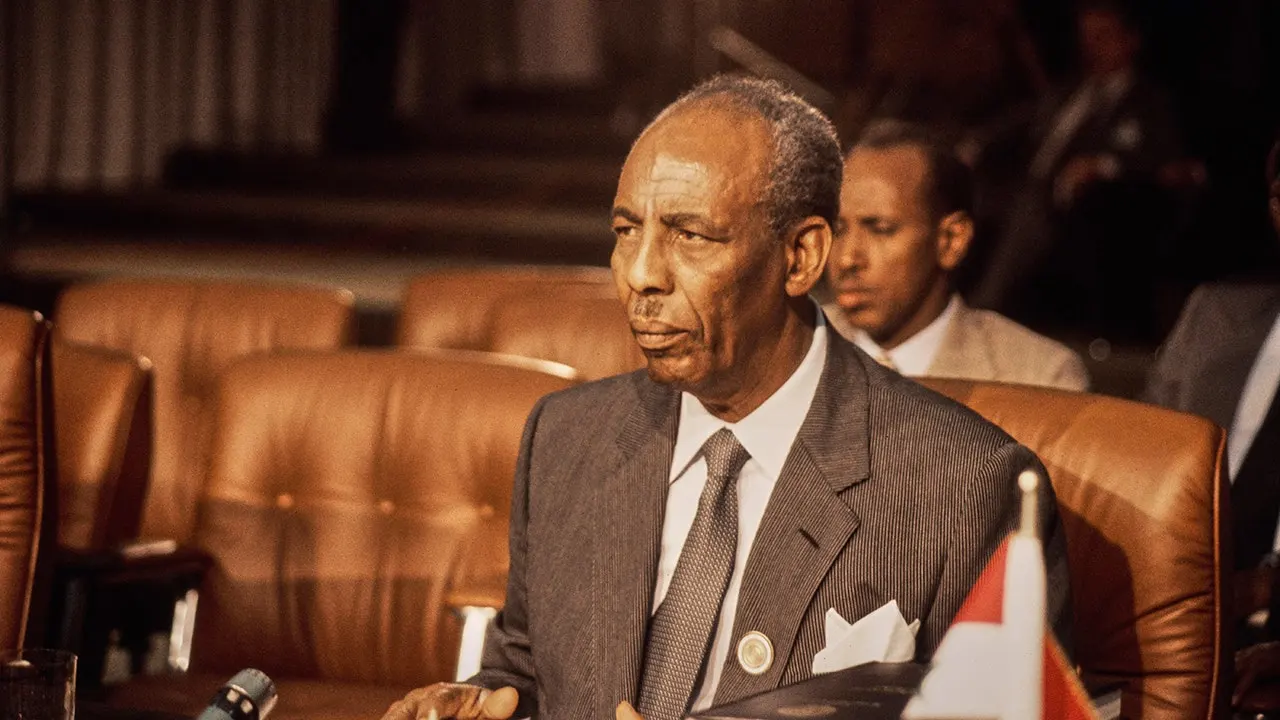
For decades, the name Mohamed Siad Barre has haunted the Horn of Africa, evoking memories of brutal repression, mass graves, and a reign of fear that spanned more than twenty years. Now, a new report has surfaced that his son has been living quietly in the American Midwest, far from the scorched landscapes and political turmoil of his father’s Somalia. Ayanle Siad Barre, 61, resides in the Columbus, Ohio area, a city that has become one of the largest Somali communities in the United States. His sister, Deka Mohamed Siad, reportedly also lives in Ohio. The revelations, first reported by the New York Post, have reopened old wounds for survivors of the Siad Barre regime, while raising uncomfortable questions about accountability, immigration, and whether the children of a man responsible for so much suffering can ever truly leave that legacy behind. Ayanle Siad Barre’s presence in the United States is not a crime in itself, and there has been no public indication that he has been charged with any offense. But for those who lived through the regime, the simple fact that a man so close to power now walks the streets of an American city is deeply jarring.
Mohamed Siad Barre seized control of Somalia in a 1969 military coup and ruled with an iron fist until his government was overthrown in 1991. During those two decades, his regime was accused of mass killings that left as many as 200,000 people dead, along with widespread torture, forced disappearances, and other human rights abuses. The brutality was especially acute against the Isaaq clan, whose members suffered systematic atrocities in the 1980s, including the bombing of Hargeisa, the burning of civilian neighborhoods, and the massacre of thousands. Barre’s forces were also accused of using collective punishment against entire communities, leaving a legacy of trauma that still shapes Somali identity and politics today. Barre himself fled into exile and died in Nigeria in 1995, never facing trial for the crimes committed under his rule. For years, many of his allies and family members scattered across the globe, some finding refuge in countries that had no idea who they were or what they had been part of. According to historian Mohamed Haji Ingiriis, a doctoral researcher at Oxford University, Ayanle Siad Barre was his father’s “right-hand man” and wielded significant power within the government. These allegations are serious, but Fox News Digital has not independently verified them, and no charges have been filed against Ayanle.
The broader context of U.S. immigration enforcement is important here, because there has been at least one recent case involving a former Barre-era official living in America. That case involved Yusuf Abdi Ali, a former Somali military commander who had been living as a permanent resident in Virginia. In 2024, an immigration judge determined that Ali personally engaged in torture while serving in the Somali National Army, and that he ordered soldiers under his command to detain and torture civilians, assist in extrajudicial killings, and carry out other atrocities. He was deported to Somalia in December 2024. At the time, Russell Hott, an official with U.S. Immigration and Customs Enforcement, said: “The United States will not be a safe haven for those who commit human rights violations.” That case was a powerful message that the United States can and sometimes does act against those accused of grave human rights abuses, even many years later. But it also highlights a complicated reality: the system relies on evidence, legal standards, and the willingness of victims to come forward. In Ayanle Siad Barre’s case, the allegations have so far been reported in the press, but there is no indication that any formal investigation has been opened, and a legal process would require far more than historical association or family ties.
The new report also details the family’s business activities in Ohio, adding another layer to the story. Ayanle Siad Barre reportedly established a translation-services company called Somal Global Services, which would have served the large Somali-speaking population in the Columbus area. His sister, Deka, and her late husband operated a home health care business called Vanguard Home Health Care. According to documents reviewed by the New York Post, that company received more than $1.8 million in Medicare funding. The report was careful to note that the company appeared to have operated legitimately and filed the appropriate paperwork. There is no allegation that the family’s businesses were fraudulent or that they were conduits for illicit money. The entrepreneurship is, in some ways, a familiar immigrant story: refugees and displaced people building new lives, creating jobs, and serving communities. For many Somali Americans, the Columbus area represents hope and stability, a place where they can rebuild after years of war. The fact that the son of the man who caused so much of that displacement is living in the same community is deeply painful for many survivors. Human rights activist Suleiman Bolaleh has called for an investigation to determine what Barre family members knew or did during the dictatorship, according to the Post. But such calls do not establish wrongdoing by Ayanle or other family members. They reflect a desire for answers and a belief that the past should not simply be buried.
Humanizing this story means recognizing that there are no easy answers. Ayanle Siad Barre was born into a family that was, for better or worse, at the center of Somali political life for two decades. He did not choose his father, and the sins of a parent are not automatically inherited by a child. Yet he was not merely a passive observer if the allegations are true. Being described as his father’s “right-hand man” suggests a level of involvement that goes beyond family loyalty, but that description comes from a historian whose claims have not been independently confirmed. The legal distinction between moral complicity and criminal culpability matters. In a court of law, being the son of a dictator is not a crime. Knowing about atrocities, or even benefiting from them, is not the same as ordering torture or commanding soldiers. The question is what Ayanle actually did during those years, and so far, the public record is thin. There is also a humanitarian dimension to consider. Many people associated with the Barre regime have died long ago, some have been prosecuted, and others have lived out their lives in exile, stripped of the power they once held. The families of former officials are often caught in a strange limbo, neither fully accepted in their new countries nor able to return home. For the victims of the regime, however, the presence of a known figure in their midst can feel like a fresh injustice, a reminder that the people who hurt them are still walking free.
The official response to the new report has been muted. Fox News Digital reached out to Ayanle Siad Barre for comment, but attempts to reach him through publicly listed contact information were unsuccessful. The Department of Justice, ICE, and the Centers for Medicare & Medicaid Services did not immediately respond to requests for comment. This silence leaves many questions unanswered. Should survivors of the Barre regime expect an investigation? Is there any evidence that would support a prosecution? Or will this story fade, as others have before? The history of human rights accountability is often slow and uneven. Some mass murderers have been brought to justice decades after their crimes, while others have died in peace or lived out their lives in comfortable exile. The story of Ayanle Siad Barre is not just about one man or one family. It is about the long shadow of authoritarian rule, the difficulty of rebuilding a country after state-sponsored violence, and the moral obligation of nations to examine who they are letting in and why. It is also about the resilience of survivors, who remember what their government did to them and who refuse to let the world forget. Whether Ayanle Siad Barre is ultimately found to have played a role in his father’s atrocities or not, his presence in Ohio has forced a reckoning. It asks all of us to consider what justice really means for crimes that happened a generation ago, and whether the children of tyrants can ever escape the weight of their family’s history. For the Somali community in Columbus, and for the world watching this case unfold, the answer is not simple. But the question itself is important, because the truth, however uncomfortable, must eventually come to light.