




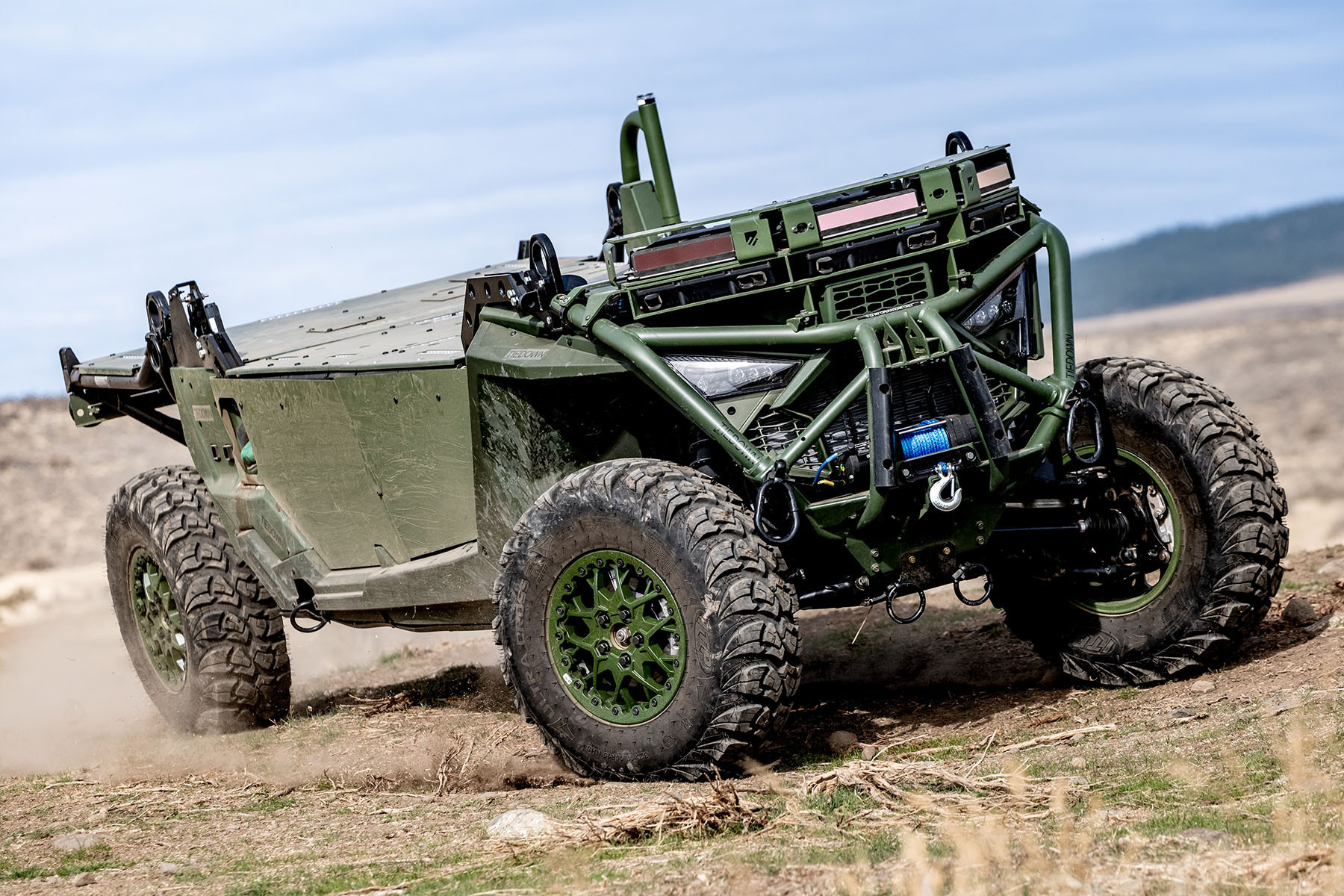
Imagine a battlefield where the road disappears into rocks and dust, where the sky is full of drones looking for any sign of movement, and where every convoy is a target. In that world, the safest vehicle is one with no driver at all. That is the idea behind IBEX, a fully autonomous ground vehicle unveiled by Overland AI, a Seattle-based defense startup. The U.S. Marine Corps has selected IBEX to support counter-drone air defense operations and to handle some of the most hazardous jobs on the modern battlefield—resupplying frontline units, breaching obstacles, and carrying electronic warfare systems. It is designed to do what soldiers don’t want to do: drive into the kill zone. Instead of a human at the wheel, IBEX uses a suite of sensors and proprietary software to read the terrain, avoid obstacles, and keep moving even when communications are jammed. It is not a remote-controlled toy. It is a thinking machine that makes its own decisions in real time. The Marines plan to integrate it into the Marine Air Defense Integrated System, or MADIS, a network of sensors and weapons built to detect and defeat hostile drones. But IBEX is not just a drone-killer platform. It is a multi-mission workhorse. It can bring ammunition, food, and water to troops who are pinned down. It can create breaches in barriers and obstacles. It can carry electronic warfare gear to jam enemy signals. In each case, the vehicle removes a human from danger and adds a robotic teammate that never gets tired, never panics, and never flinches. For soldiers who have spent years watching their friends drive into ambushes, this is not a novelty. It is a lifeline. Overland AI calls this the future of ground mobility, but it is not a distant future. The vehicle is being produced, tested, and prepared for deployment. The name IBEX—the agile mountain goat that climbs impossible cliffs—captures the spirit of the machine: sure-footed, rugged, and impossible to stop. For the Marines and the Army, it represents a new kind of asset. For Overland AI, it is a chance to prove that autonomy can save lives, one mission at a time.
Getting a new piece of military hardware from a startup’s lab into the hands of soldiers is usually a long and frustrating process. There are years of studies, prototypes, competitions, and red tape. Overland AI appears to have skipped much of that. IBEX was developed under a Department of Defense APFIT production contract—an acronym for a program designed to accelerate the procurement and fielding of innovative technologies. That contract has since expanded to $25 million, with additional funding specifically allocated for the Army’s 75th Ranger Regiment. The initial $20 million milestone was more than just a financial win. It made Overland AI the first ground autonomy startup to serve as a primary defense hardware supplier. That is a landmark. In the defense world, “primary supplier” means you own the platform, you control the design, and you are responsible for delivering the finished product. It is a role traditionally reserved for giant contractors with decades of experience. For a company founded in 2022, it is almost unheard of. The Marine Corps also selected IBEX for integration into MADIS, giving the vehicle a clear mission in the counter-drone fight. The fact that both the Marines and the Army’s elite Rangers are investing in the same platform suggests that IBEX is not a niche experiment. It is becoming a program of record in all but name. The APFIT program was created to bridge the gap between promising research and actual production, and Overland AI has crossed that gap in record time. The expanded funding for the Rangers adds another layer of credibility. The Rangers are known for demanding the best equipment and rejecting anything that doesn’t work in the field. Their involvement means IBEX will be tested by some of the toughest customers in the military. For Overland AI, this contract is validation. For the defense industry, it is a warning that the old guard is no longer the only option. Small, agile companies can now compete—and win—on the highest-stakes battlefield. This is exactly the kind of change that defense leaders have been pushing for. They want faster innovation, lower costs, and closer partnerships with the people who actually use the equipment. IBEX is proof that those partnerships can work.
Beneath IBEX’s autonomous brain sits a familiar body. The vehicle is built on the chassis, engine, and drivetrain of the Polaris MRZR, an ultra-light utility vehicle that is already a common sight in the U.S. armed forces. That choice might seem unglamorous, but it is one of the smartest decisions Overland AI could have made. The military already knows how to maintain the MRZR. It has the parts, the tools, and the training. By building IBEX on that proven platform, Overland AI avoids the long learning curve that comes with a brand-new chassis. Soldiers can start driving and repairing IBEX on day one. The numbers tell the story of a serious workhorse: IBEX can carry a 2,000-pound payload, reach fully autonomous speeds exceeding 35 miles per hour, and cruise for 250 miles at 20 miles per hour. It is compact enough to fit inside a V-22 Osprey, meaning it can be flown into remote landing zones and unloaded ready for action. But the hardware is only half of the equation. The other half is OverDrive, Overland AI’s proprietary software stack. OverDrive combines real-time terrain perception with adaptive route planning, allowing the vehicle to navigate complex off-road environments at speed without relying on GPS or pre-mapped routes. This is a crucial capability, because GPS is one of the first things an enemy tries to jam. If a vehicle depends on satellites, it can be blinded by a cheap jammer. IBEX does not have that vulnerability. It sees the world through its sensors, builds a picture of the ground ahead, and chooses the best path just as a human driver would—but faster and with more awareness. It can dodge rocks, follow ridgelines, and cross open ground without a single command from a human. OverWatch, the company’s command-and-control software, lets a single operator manage multiple uncrewed vehicles simultaneously. Instead of one soldier driving one robot, a small team can oversee an entire fleet of IBEX units, each running its own mission. This is the kind of scalability that military planners have been dreaming about for years, and it is now a reality. For the warfighter, that means less time in harm’s way and more time focusing on the mission. For commanders, it means a force multiplier that can operate around the clock, in bad weather and worse terrain. The autonomy is not a gimmick; it is a survival tool.
On a battlefield, electricity is as precious as ammunition. Radar systems, communication gear, electronic warfare jammers, and drone detection sensors all require power, and power is hard to come by in forward positions. IBEX addresses this problem by providing 5 kilowatts of export power. That is enough to run a suite of onboard sensors and defense systems without dragging along a separate generator. It turns the vehicle into a mobile power station, capable of keeping critical equipment online in the middle of nowhere. Overland AI describes each IBEX as a combined power, communications, and compute node. It is not just a truck that drives itself. It is a server, a radio, and a generator on wheels, designed to operate independently in environments where communications are limited or completely disrupted. If the network goes down, IBEX can continue its mission using its own onboard intelligence. If a unit needs to set up a temporary command post, IBEX can provide the power and connectivity. This multi-role capability is what makes the vehicle so valuable. It is also remarkably easy to sustain. Because it shares its base platform with the Polaris MRZR, the military can use existing supply chains for fuel, filters, and spare parts. Greg Okopal, co-founder and chief operating officer of Overland AI, framed it in direct terms. “We pride ourselves on developing technology that is informed directly by the warfighter,” he said. He added that IBEX can be deployed on day one and maintained with the parts and fuel units already have. That kind of statement is rare in the defense industry, where new systems often require new logistics networks and months of training. Overland AI has designed IBEX to slip into the existing military structure without friction. The vehicle joins the company’s flagship platform, ULTRA, and production is scaling at Overland AI’s Seattle facility. The company is not just building prototypes; it is building an assembly line. The demand for autonomous ground systems is growing, and Overland AI intends to be at the front of that wave. This is not just a convenience; it is a strategic advantage. The ability to generate power on the front line can keep radars turning and communications open when the grid—if there ever was one—is long gone.
Overland AI’s journey from a university spinout to a defense contractor has been remarkably fast. The company was founded in 2022 as a spinout from the University of Washington, drawing on years of academic research in robotics and autonomous systems. It has since raised over $140 million in venture funding, including a $100 million Series B round earlier this year. That financial backing has allowed the startup to think big. It now ranks No. 7 on the GeekWire 200, a closely watched index of the Pacific Northwest’s top startups. But the numbers only tell part of the story. The company has also been busy building physical infrastructure. In 2025, Overland opened a 22,000-square-foot production facility in Seattle’s Rainier Beach neighborhood, just south of downtown. This is where IBEX and ULTRA are being manufactured, and it gives the company the capacity to meet military orders at scale. This summer, Overland established an engineering outpost in Burlingame, California, strategically located in the heart of the Bay Area’s robotics and autonomy ecosystem. The outpost is designed to tap into a talent pool that includes engineers from some of the world’s leading technology companies. It is a smart move. Seattle provides the manufacturing and aerospace expertise, while the Bay Area offers deep software and AI talent. By operating in both places, Overland AI can attract the best people from two distinct technology cultures. The company’s growth reflects a broader trend in the defense industry, where venture-backed startups are challenging traditional contractors with faster development cycles and a willingness to embrace commercial technology. For Overland AI, the next few years will be about scaling production, delivering on contracts, and proving that a small company can handle the demands of the U.S. military. With the facilities, funding, and contracts in place, the foundation is solid. The company’s investors clearly believe in that mission. But the real test will be in the field, where the mud is thick, the enemy is watching, and the difference between a good system and a great one is measured in lives saved. If IBEX performs as advertised, Overland AI will not just be a successful startup. It will be a model for how defense technology gets built in the twenty-first century.
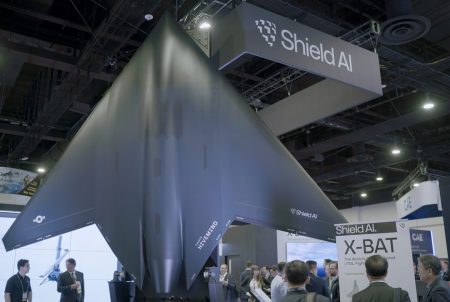
Overland AI’s rise is part of a larger defense technology boom taking place across the Seattle region. The area, once known primarily for software and cloud computing, has become a magnet for companies building the hardware and software of future warfare. Shield AI, a defense technology company known for its autonomous X-BAT fighter jet, has chosen the Seattle area for a massive manufacturing facility. Anduril, one of the most valuable defense startups in the world, sees a path to 1,000 Seattle-area engineers across its Bellevue and Seattle hubs. Echodyne, a radar company focused on drone detection, opened a $40 million manufacturing factory in Woodinville to support the growing demand for counter-drone systems. These companies, along with Overland AI, are turning the Pacific Northwest into a new center of gravity for defense innovation. The reasons are clear: the region has deep engineering talent, a culture of rapid prototyping, and a willingness to embrace risk. It also has a growing cluster of suppliers and partners who can support hardware production. For Overland AI, this ecosystem is a competitive advantage. It can source components, hire engineers, and collaborate with neighboring companies in ways that would be harder in other regions. The success of IBEX is not just a win for Overland AI. It is a proof point for the entire Seattle defense community. It demonstrates that a startup can go from a university lab to a primary defense supplier in just a few years. It shows that the military is willing to buy from new players when the technology is proven. And it reinforces the idea that the future of defense will be built by nimble, innovative companies working alongside traditional contractors. As IBEX rolls into production, it carries more than just sensors and software. It carries the momentum of a region that has decided to lead the world in autonomous systems. From Rainier Beach to Burlingame, from the Marine Corps to the Army Rangers, the message is clear: the next generation of military vehicles will not just be armored. They will be autonomous. And they are being built right here, in the Pacific Northwest.