


It was roughly 1:30 on a warm Saturday morning when the predictable, rhythmic hum of Florida’s Interstate 75 was abruptly shattered near Thonotosassa. What should have been a quiet, dark stretch of highway became the stage for an impromptu, high-octane spectacle known as a street takeover. Hundreds of vehicles converged near mile marker 266, completely choking off all northbound lanes to create an improvised arena for dangerous stunts. Inside this localized pocket of lawlessness, the air grew thick with the acrid stench of burning rubber, the screech of tires spinning in tight circles, and the deafening roar of modified engines pushing their limits. For the everyday motorists trapped in the sudden gridlock, it was a frustrating and terrifying disruption, transforming a routine late-night drive into an unwanted front-row seat to chaos. But for the Florida Highway Patrol, it was a high-priority emergency that demanded an immediate, decisive response. As reports flooded dispatch, a lone state trooper accelerated toward the scene, his emergency lights slicing through the darkness and sirens wailing, prepared to confront an unpredictable crowd that had effectively seized control of a major state artery. The trooper knew that with hundreds of people gathered in an uncoordinated, adrenaline-fueled environment, the potential for a catastrophic accident was incredibly high, making every second count as he raced toward the bottleneck.
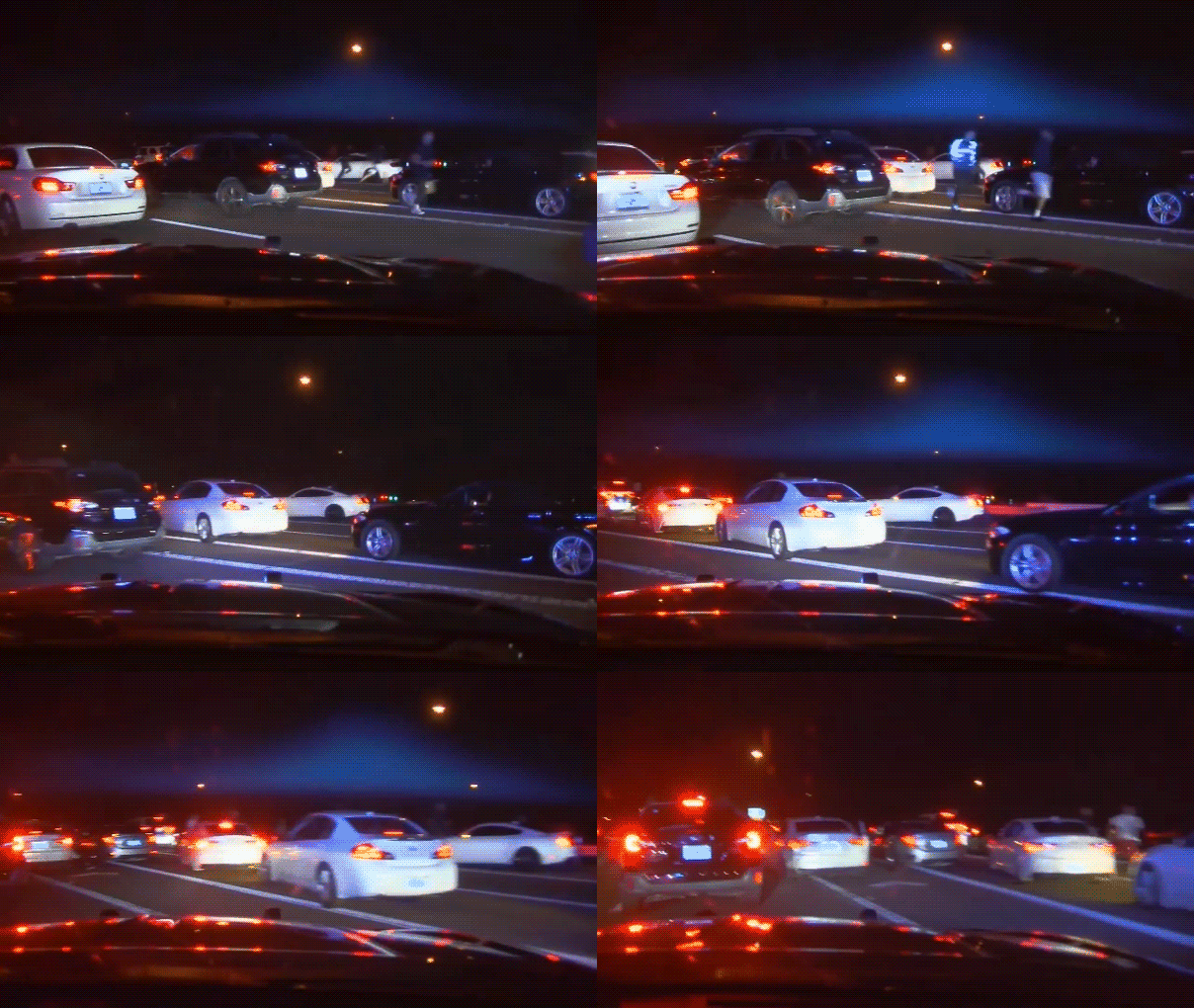
Newly released dashcam footage from the patrol vehicle offers a gripping, first-person perspective of what the trooper encountered upon arrival. As the cruiser approached the blockade, the flashing blue and red lights illuminated a surreal scene: an asphalt sea of hundreds of stationary cars blocking every single lane of the highway. At the sight of the approaching authority, the collective bravado of the crowd instantly dissolved into panic. The video captures a frantic scramble as onlookers who had been filming the burnouts on their phones suddenly bolted in all directions, some running across the highway lanes while others dove back into their driver’s seats to escape. Threading a multi-ton police cruiser through such a dense, unpredictable maze of vehicles and panicked pedestrians required extraordinary focus and precision. The trooper slowly but assertively nudged forward, steering through the narrow gaps left by intimidated drivers who tried to edge out of the way. It was a high-stakes game of inches, where one wrong move could have resulted in a pedestrian collision or a minor crash that would have ended the response then and there, allowing the instigators to escape without consequence.
The slow-motion navigation of the traffic jam quickly erupted into a terrifying, high-speed chase as the trooper spotted a green BMW fleeing the scene. Driven by 25-year-old Yulian Lugo, the sports car broke away from the dispersing crowd and rocketed down the open asphalt, initiating a pursuit that would test the absolute limits of safety. Lugo pushed the BMW to speeds of approximately 140 miles per hour—about double the posted speed limit—creating a deadly kinetic force on the highway. The dashcam video captures the sheer velocity of the chase, where lane markers become a continuous white blur and the distance between vehicles vanishes in the blink of an eye. The pursuit eventually veered off the interstate and snaked its way into a quiet, sleeping residential neighborhood. In these narrow streets, where the margin for error was non-existent and the risk to innocent sleeping families was immense, the high-speed drama finally reached its climax. Perhaps realizing the futility of escaping a police helicopter or persistent ground units, Lugo brought his vehicle to a halt, ending a chase that could have easily resulted in tragedy.
With the pursuit halted, the tension remained palpable as the trooper executed a high-risk traffic stop, loudly ordering Lugo out of the BMW. The driver complied, stepping out of the vehicle into the harsh glare of the police headlights, where he was swiftly handcuffed without further physical resistance. Moments later, three passengers—a 24-year-old and two 18-year-olds—exited the vehicle, their initial adrenaline rush likely replaced by the cold, sobering realization of the legal jeopardy they had entered. In a striking image captured during the aftermath, the young passengers were directed to sit on the hood of the patrol vehicle as the trooper worked to secure the scene and await back-up. The consequences of their late-night thrill-seeking were immediate and severe. Lugo was arrested and hit with heavy felony charges, including aggravated fleeing to elude and participation in a street takeover. His three companions did not escape unscathed either; they were arrested and charged with misdemeanor highway racing. All four individuals were transported and booked into the Hillsborough County Jail, their night of adrenaline ending in the stark, quiet reality of a holding cell.
This dramatic confrontation on I-75 is not an isolated incident, but rather the latest flashpoint in a growing and deeply troubling nationwide trend of street takeovers. These events, often coordinated through encrypted messaging apps and social media platforms, draw hundreds of young drivers seeking internet clout and adrenaline, turning public roads into lawless racetracks. Florida law enforcement has been increasingly aggressive in combating this subculture, which poses a severe threat to public safety and infrastructure. Just this past June, the St. Augustine Beach Police Department narrowly averted a massive “teen takeover” by utilizing electronic monitoring to intercept and dismantle online coordination efforts before the participants could even gather. Similarly, earlier this year, Orlando police released disturbing footage of hundreds of e-bike riders swarming downtown streets, flagrantly running red lights, blocking traffic, and even delaying a responding ambulance. These incidents highlight the evolving nature of the challenge, as thrill-seekers use everything from high-powered sports cars to electric bicycles to seize control of public spaces, leaving communities feeling vulnerable and demanding action.
In response to this rising tide of reckless behavior, law enforcement agencies across the Sunshine State are sending a clear, uncompromising message that the public highways are not private playgrounds. Officers are employing a mix of proactive digital intelligence, undercover operations, and swift, decisive physical intervention to disrupt these gatherings before they can paralyze cities or cause fatal accidents. The successful apprehension of Lugo and his passengers serves as a powerful warning of the severe legal ramifications that now await those who choose to participate in or facilitate these takeovers, with felonies, vehicle impoundments, and jail time becoming the standard response. While the allure of speed and social media fame continues to tempt a subset of young drivers, the risk of devastating crashes or lifelong criminal records looms larger than ever. For the residents of Florida and the troopers who patrol its vast highway system, the resolution of the I-75 chase is a small victory in an ongoing battle to reclaim the streets and ensure that a simple drive home does not turn into a deadly encounter with lawless stunt-drivers.