






The Frontlines of Rwampara: Inside the Clamorous Battle Against a Mutated Threat
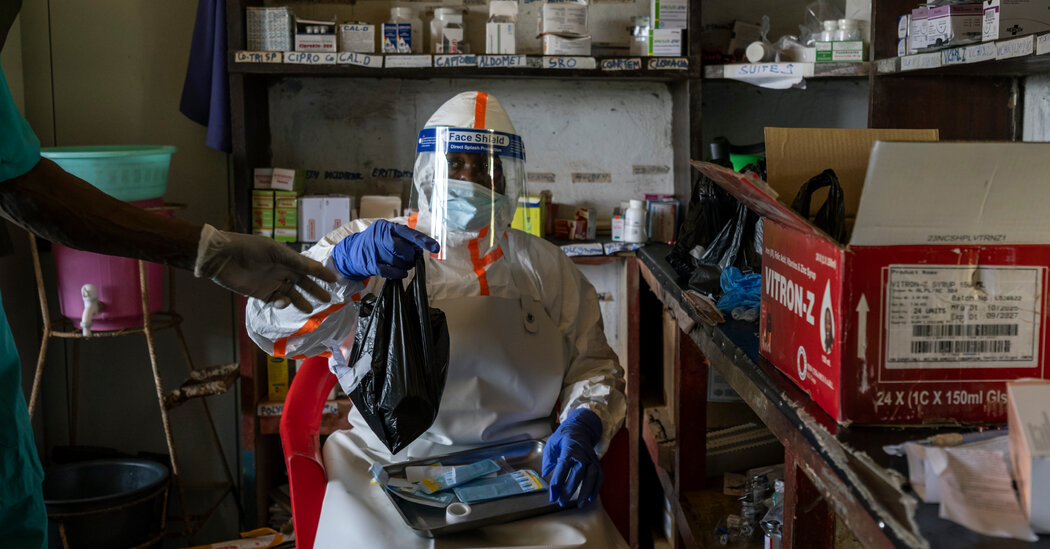
In the hastily assembled, humid confines of an emergency Ebola treatment center in Rwampara, located in the war-torn eastern province of the Democratic Republic of Congo, Dr. Papys Lame and his exhausted medical team operate at the razor’s edge of human endurance and micro-biological warfare. Beneath heavy layers of personal protective equipment that trap the equatorial heat, these frontline clinicians perform a grueling daily ritual of critical supportive therapies: aggressively rehydrating patients who arrive in the violent, exhausting throes of gastrointestinal failure, administering blood transfusions to those suffering from dramatic hemorrhages of the nose and mouth, and managing critical respiratory distress with supplemental oxygen. As the Ebola response coordinator in Congo for the Alliance for International Medical Action (ALIMA), Dr. Lame has spent years guiding communities through some of the world’s most terrifying epidemics, and he readily acknowledges that the modern standard of supportive medical care represents a major victory compared to the grim prospects patients faced just half a decade ago. “Today we have more options, and more people survive,” Dr. Lame observes, his voice carrying the quiet, battle-hardened resolve of someone who has witnessed the slow evolution of epidemic response firsthand. Yet behind this hard-won progress lies a deeply frustrating clinical vacuum: despite all their advanced monitoring systems and pain management protocols, healthcare workers still lack an approved therapeutic agent that specifically targets the Bundibugyo virus—the highly lethal species of filovirus responsible for the current devastating outbreak in East Africa, which has already swept through vulnerable communities to infect at least 695 people and claim 138 lives.
The Evolutionary Divide: Why Yesterday’s Miracles Fail Today’s Outbreak
                   FILOVIRIDAE FAMILY TREE (Simplified)
                              │
     ┌────────────────────────┴────────────────────────┐
     ▼                                                 ▼
EBOLA VIRUS GENUS MARBURG VIRUS
│
├─► EBOLA VIRUS (Zaire ebolavirus) ──► Targeted by current FDA-approved therapies
│ (Ebanga, Inmazeb)
│
└─► BUNDIBUGYO VIRUS ────────────────► Lacks approved targeted therapeutics;
(Bundibugyo ebolavirus) subject of urgent clinical trials
The biological reality of the Bundibugyo virus highlights a stark scientific challenge: the modern therapies developed to combat previous Ebola epidemics are virtually useless against this distinct viral strain due to millions of years of evolutionary divergence. Over the last fifty years, the vast majority of high-profile outbreaks within the African continent were driven by the Zaire ebolavirus (commonly referred to simply as the Ebola virus), a pathogen for which the World Health Organization (WHO) now confidently recommends peer-reviewed, highly effective monoclonal antibody treatments. However, a treatment that successfully neutralizes one species of filovirus cannot simply be repurposed for another; the genetic and structural variations in the outer glycoproteins of the Zaire and Bundibugyo species are so pronounced that antibodies engineered for the former find no docking sites on the latter. When the Bundibugyo virus was first identified in Uganda in 2007, early-stage in-vitro and animal model testing showed initial promise, but these pilot programs were quickly shelved when the outbreak subsided. Because the virus had historically caused only two localized, self-limiting outbreaks before the current crisis, public health organizations and pharmaceutical companies—plagued by chronic funding shortages and forced to triage their research priorities—chose to allocate their multi-million-dollar clinical trial budgets toward the far more frequent and devastating Zaire outbreaks. “If you were a betting person, you would not have bet on Bundibugyo to cause something large,” admits Dr. Thomas Geisbert, a renowned virologist at the University of Texas Medical Branch at Galveston, who has spent decades studying filoviruses. “And, of course, we’re all wrong now,” he adds, reflecting on the international community’s failure to prepare for the current public health emergency, which has sent global scientists into a frantic, retrospective race to identify, validate, and manufacture candidate molecules capable of saving lives in the DRC.
Weapons of Selective Destruction: Inside the Race for Monoclonal Antibodies and Antivirals
To successfully neutralize a pathogen as aggressive as the Bundibugyo virus, an experimental drug must intervene at a molecular level, relying on one of two primary scientific mechanisms: either deploying lab-engineered monoclonal antibodies to lock onto the viral spike proteins and block cellular entry, or administering small-molecule antivirals to disrupt the replication machinery inside host cells. One extremely promising therapeutic candidate, a dual-antibody cocktail known as MBP-134, has already demonstrated remarkable efficacy in preventing death in non-human primates exposed to lethal doses of the virus, and earlier manufacturing safety trials have fortunately confirmed that the drug is well-tolerated by human volunteers. In an extraordinary real-world test, clinicians recently administered MBP-134 alongside the broad-spectrum antiviral remdesivir—a drug originally developed for hepatitis C and later widely utilized during the COVID-19 pandemic—to Dr. Peter Stafford, an American physician who contracted the Bundibugyo virus while working on the frontlines in the DRC. Following a dramatic medical evacuation to the high-security isolation ward at Charité Hospital in Berlin, Dr. Stafford made a full recovery and was discharged on June 6, an outcome that quickly captured headlines but left scientists urging cautious optimism. Researchers argue that because single compassionate-use success stories are fundamentally anecdotal, the global medical community must resist drawing premature conclusions; the only scientifically rigorous way to determine whether MBP-134, remdesivir, or a combination of both can reliably reduce mortality rates is through the complex, ethically sensitive framework of randomized controlled clinical trials conducted directly within the affected communities.
Designing Hope in Chaos: Bold Strategies for Clinical Trials Under Fire
Traditional Trial Design Adaptive Platform Trial Design
┌──────────────────────────────┐ ┌──────────────────────────────────┐
│ One Outbreak ──► One Drug │ │ Multiple Outbreaks & Viruses │
│ │ │ │
│ Highly vulnerable to │ VS. │ [ Outbreak A: Marburg ] ──┐ │
│ abrupt end of outbreak │ │ [ Outbreak B: Bundibugyo ] ┼─► │
│ Logistics and regulatory │ │ [ Outbreak C: Sudan ] ────┘ │
│ approvals take months │ │ │
│ High failure-to-launch │ │ Shared protocol, rapid pivot │
│ history during epidemics │ │ * Maximizes patient data pools │
└──────────────────────────────┘ └──────────────────────────────────┘
The logistical coordination required to launch clinical trials in the midst of an active epidemic is famously difficult, often resulting in outbreaks naturally dissipating and ending before researchers can secure the necessary international regulatory approvals, establish cold-chain supply lines, and enroll a sufficient number of patients. In an attempt to shatter this cycle of missed scientific opportunities, Dr. Amanda Rojek, an associate professor of health emergencies at the University of Oxford and a veteran of multiple filovirus outbreaks, has spent years refining a highly adaptive, multi-outbreak trial framework designed to evaluate experimental therapies across distinct but biologically related viral epidemics. This innovative clinical trial mechanism allowed Dr. Rojek and her team to rapidly initiate evaluations of remdesivir during a deadly 2024 Marburg virus outbreak in Rwanda, with plans to seamlessly integrate and compare those findings with incoming data from a newly launched sister trial targeting the Bundibugyo virus in Congo. However, translating this pioneering clinical strategy into reality remains incredibly difficult, as the current outbreak zone is situated in an active conflict corridor where violent militia activity, deep-seated political instability, and severely damaged local infrastructure disrupt the delivery of basic medical supplies. Yet, despite these immense security and logistical headwinds, there is palpable optimism among regional public health leadership; Dr. Salim Abdool Karim, who heads the Africa Centers for Disease Control and Prevention’s expert advisory group on the outbreak, points out that because the clinical infrastructure is already housing patients, demonstrating the efficacy of therapies like remdesivir could progress rapidly, offering a massive global health advantage given that remdesivir is a highly affordable, chemically stable drug with robust generic manufacturing options already established worldwide.
Preempting the Pathogen: How Post-Exposure Prophylaxis Could Break the Chain of Transmission
While treating actively hemorrhaging patients in intensive isolation wards remains a critical priority, epidemiology experts argue that the true key to suppressing a fast-moving epidemic lies in post-exposure prophylaxis (PEP)—the administrative strategy of giving experimental antiviral drugs to healthy individuals who have been exposed to the virus, thereby neutralizing the pathogen before it can establish a systemic infection. Currently, public health workers in the DRC and Uganda are engaged in a race against time to trace hundreds of high-risk family and community contacts, all of whom are forced to endure an agonizing, multi-week isolation period to see if the dreaded symptoms of Bundibugyo disease materialize. To alleviate this psychological and physical burden, researchers are preparing to launch clinical trials evaluating obeldesivir, a highly advanced, orally administered nucleoside analog that acts as a direct-acting prodrug of remdesivir, packaging deep-tissue antiviral efficacy into an easily swallowed pill. This preventative intervention has been described as an absolute epidemiological game-changer by experienced veterans like Dr. Armand Sprecher, an emergency physician with Doctors Without Borders, who emphasizes that curing an individual during the silent incubation phase not only saves their life but permanently breaks the transmission chain by preventing the virus from ever being shed into the community. This optimism is backed by stunning preclinical data published by Dr. Geisbert’s laboratory, which demonstrated that monkeys treated with obeldesivir just twenty-four hours after exposure to lethal doses of various filoviruses—including the Ebola, Sudan, and Marburg strains—were afforded total, absolute protection from illness, a revolutionary protective shield that scientists are desperate to replicate in human communities facing the threat of the Bundibugyo virus.
The Structural Chasm of Global Health Equity: Who Receives the Modern Cure?
| Therapeutic Agent | Drug Class | Dev. Origin | Primary IP Holder | Access Status |
|---|---|---|---|---|
| MBP-134 | Monoclonal Antibody | Public-Private | Mapp Biopharmaceutical | Experimental; used in Berlin; limited clinical trial pipeline in DRC |
| Ansuvimab (Ebanga) | Monoclonal Antibody | DRC Survivor | Ridgeback Biotherapeutics | Approved for Zaire; DRC access via special protocol; largely stockpiled in US |
| Remdesivir | Small-Molecule Antiviral | Broad Research | Gilead Sciences | Promising early trials; generic availability could aid global access |
| Obeldesivir | Oral Prodrug Antiviral | Broad Research | Gilead Sciences | Under study for PEP; potentially affordable oral treatment option |
The profound disparities that define global health security were illustrated when the family members of Dr. Peter Stafford were promptly administered prophylactic doses of the experimental MBP-134 antibody cocktail in Berlin, successfully shielding them from infection and prompting the recovering physician to publicly urge that the impoverished citizens of the Democratic Republic of Congo undergo the exact same standard of elite, life-saving care. This plea directly targets a painful legacy of modern medicine: clinical trial data generated by African patients is frequently used to secure lucrative regulatory approvals in the Global North, yet the resulting drug stocks remain tightly sequestered in Western strategic biodefense stockpiles, far out of reach for the communities where the diseases actually occur. A historical example of this ethical divide occurred during the historic 2018–2020 Ebola outbreak in the DRC, where a landmark clinical trial proved that two breakthrough monoclonal antibody therapies—one of which was isolated directly from the blood of a Congolese Ebola survivor—cut patient mortality rates in half, yet the intellectual property rights ended up restricted under the patents of Western corporations like Regeneron and Ridgeback Biotherapeutics. Although Ridgeback Biotherapeutics has provided quantities of its antibody treatment to the DRC under limited, compassionate-use protocols during subsequent localized emergencies, the drug remains unregistered in the sub-Saharan countries most vulnerable to outbreaks, leaving local ministries of health at the mercy of discretionary corporate donations. As clinical trials for the Bundibugyo virus begin to yield crucial diagnostic and therapeutic data, international human rights advocates and organizations like Unitaid are stepping up pressure on global drug manufacturers and funding bodies, demanding binding, pre-negotiated access agreements to ensure that if these experimental molecules are proven to save lives, they are manufactured at scale and distributed directly to the clinics of East Africa, rather than locked away as intellectual property in the safety vaults of foreign governments.