


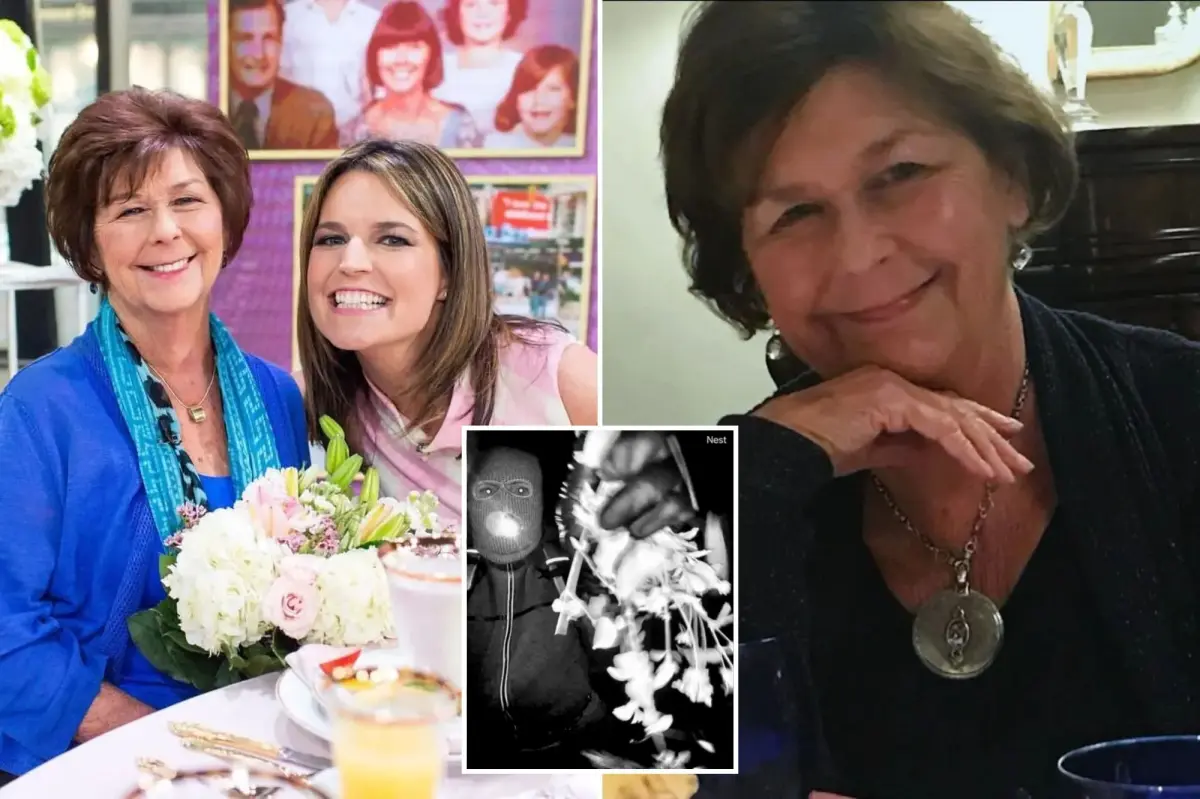
Six months is an eternity when you are suspended in the agonizing vacuum of the unknown, living through a nightmare that began in the quiet of a desert night and has yet to offer any semblance of peace. For Savannah Guthrie, the familiar, warm face millions of Americans welcome into their living rooms every morning on NBC’s “Today” show, the passage of these past six months has not softened the blow of her mother’s sudden and terrifying disappearance; instead, it has only deepened a profound, echoing ache that permeates every aspect of her daily life. On a somber Saturday morning, marking exactly half a year since her eighty-four-year-old mother, Nancy Guthrie, vanished without a trace, Savannah laid bare the shattering reality of her family’s private hell. Sharing a radiant, smiling photograph of her mother on Instagram, Savannah bypassed the polished veneer of national television broadcasting to speak directly from the raw, bleeding center of a daughter’s broken heart. Her words were not just a commemoration of a painful milestone, but a desperate, impassioned cry directed squarely at the faceless individuals responsible for stealing her family’s anchor, begging them to finally step forward and end a cycle of torment that she described as “agony and despair.” In doing so, she reminded a watching world that behind the sensational headlines, police press releases, and true-crime speculation are real, breathing human beings whose lives have been permanently fractured by an act of incomprehensible cruelty. By humanizing her mother beyond the clinical label of a victim, Savannah sought to touch the conscience of anyone who might hold the key to their closure, transforming a cold missing-person statistic into a living testament of deep familial devotion and unresolved grief that demands justice and truth. She illuminated the stark reality that while the public might move on to the next news cycle, a family left in the wake of an abduction remains perpetually frozen in their grief, desperately searching for a way to piece their broken world back together.
The timeline of Nancy Guthrie’s abduction reads like a chilling psychological thriller, yet for her family, it is a rigid, haunting sequence of events that they replay in their minds with agonizing precision every single day. On the evening of January 31st, Nancy was dropped off at her cozy home in Tucson, Arizona, wrapped in the warmth and safety of her family’s love, with no indication of the horror that awaited her in the quiet hours of the night. Investigators believe that between the silent hours of 1:47 a.m. and 2:28 a.m. on February 1st, an intruder—or intruders—breached the sanctity of her home and took the frail, elderly woman directly from her bed while the rest of the world slept. The deliberate precision of the crime is mirrored in the heartbreaking way Savannah chose to mark this six-month anniversary: her emotional social media post was published at exactly 1:47 a.m. Arizona time, the very minute the nightmare is believed to have commenced. This poetic yet devastating choice of timing underscores how deeply the trauma has integrated into the family’s biological clocks; they do not merely count the passing of the days, but the hours, the minutes, and the individual heartbeats that have elapsed since Nancy was stolen. The silence of that desert night has stretched into a half-year of unanswered questions, leaving behind an empty bed, a quiet home, and a family frozen in the precise moment their lives were torn apart. They are left desperately seeking a path out of the darkness that swallowed their beloved matriarch, holding onto the hope that the truth will eventually come to light and break the terrible silence that has blanketed their lives. Each passing day without her serves as a harsh reminder of how fragile safety can be, and how quickly a routine evening can transform into an enduring tragedy that leaves a family searching for a beacon of hope in the dark.
To truly comprehend the scale of this tragedy, one must look beyond the sterile vocabulary of criminal investigations and gaze into the ruined landscape of the Guthrie family’s daily life. Savannah, along with her siblings and relatives—Cam and Kristine, Annie and Tommy, Mike and herself—navigates an existence that has been fundamentally hollowed out, leaving a massive, painful crater where their vibrant matriarch once stood. They wake up each morning forcing themselves to put one foot in front of the other, to find the strength to smile, and to carry on solely because that is the very lesson of joy and resilience that Nancy spent her eighty-four years instilling in them. Yet, beneath their courageous public facades lies an unyielding sorrow, an ache that Savannah notes cannot be softened by time, platitudes, or distraction. The family’s fierce determination to discover the truth is not fueled by a desire for vengeance, but by a deep, instinctual yearning to afford their mother the simple, sacred dignity of a proper goodbye—a beautiful celebration of a remarkable life that she so richly deserves, rather than leaving her memory suspended in the dark. In her post, Savannah fiercely defended her mother’s humanity against those who would exploit this tragedy, issuing a sharp, stinging rebuke to true-crime tourists, internet sleuths, and media vultures who consume their real-life grief as mere entertainment or a source of profit. She asserted with powerful clarity that such behavior only compounds the profound harm already inflicted upon their family, reminding everyone that this is not a fictional drama, but a real-life horror story that has shattered real people. The family’s collective pain is a testament to the deep love they share, a bond that remains unbroken even as they navigate the devastating reality of her absence.
Driven by an overwhelming desperation that only a loving child could harbor, Savannah used her platform to broadcast a powerful, multi-layered plea for help, appealing directly to the consciences of anyone who might hold a key to unlocking this mystery. Recognizing that the truth often hides in the quiet shadows of local communities, she begged neighbors, acquaintances, and even strangers to look closely at their surroundings, offering a substantial financial reward for any information that might lead to a breakthrough in the case. Her plea was remarkably empathetic, reaching out to individuals who might be paralyzed by fear, torn by conflicting loyalties, or deeply troubled by suspicious changes they have observed in someone they love. She acknowledged that speaking up is terrifying, particularly if it involves confronting the dark actions of a family member or friend, but she gently urged them to realize that there is a path toward redemption and peace through anonymous tips. By imploring people to recognize the handwriting in the ransom demands or to speak up about unusual behaviors, Savannah sought to bridge the gap between fear and justice. She pleaded for the collective power of human goodness to rise up and overpower the dark, destructive force that took her mother away, emphasizing that doing the right thing can put an end to this cycle of suffering and bring an elderly woman back to the family that loves her. She reminded the public that no detail is too small, and that sometimes, a simple observation can be the final piece of the puzzle that solves a devastating crime and restores peace to a shattered household. Through her words, she offered a lifeline to those who might be holding onto secrets, inviting them to step into the light and help heal a family’s broken heart.
The urgency of Savannah’s public appeal became even more pronounced following the shocking release of two ransom notes by the Pima County Sheriff’s Office, documents that offer a terrifying glimpse into the cold-blooded nature of the abduction. The first email, sent in the chaotic, early days of the kidnapping and addressed directly to Savannah, was a chilling exercise in digital extortion that demanded a staggering $4 million ransom to be paid in Bitcoin, a cryptocurrency notorious for its anonymity and ease of transfer across international borders. The author of the note attempted to project a twisted sense of order and civility, claiming that Nancy was “safe but scared” and promising her unharmed release upon receipt of the funds within a strict seven-day window. The kidnappers laid out a ruthless timeline, threatening to hike the ransom to an astronomical $6 million if the initial deadline was missed, weaponizing the family’s love and desperation against them in a calculated financial transaction. This initial note painted a horrifying picture of an elderly, fragile woman being treated as a high-stakes commodity, thrusting her family into a frantic, high-pressure race against time while dealing with the sheer terror of her vulnerability in the hands of faceless captors. It forced the family to confront the reality that Nancy’s life had been reduced to a monetary transaction, a cold equation calculated by criminals who had no regard for her humanity, her physical limitations, or the simple fact that she was a mother, grandmother, and beloved community member who deserved safety. The clinical coldness of this demand stood in stark contrast to the warmth of the woman they loved, highlighting the terrifying divide between the perpetrators’ greed and the family’s desperate hope.
However, the fragile hope kindled by the first message was brutally extinguished just four days later when a second, devastating note arrived, shifting the narrative from a hostage negotiation to a heartbreaking tragedy. In this second communication, the captors claimed that they had failed to grasp the severity of Nancy’s underlying physical health, stating that she had “perished shortly after she was taken” due to what they believed was a heart-related medical emergency. The writers offered a hollow, unsettling apology, claiming they never intended to harm her and revealing that she was now “buried in nature,” a phrase that offers cold comfort to a family longing to bring her body home for a sacred, traditional burial. Despite this crushing blow and the grim probability that Nancy is no longer alive, the Guthrie family refuses to let their spirits be entirely broken by the darkness of this ordeal. Drawing deep from the wellspring of their Christian faith, Savannah concluded her message with an unwavering declaration of hope, asserting that they will never stop searching for answers, never stop looking for the light, and never stop believing in the inherent goodness of the human spirit. Their determination to find Nancy remains unquenchable, a burning testament to a daughter’s love that refuses to let the final chapter of her mother’s life be written by the hand of her captors, choosing instead to focus on the legacy of love she left behind. In the face of unimaginable tragedy, the Guthrie family stands united, bound by their memories and an enduring faith that promises that love will ultimately triumph over the darkness, keeping Nancy’s memory alive as they continue their tireless search for the truth.