




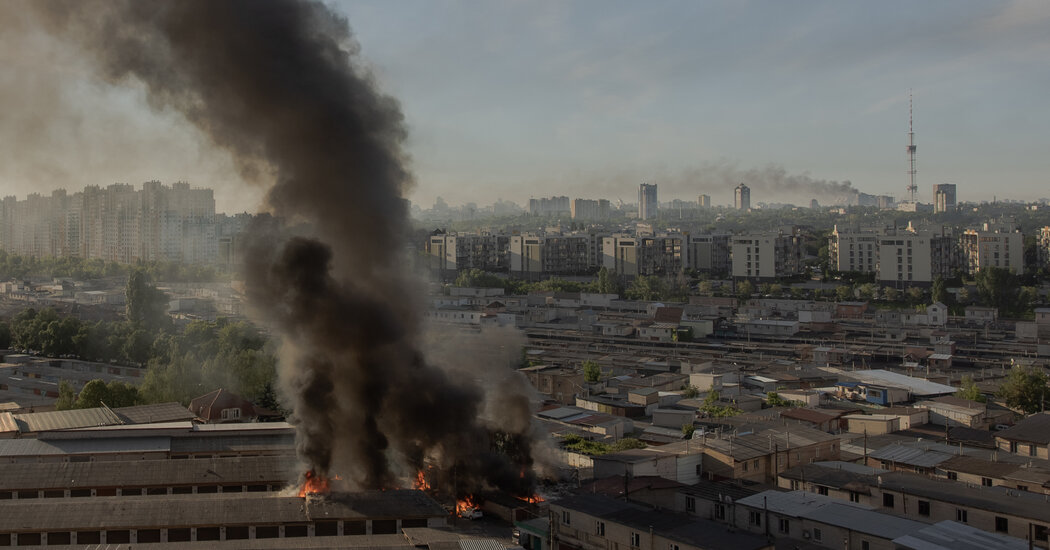
The devastating aerial bombardment that rained down upon Ukraine on Tuesday morning—a terrifying symphony of hundreds of swarming drones and screaming ballistic missiles lighting up the pre-dawn sky—was designed to project absolute dominance, yet it ultimately failed to obscure a much deeper, more profound truth: Russia’s war machine is fractured, weary, and increasingly desperate. For the civilians huddled in subterranean subway stations and cold makeshift bomb shelters, comforting weeping children as explosions shook the ground above, the physical terror of the strikes was all too real, yet military analysts see these spectacular displays of force not as a sign of offensive vitality, but as the convulsive gasps of a stalled invasion. On the muddy, blood-soaked front lines of eastern Ukraine, the Russian advance has ground to an agonizing, near-total standstill, plagued by logistical failures, depleted arsenals, and a severe shortage of willing combatants. This stark reality represents a dramatic shift in the war’s momentum, a sentiment echoed by leading global defense experts who note that the strategic landscape has altered fundamentally over the past twelve months. As Franz-Stefan Gady, a prominent Vienna-based military analyst, keenly observed during a recent detailed interview, Ukraine’s current defensive and offensive position is immeasurably more formidable, cohesive, and resilient today than it was at this time last year, validating the painful sacrifices made by its people. Rather than signaling a path to decisive Russian victory, these fierce, offensive aerial assaults are widely interpreted as a frantic effort to manufacture leverage ahead of anticipated diplomatic negotiations, especially as the United States shifts its primary security focus toward burgeoning crises in the Middle East. Moscow is attempting to project an illusion of strength to the international community, hoping to bring a weary Kyiv and a distracted Washington to the negotiating table on favorable terms, even as its own boots on the ground struggle to hold their positions, relying on the psychological terror of bombardment to compensate for its dramatic, deeply systemic failures on the battlefield.
This sudden erosion of Russian momentum marks a stunning and humbling reversal of fortune for President Vladimir V. Putin, who only one year ago exuded an air of absolute, unchallenged triumph. In the summer of 2023, the Russian leader felt so secure in his military’s trajectory that he traveled to Alaska, using a high-profile meeting with President Donald Trump to casually dictate his terms for what he assumed was an inevitable Ukrainian surrender, projecting a future of unchecked expansion. Today, however, the geopolitical tables have turned in a remarkably dramatic fashion, with President Volodymyr Zelensky of Ukraine actively driving the diplomatic narrative and aggressively pushing for a just, swift end to the hostilities from a position of renewed battlefield leverage and international solidarity. This psychological and strategic shift is quietly being acknowledged even within the heavily guarded, gold-plated corridors of the Kremlin, where public optimism has given way to bleak, realistic assessments of their military’s limitations. In a rare and telling admission of vulnerability, Dmitry Peskov, the chief spokesman for the Russian presidency, conceded this week that peace talks have hit a frustrating standstill and that Russia is highly unlikely to achieve its primary objective of seizing full control over the Donbas region by the end of 2026. This sudden retreat from aggressive, short-term military timelines to a prolonged, decades-long defensive outlook highlights a growing realization in Moscow that their initial ambitions of rapid conquest have shattered against the rock of Ukrainian resistance. The hollow bravado of past years has been replaced by a grim, reluctant willingness to settle for territorial consolidations, revealing a desperate desire to freeze the conflict before the cracks in Russia’s domestic stability expand beyond the Kremlin’s control, exposing their structural fragility to a watching world.
The dramatic transformation of the battlefield is fueled in large part by a steady, revitalizing influx of high-grade military assistance from Ukraine’s European allies, which has successfully countered the initial advantages of Russian mass and artillery dominance. Recent defense packages—including a critical, highly sophisticated $149 million arms consignment from Finland and Sweden’s game-changing pledge of sixteen state-of-the-art Gripen fighter jets—have injected new life, precision, and defensive capabilities into the Ukrainian Armed Forces, filling soldiers with renewed hope. According to detailed battlefield assessments conducted by DeepState UA, an authoritative open-source intelligence tracking collective, this rapid infusion of Western hardware has yielded tangible, historic results on the ground: in May, the Russian military actually lost more physical territory than it managed to capture, marking the first net territorial retreat for Moscow since the height of Kyiv’s 2023 counteroffensive. What makes this achievement even more extraordinary is that it occurred during a period when Russia dramatically escalated its offensive operations, increasing its ground attacks by a staggering 37.5 percent. This glaring disparity between increased offensive effort and negative territorial gain indicates that Russia’s frontline forces have degraded to a catastrophically dysfunctional degree, unable to execute complex tactical maneuvers. Frontline reports reveal a tragic, highly desperate reality where massive, coordinated armored assaults have been replaced by disjointed, suicidal charges composed of only one or two isolated soldiers sent forward into fortified Ukrainian positions. It is a chilling testament to the erosion of Russian combat capability, signaling to both Ukrainian commanders and Western intelligence agencies that the war has entered a pivotal new phase where Kyiv holds the vital tactical initiative, leaving Russian forces exhausted and structurally compromised.
Behind these tactical shifts and cold, clinical statistics lies an unimaginable, heartbreaking scale of human suffering, with the Russian military experiencing a level of attrition not seen in Europe since the darkest days of the Second World War, representing a profound human tragedy. British intelligence chief Anne Keast-Butler recently delivered a sobering assessment of this human toll, revealing that nearly half a million Russian soldiers have been killed since the invasion was launched in February 2022, a staggering number that represents a generation of young men lost to a futile war of aggression. The relentless carnage is further underscored by high-ranking American officials, including Secretary of State Marco Rubio, who noted that Russia is currently losing fifteen to twenty thousand soldiers every single month—specifying with grim emphasis that these figures represent actual deaths rather than injuries. This unsustainable rate of loss has sent shockwaves through Russian society, sparking a quiet but deeply pervasive undercurrent of domestic discontent as hundreds of thousands of families grapple with the sudden, violent loss of fathers, sons, and brothers. The Kremlin’s desperate attempt to hide these catastrophic casualties from its domestic population has created an atmosphere of profound grief, fear, and paranoia, as ordinary citizens watch their loved ones disappear into a military system that treats them as literal, nameless cannon fodder. This brutal reality has stripped the war of its initial hyper-nationalistic allure, leaving behind an exhausted, grieving populace that is increasingly questioning the enormous human cost of Putin’s imperial ambitions, creating a volatile domestic environment that the Russian leadership is finding increasingly difficult to manage through propaganda alone.
Faced with this crippling personnel deficit and a domestic population that is increasingly resistant to standard recruitment drives, Moscow has resorted to ever more coercive, predatory, and morally bankrupt methods to replenish its depleted ranks. In the occupied, war-torn regions of eastern Ukraine, most notably Donetsk and Luhansk, the Russian occupation authorities have unleashed a campaign of systematic, forced mobilization that amounts to a quiet demographic tragedy for local communities. Academic deferrals that once protected vulnerable, young university students from the horrors of the front lines have been abruptly and ruthlessly canceled, replacing dreams of education, career, and a peaceful future with the immediate threat of combat. Local human rights groups and defense analysts, such as Maksym Beznosiuk of the Jamestown Foundation, describe a reign of terror in these occupied territories, where Russian military units conduct aggressive street raids, mandatory forced registrations, and issue severe legal threats to drag young Ukrainian men into uniforms to fight against their own countrymen. This sinister mobilization strategy serves a dual, deeply insidious purpose for the Kremlin: it simultaneously fills the critical personnel gaps left by their catastrophic battlefield losses while systematically dismantling the native Ukrainian demographic structure of the occupied regions. By forcing Ukrainian citizens to serve as the highly expendable vanguard of the Russian army, Moscow is effectively using the victims of its aggression to sustain its invasion, a tragic and deeply cynical manipulation of human lives that violates the fundamental laws of humanity and international warfare, leaving scars that will last for generations.
As the war enters this highly volatile, transformative phase, the enduring resilience of the Ukrainian people remains the ultimate barrier against Russian ambitions, even as President Zelensky issues urgent, passionate appeals to the international community for the advanced air defense systems necessary to fully shield civilian populations from ongoing missile terror. The geopolitical landscape surrounding the conflict continues to shift, with American-mediated diplomatic efforts temporarily losing momentum due to a complex web of domestic political factors and emerging global crises, including economically disruptive tensions in the Middle East that have inadvertently provided Moscow with a brief financial lifeline through elevated oil prices from the closed Strait of Hormuz. Yet, despite these global distractions and the economic lifelines keeping the Kremlin on life support, there is a palpable, growing sense of confidence radiating from both the battlefields of Ukraine and the halls of power in Kyiv, where the belief in victory remains unshaken. The Ukrainian people and their military leadership are increasingly convinced that they possess the strategic endurance, the international support, and the moral clarity necessary to withstand Russia’s brutal campaign and ultimately force a sustainable, honorable ceasefire. In this high-stakes struggle for national survival, the sheer courage of ordinary Ukrainians has transformed what was once expected to be a swift Russian conquest into a profound testament to the power of human self-determination, proving to a watching world that even the most violent displays of authoritarian force cannot crush the spirit of a free nation determined to write its own destiny, ensuring that the light of democracy will not be extinguished in eastern Europe.