






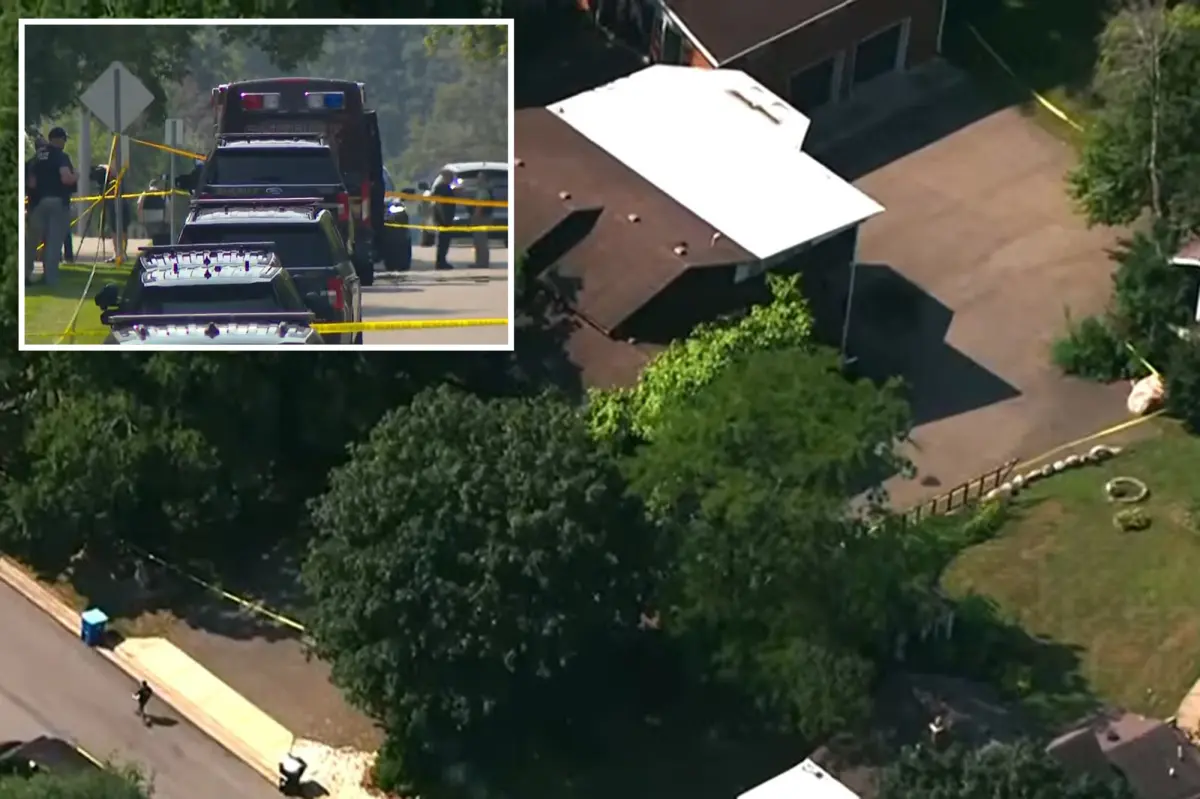
In the quiet, tree-lined streets of Hopkins, Minnesota, a suburb just southwest of Minneapolis, Wednesday morning began with the comforting, unremarkable rituals of family life. Parents clutched coffee mugs and wrangled backpacks, guiding sleepy children through the front doors of a modest in-home daycare on the 200 block of Tyler Avenue North. This address was a trusted landmark in the neighborhood—a cozy home where working parents felt secure leaving their most precious cargo in the hands of a caregiver. The air was filled with the cheerful noise of toddlers preparing for a day of finger painting and story time. But at approximately 9 a.m., that innocent soundtrack was violently shattered. Frantic 911 calls poured in, and police rushed to the scene to discover a tableau of absolute horror. Inside that suburban sanctuary, three souls—a man, a woman, and a young child—lay dead. The initial shockwaves were instantaneous, transforming a serene enclave into a cordoned-off crime scene where the yellow police tape fluttered like a morbid flag against the backdrop of a neighbor’s patriotic display. The promise of a safe, nurturing morning had been replaced with an unfathomable reality, leaving first responders, neighbors, and a sprawling community grappling with the sudden, violent collapse of a family unit.
The details that emerged from the investigation were even more harrowing than the initial alarm. This was not a secret act of violence committed in an isolated back room; the attack unfolded in the chaotic, vulnerable heart of a child-care environment. Seven innocent children were present in the daycare when the brutality erupted, their small, impressionable eyes exposing them to a trauma that should never exist in the adult world, let alone theirs. A parent arriving to drop off their own child was the unwitting witness, stumbling directly into the unfolding tragedy. Their desperate, frantic call to emergency services served as the piercing alarm that summoned help, although it was far too late for the victims. The terror experienced by that witness must have been absolute—imagine the sheer cognitive dissonance of seeing your child’s second home transformed into a charnel house. The police have yet to confirm whether the deceased child was among the original seven counted inside, adding a shattering layer of agonizing uncertainty to the collective grief. However, officials did confirm that no other children sustained physical injuries. Every surviving child was methodically accounted for and reunited with their terrified parents, who rushed to the scene desperate for news of their loved ones. Yet, while their bodies were safe, the psychological and emotional wounds inflicted upon those children are immeasurable, a hidden scar that will likely surface in nightmares, behavioral regressions, and a permanent, fragile sense of security.
As investigators untangled the grim web of evidence, a devastating narrative of domestic annihilation came into focus. Police believe the three victims were a single family unit—a mother, a father, and their young child. The working hypothesis points toward the father as the perpetrator, a man who allegedly murdered his wife and his own offspring before turning the weapon upon himself. This chilling pattern, known as a family annihilation, is a tragic escalation of domestic violence that often follows a period of concealed desperation. The motivation remains lost forever, buried with the perpetrator. Was there a history of abuse? A sudden financial collapse, a custody dispute, or a severe, unrecognized mental health crisis? The weapon used remains unidentified, but the mechanism of death is secondary to the profound breach of trust that occurred. This was not a stranger breaking in through a window; it was a member of the immediate family, presumably an individual responsible for providing care or support, orchestrating a massacre. The safety of the home was violated from within, and the safety of the daycare was compromised by the very system meant to protect it. Police have been cautious in their public statements, mindful not to prematurely assign guilt, but the evidence strongly suggests an inside job, drawing a stark and painful line between a private family conflict and a public tragedy that traumatized an entire neighborhood.
The horror of the event has rippled outward, striking local leaders with its profound shock. Minneapolis Mayor Jacob Frey addressed the attack, referring to it as a “critical incident” in a brief statement ahead of a scheduled speech. His formal words carried the weight of a civic leader grappling with a nightmare occurring just outside his jurisdiction, yet one that would haunt the entire metropolitan area. “I know that our hearts and our prayers are with the people of Hopkins and any families that have been impacted,” Frey offered, expressing a shared grief that transcended municipal lines. He confirmed he had already contacted Hopkins Mayor Hanlon directly, offering the full assistance of Minneapolis—crisis counselors, additional police forensic resources, and any logistical support that might be required in the aftermath. This gesture of inter-city solidarity underscores how such an event destroys the illusion of suburban safety. Suburbs like Hopkins are often chosen specifically as refuges from urban crime, places where families can raise children away from danger. To have a massacre occur at a small, homely daycare shatters that fundamental assumption. Outside, neighbors gathered in clusters, whispering in hushed tones, hugging their own children tightly, and staring with blank disbelief at the house that now held so much sorrow. The local school district and community centers have already opened their doors for grief counseling, recognizing that victims extend far beyond the immediate families—they include every child who set foot in that room, every parent who ever trusted that caregiver, and every passerby who now associates Tyler Avenue with tragedy.
Perhaps the most haunting aspect of this tragedy is the plight of the surviving children. They are the silent, traumatized collateral damage of this incident. While they escaped with their lives and bodies intact, they witnessed an act of absolute evil that will forever alter their cognitive and emotional development. Developmental psychologists warn that children process trauma differently—some may regress to infantile behaviors, others may become hyper-vigilant and uncontrollably anxious, and still others may bury the memory so deeply that it resurfaces only years later as anxiety, depression, or post-traumatic stress. The immediate priority for police was the logistical act of reuniting these children with their parents, a procedure that, while orderly, was undoubtedly emotionally devastating for the parents who arrived to find their worst fears partially confirmed. Those parents now face the herculean task of explaining to their children why they saw a classmate or a sibling being hurt, why the sounds they heard were terrifying, and why that trusted home is now off-limits. They will grapple with profound guilt, even though they had no way of predicting the tragedy. The bonds of trust between a parent and a caregiver have been irrevocably broken for these families. The daycare, once a symbol of community support and shared responsibility, will forever be marked as a site of terror. For the surviving children, the simple act of going to school or daycare, a daily separation from their parents, will now be fraught with dread, requiring them to unlearn the safety that should be innate in such spaces.
As the sun sets over Hopkins, the community faces a long and painful road to recovery. The formal investigation will be meticulous, but it cannot bring back a mother, a father, and a child. The broader questions linger loudly in the minds of residents: How do we prevent such acts? What warning signs were missed? How can we better screen mental instability and violence within our most intimate spaces, our homes and our caregiving institutions? While the deceased family cannot be saved, their story serves as a stark, poignant reminder of the fragile nature of life and the often-hidden devastation of domestic violence. The people of Hopkins will gather for vigils, lighting candles for the three lost souls, and holding one another close in an embrace of collective grief. They will mourn a family that existed in their community, perhaps one they saw at the grocery store or at a park, now permanently erased. The daycare will likely remain closed, its walls silently holding the memory of a terrifying morning that no renovation can erase. Yet, even in the depths of this devastation, the resilient human spirit of the town endures. Neighbors will cook meals for the families of the surviving children. Therapists will offer pro bono sessions. Strangers will donate to memorial funds. The community will slowly, painfully, stitch itself back together, guided by the need to support one another. But the scars will remain—not just on the physical neighborhood, but in the hearts of every parent who hugged their child a little tighter that night, and in the mind of every child who will have to learn to trust the world again, one tentative step at a time.