


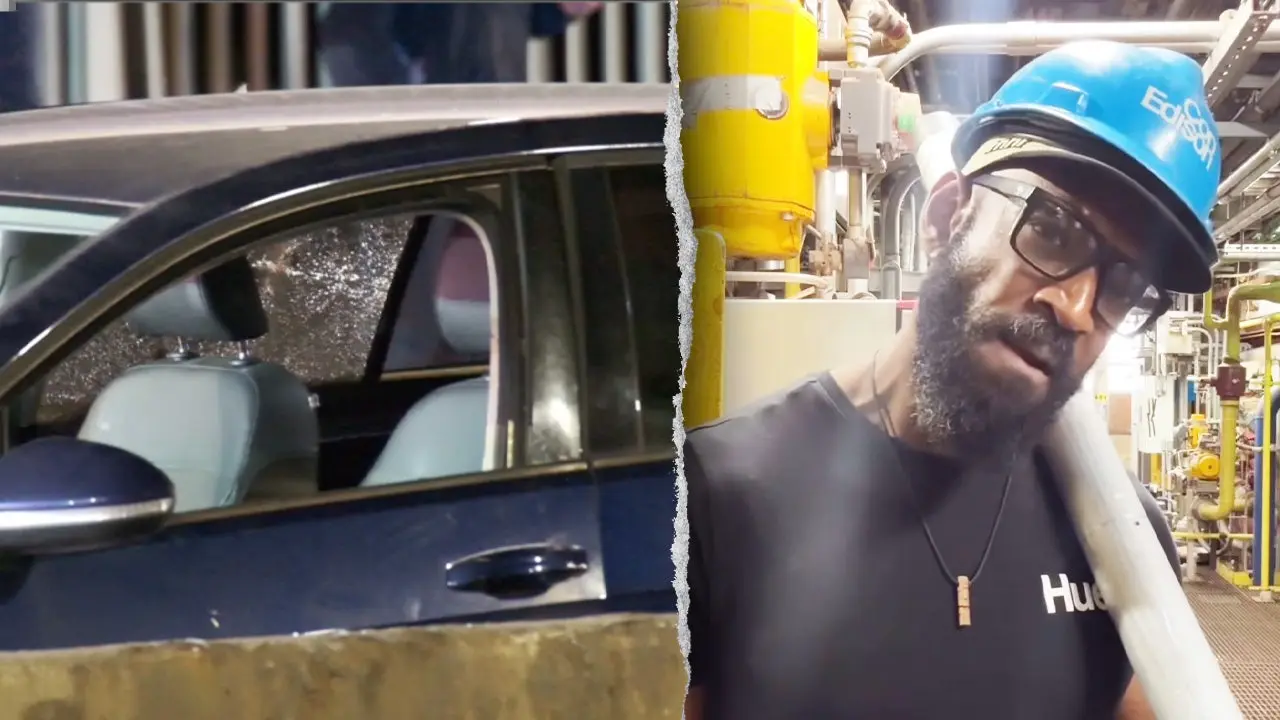
A Life Cut Short on the George Washington Bridge: The Tragic Road Rage Shooting of Koran Irvine
The George Washington Bridge has long stood as a symbol of connection—a massive steel span linking New York City to New Jersey, carrying hundreds of thousands of commuters across the Hudson River every single day. But on a quiet Tuesday evening in late fall, that same bridge became the backdrop for an unimaginable tragedy that would forever change the lives of two families. What began as an ordinary commute home from work spiraled into a senseless act of violence, leaving a devoted husband and father dead and a retired police detective facing charges of murder. The victim, Koran Irvine, a 46-year-old Con Edison worker from Valley Cottage, was simply driving across the bridge when an altercation escalated beyond all reason. The accused, Victor Romero, a 62-year-old former NYPD detective from Haverstraw, now sits in custody, his life and legacy forever altered by a momentary loss of control that no one could have predicted. In the span of a few heartbeats, two men who had dedicated their lives to serving their communities in very different ways found themselves locked in a fatal confrontation—one that leaves behind grieving families, shocked colleagues, and a community struggling to make sense of the meaningless violence.
The shooting occurred at approximately 7:18 p.m., during the height of the evening rush hour when the bridge was filled with weary commuters eager to reach their homes. According to the New York Police Department, officers responded to a 911 call reporting a male shot on the outbound upper level roadway of the George Washington Bridge. When investigators arrived at the scene, they discovered Irvine unconscious and unresponsive in the driver’s seat of his vehicle, suffering from a gunshot wound to the rear of his right shoulder. The impact of the bullet had caused him to lose control of his vehicle, crashing into the median before coming to a stop. Emergency medical personnel rushed Irvine to Englewood Hospital, where despite their best efforts, he was pronounced dead shortly after arrival. The news sent shockwaves through the tight-knit community of utility workers who had come to know Irvine as a dedicated colleague and friend. The NYPD immediately launched an investigation, and within hours, they had identified Romero as the suspect. The former detective had been driving a black Range Rover at the time of the incident, and authorities quickly pieced together the sequence of events that led to the fatal shooting. What authorities described as a road rage attack between two Rockland County residents had escalated with horrifying speed and finality.
Victor Romero’s arrest has raised troubling questions about how a man who once swore to protect and serve could find himself on the wrong side of the law in such a devastating manner. Romero served as an NYPD detective, a position that carries significant responsibility and demands a level of composure and judgment that few possess. He left the force 25 years ago, having spent years in one of the most demanding law enforcement roles in the country. In the decades since his departure from the NYPD, Romero had presumably built a quiet life in the suburban community of Haverstraw, a picturesque town nestled along the Hudson River in Rockland County. Nothing in his public history suggested the capacity for such violence, making the incident all the more shocking to those who knew him. The stark contrast between his past as a protector of the public and his present circumstance as an accused murderer creates a deeply troubling narrative—one that speaks to how quickly life can take unexpected and tragic turns. The NYPD has remained tight-lipped about the specifics of the investigation, but the murder charge against Romero indicates that authorities believe this was no accident or momentary lapse of self-defense, but rather a deliberate act of violence that took a man’s life.
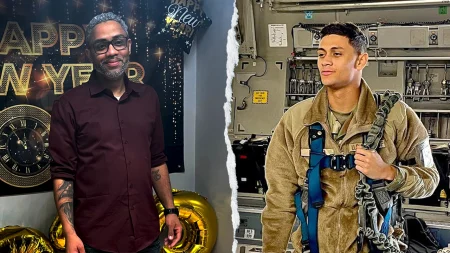
The true human cost of this tragedy is perhaps best understood through the life of Koran Irvine, the man whose future was stolen in an instant. Irvine was more than just a utility worker; he was a devoted husband to his wife Patricia and a loving father to their two children, Lea and Hiro. According to those who knew him, Irvine was a man full of life, love, and dedication to the people who meant the most to him. His family was his world, and he worked hard every single day to provide for and support them. In September, just weeks before his death, Irvine had celebrated a remarkable milestone: 20 years of service with Con Edison. He had posted about the achievement on social media, sharing his pride with friends and colleagues. That sense of accomplishment and stability, built over two decades of hard work, was shattered in a moment of senseless violence on a bridge he had likely crossed countless times before. An online fundraiser established to support Irvine’s family paints a vivid picture of the man behind the statistics—someone who valued his relationships deeply, loved without reservation, and always strived to give his family the best life possible. The words are a testament to a life that mattered, a life that was abruptly and cruelly interrupted.
The response from Con Edison and the broader community has been one of profound grief and disbelief. “We are heartbroken by the tragic loss of a member of the Con Edison family in this senseless act of violence,” the company said in a statement. “Our deepest condolences go out to his family, friends, colleagues and everyone who knew and loved him.” The utility company, which employs thousands of workers across the New York metropolitan area, has rallied around Irvine’s family, offering support and assistance during this unimaginably difficult time. His colleagues, many of whom worked alongside him for years, are grappling with the sudden and violent loss of a man they respected and admired. The tragedy has also resonated far beyond the immediate circle of family and friends, touching commuters who crossed the bridge that evening and heard the sirens, and ordinary citizens who struggle to comprehend how such violence can erupt in the most mundane of circumstances. Road rage incidents have become increasingly common across the United States in recent years, but each incident that results in loss of life serves as a grim reminder of how fragile our existence truly is and how quickly a routine drive home can turn deadly.
As the investigation continues and the legal process begins to unfold, the families of both Koran Irvine and Victor Romero face a future they never anticipated. Patricia Irvine must now navigate life as a widow, raising her children Lea and Hiro without the man who was the center of their family universe. The fundraiser established in Koran’s memory will help provide some measure of financial stability, but nothing can fill the void left by his absence. Meanwhile, Romero’s family must confront the reality that their husband, father, and grandfather is now facing a murder charge—a situation that carries its own profound pain and bewilderment. The George Washington Bridge will continue to carry millions of commuters across the Hudson River, but for those who knew and loved Koran Irvine, it will forever be the place where their world came crashing down. There are no easy answers, no neat resolutions to a tragedy of this magnitude. What remains is the human story—a story of a dedicated utility worker who loved his family, a community that has lost a valued member, and a sobering reminder that our actions, even in moments of anger, can have consequences that ripple outward in ways we can never anticipate or undo. The senseless violence that claimed Koran Irvine’s life was entirely preventable, and his loss stands as a tragic testament to the cost of unchecked rage on our roads and in our lives.