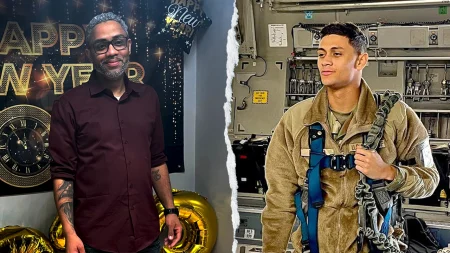



Four Salvadoran Soldiers Abducted in Haiti: President Bukele Demands Their Return
The soldiers were seized Sunday during a security mission, forcing a high-stakes confrontation between El Salvador and the gangs that control much of Haiti.
A Country on the Edge
Port-au-Prince, Haiti — Four members of El Salvador’s military were abducted on Sunday in Haiti, a brazen incident that has sent shockwaves through the Caribbean security landscape and triggered a blunt response from President Nayib Bukele. The soldiers were serving as part of a multinational security effort aimed at restoring order to a country that has been pushed to the brink by gang violence. Details about the kidnapping remained sparse in the hours after it occurred, but the symbolism of the attack was immediate. President Bukele, whose reputation rests largely on his iron-fisted campaign against criminal organizations, moved quickly to issue a public promise: the troops will not be abandoned. El Salvador, he insisted, will spare no effort in bringing them home. The abduction of uniformed personnel marks a dangerous escalation in Haiti’s conflict, a sign that armed groups have grown so confident that they no longer fear the consequences of targeting foreign militaries.
The incident unfolded at a particularly tense moment. Haiti has spent years sliding into institutional collapse, with gangs controlling more than 80 percent of the capital and maintaining a chokehold over food supply routes, fuel depots, and major highways. The police force, underfunded and outgunned, has been unable to reclaim territory seized by heavily armed militias. Into this void stepped the Multinational Security Support mission, an international coalition authorized by the United Nations and led by Kenya. The mission’s goal was straightforward: to support Haiti’s beleaguered police, dismantle gang strongholds, and create enough security for elections to take place. But the mission has struggled from the very beginning. Funding has been slow to arrive. Personnel have been stretched thin. And the gangs, rather than retreating, have adapted — finding new ways to test the resolve of the international community. The kidnapping of four Salvadoran soldiers is the most alarming test yet.
A New Kind of Hostage
No group had claimed responsibility for the abduction by late Sunday, and Haitian authorities offered few specifics about where or how the soldiers were taken. What has become clear is that the operation was not random. Kidnapping has long been one of the most profitable enterprises in Haiti’s informal gang economy. Abductions range from short-term ransom grabs targeting middle-class residents to highly orchestrated seizures of well-known businessmen, diplomats, and aid workers. Foreigners, in particular, have been treated as high-value assets because their governments are often prepared to pay large sums or make political concessions. But seizing a soldier is different. A soldier does not belong to a family or a company. A soldier belongs to a state. And when a soldier is taken, the response is no longer a private negotiation — it is a matter of national security.
The gangs operating in Haiti today are far more sophisticated than the street-level criminal organizations of previous decades. The two most powerful coalitions, often referred to as the G9 and G-Pep alliances, have established parallel systems of governance in the neighborhoods they control. They collect taxes from market vendors, fuel smugglers, and transport operators. They run their own courts. They use complex communications networks to evade detection. And they have shown time and again that they are willing to use violence to send a message. The abduction of four foreign soldiers may have been designed to do just that: demonstrate that no one is untouchable, not even those who arrive with heavy weapons and international mandates. It could also be an attempt to force a prisoner exchange or to gain leverage in negotiations over the future of the security mission. Whatever the motive, the effect has been immediate. The soldiers are now hostages in every sense of the word — held in an unknown location, their lives tied to political calculations far beyond their control.
Bukele’s Mission Abroad
El Salvador’s presence in Haiti is relatively new but deeply symbolic. For years, Bukele’s domestic security agenda has attracted worldwide attention. By declaring a state of emergency, expanding the military’s role in policing, and building what has been called the largest prison in the Americas, Bukele transformed El Salvador from one of the most violent countries in the world into something approaching a model of public safety. Homicides dropped dramatically. Polls showed overwhelming support. And Bukele began to speak about exporting his methods. Haiti, with its ungovernable streets and failing institutions, became the natural place to test that vision. The soldiers dispatched to the Caribbean were not just peacekeepers; they were symbols of a particular philosophy — that strong state action, even at the expense of due process, is the only way to defeat organized crime.
But Haiti is not El Salvador. In El Salvador, Bukele had the benefit of a functioning state apparatus, a loyal military, and a coherent national police force. In Haiti, the state has dissolved in many regions, and the police are often no match for the heavily armed groups that surround them. The country’s judicial system is fragile, and its prisons are overcrowded and insufficient. There is no centralized authority powerful enough to coordinate a nationwide offensive. There is no reliable infrastructure to support mass arrests. And there is no political consensus about how the multinational mission should operate. The Salvadoran soldiers walking into this environment were doing so at great risk, aware perhaps that the mission was as much a political statement as a military operation. Sunday’s abduction has made that risk impossible to ignore.
No Negotiation, No Surrender
For Bukele, the abduction is both personal and political. He has built his entire public identity around the idea that gang members should never be appeased. His government has repeatedly refused to negotiate with criminal organizations, and his policies have been defined by a willingness to use overwhelming force. Now, with four soldiers in the hands of kidnappers, that doctrine faces its most serious external test. A rescue operation in Port-au-Prince would be extraordinarily dangerous. The soldiers could be held in a densely populated neighborhood where a single firefight could result in civilian casualties. Intelligence on the ground is limited, and the gangs operate in shifting networks that make it difficult to know exactly who is in charge. A direct military intervention would be a gamble — one that could cost the lives of the very people Bukele is trying to save.
Yet backing down would carry its own risks. If Bukele enters into negotiations, he could signal to gangs in El Salvador that hostage-taking works. If he accepts a ransom payment, he could set a precedent for future abductions. If he orders a strike, he could ignite a broader conflict that pulls more countries into Haiti’s chaos. Every option carries a price. In the hours since the abduction, Salvadoran officials have been careful not to reveal their next move. Diplomatic channels are open. Foreign intelligence agencies are reportedly lending assistance. Search teams have been mobilized. But the clock is ticking. The longer the soldiers remain in captivity, the more time gangs have to consolidate their position, extract information, and prepare for the possibility of an assault. Bukele has said he wants them back — and he has made it clear that he will not accept being outmaneuvered by criminals who have already shown they have no respect for borders, laws, or human life.
A Major Test for the Multinational Security Support Mission
The abduction has raised the stakes not only for El Salvador but for every country involved in the Haitian mission. Under the terms of the United Nations resolution that authorized the Multinational Security Support operation, participating nations are expected to help restore security and protect civilians. The soldiers were acting under that mandate, and their seizure represents a direct challenge to the legitimacy of the mission itself. If foreign troops can be captured with impunity, the entire operation will be called into question. Other nations considering whether to contribute forces to Haiti may now think twice. The United States, Canada, and several European countries have provided funding and logistical support. Kenya has supplied police officers. Jamaica and Belize have contributed troops. But the mission has always depended on a fragile coalition of nations, each with its own political constraints and public opinion concerns. The sight of Salvadoran soldiers being led away by armed captors is exactly the kind of image that erodes international support.
There is also a legal dimension that cannot be overlooked. The abduction of military personnel serving under an international mandate is far more than a criminal act. It is a violation of the norms governing the treatment of security forces and a potential violation of international humanitarian law. The soldiers were not combatants in a declared war, but they were engaged in a peace enforcement operation under an official international framework. Seizing them as hostages is designed to use their lives as bargaining chips. That is not merely unlawful; it is an attack on the entire concept of collective security. The United Nations Security Council is likely to address the incident in the coming days, and pressure will mount on Haiti’s transitional government to take action. But the Haitian government, dependent on international assistance, has limited ability to influence gangs that operate outside the law. The real question is whether the multinational mission will now adopt a more aggressive posture — or retreat from the streets in an effort to protect its own personnel.
Four Families and the Weight of a Nation
Behind the official statements and strategic calculations are four families waiting in anguish. The soldiers are not simply numbers on a casualty report. They are husbands, sons, brothers, and fathers. They are men who volunteered to serve their country and were sent far from home to help people they had never met. Their names have not been released, pending notification of next of kin, but their absence is already being felt in military barracks, in living rooms, and in a nation that has come to expect its leader to deliver results. Bukele’s promise to bring them home is not merely rhetoric. It is a commitment rooted in the same political instinct that made him popular: a stubborn refusal to allow criminals to win. But in Haiti, the rules are different. The terrain is unfamiliar. The adversary is fragmented and unpredictable.
The coming days will determine the fate of the four soldiers and, perhaps, the future of Haiti’s security mission. Will El Salvador attempt a risky rescue? Will there be back-channel negotiations? Will the gangs release a video, present demands, or simply wait for the pressure to mount? The uncertainty is enormous. What is certain is that the abduction has changed the nature of the conversation about Haiti. No longer is this a distant crisis in a small Caribbean nation. It has reached deeply into the political life of El Salvador and drawn an explicit challenge from one of the region’s most unyielding leaders. Bukele wants his soldiers back, and he has made that clear to anyone listening. For the families, for the governments watching, and for the soldiers themselves, the wait has only just begun.