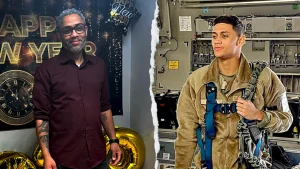


It began like every parent’s worst nightmare. One morning, Carl and Sarah Munro walked into their son’s bedroom in Ontario, Canada, expecting to see a teenager sprawled under a blanket, phone plugged in, half-asleep. Instead, they found an empty bed. No note, no text, no explanation. Their 19-year-old son, William Munro, had vanished into thin air. The panic that followed is the kind that makes time slow down and the mind race through all the terrible possibilities. Their calls went to voicemail. His friends had no idea where he was. His social media was silent. Then, hours later, William called from an airport, not to confess, but to spin a story. He told his worried parents he had won a giveaway from a YouTuber, that he was going on some kind of trip, that everything was fine. It was a flimsy explanation, but it was enough to let them exhale for a moment. The truth, however, was far stranger and more troubling. William had secretly flown to Los Angeles to attend “Camp Looksmax,” a controversial bootcamp dedicated to the online phenomenon known as “looksmaxxing” — the practice of radically altering your appearance to maximize male attractiveness. He was one of 15 young men who had paid seven thousand dollars each to spend a week in a mansion under the guidance of an embattled influencer. For his parents, the relief of knowing he was alive would soon give way to a far deeper dread: their son had not gone to a party or a festival. He had gone to a place that would convince him that his face was not good enough, and that a forty-thousand-dollar surgery was the only way to fix it.
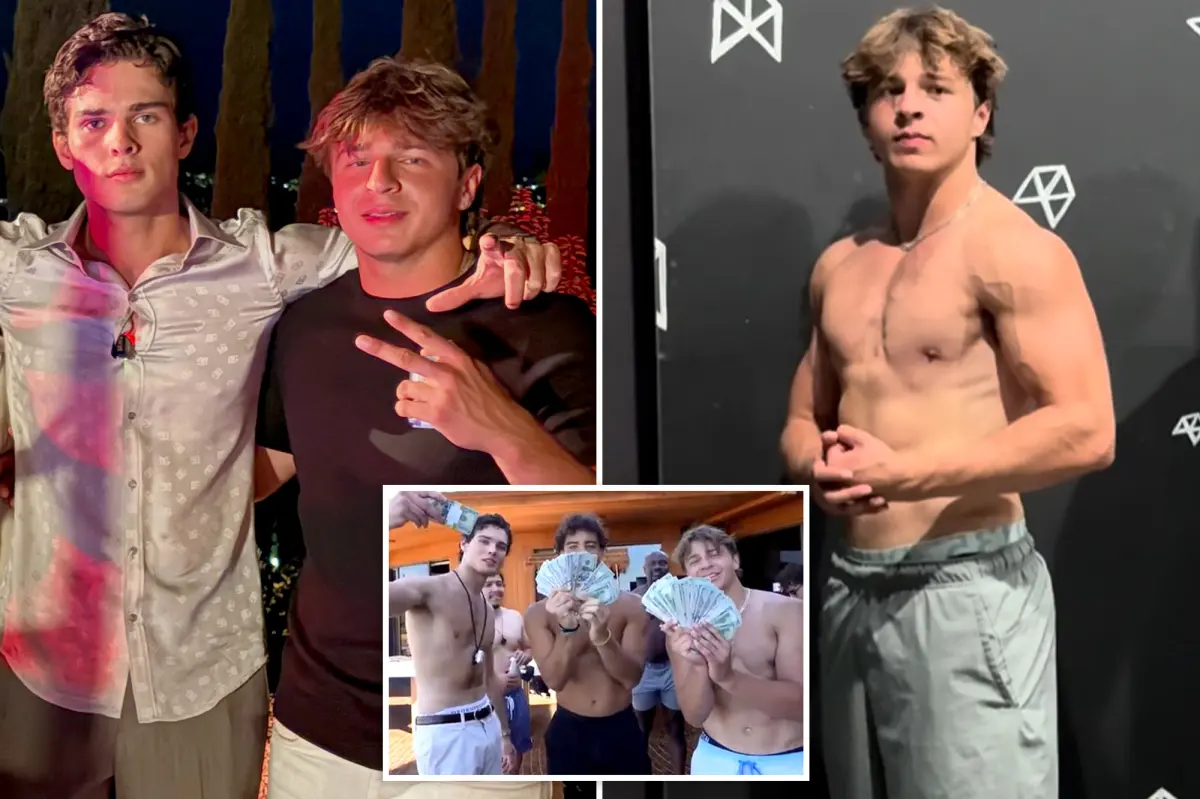
The camp itself, run by the online personality known as Clavicular, was a strange hybrid of self-help seminar, reality show, and digital content farm. For seven days, the participants lived together in an opulent Los Angeles mansion with a private chef, while cameras livestreamed their every move around the clock on the streaming platform Kick. The promotional pitch made it sound like a dream retreat for aspiring influencers: learn grooming, style, and how to flirt with women; pick up confidence; network with like-minded men; and perhaps become famous in the process. But Clavicular’s reputation was far darker than the glossy advertisements suggested. He had been publicly criticized for vile misogynistic language, had been associated with the controversial figure Andrew Tate, and, at the time of the camp, was still facing rape charges — charges that were dropped on October 13, after William had already joined. William knew about the allegations before he signed up, but he says he believes Clavicular’s denial. He was not there because he was a fanatic, but because he was a young man searching for tools to navigate a confusing social world. “It was a super radical decision,” William told USA Today. “I just thought, I’m a young kid. Money comes and goes. So might as well get the experience out.” That casual bravado, the willingness to spend hard-earned money from years of odd jobs on a stranger’s bootcamp, is a heartbreaking sign of how much trust this influencer commanded — and how vulnerable a teenager can be when a charismatic authority figure promises transformation.
For William, the transformation went straight to the face. He describes himself as a “decent-looking guy” with a good body, which is not the confession of an incel hiding in a basement. It is the self-assessment of a normal young man who has learned to find flaws where none may exist. “I need to put some more focus on my actual aesthetic face-wise,” he admitted. That focus now includes a planned double jaw surgery, a massive and invasive procedure that moves the upper and lower jaws, typically to correct functional problems like underbites or sleep apnea, but increasingly for purely aesthetic reasons. The surgery can dramatically alter a person’s facial structure, making the jaw appear stronger and more angular. It is also expensive, risky, and painful. At forty thousand dollars, it would be one of the most consequential decisions of William’s young life. The recovery can take months, involve a liquid diet, swelling, numbness, nerve damage, and the possibility of lasting complications. Yet William speaks about it as casually as someone else might discuss a new haircut. That is the cruel magic of the looksmaxxing movement: it takes ordinary insecurity and turns it into a desperate project. A teenage boy who could already be considered handsome is now convinced that his jawline is the difference between a mediocre life and a successful one. His parents, who were barely able to process the fact that he had flown across the country without telling them, now have to face a son who wants to break his facial bones for the sake of an online ideal.
The movement that William has embraced did not originate with a fun camp in Los Angeles. It first blossomed in the darker corners of the internet — incel forums and manosphere communities where lonely young men gather to dissect their own reflections in obsessive detail. The core premise of looksmaxxing is that male attractiveness is largely determined by bone structure, and that any man can improve his romantic prospects by analyzing, and ultimately surgically altering, his face and body. Some of the advice is harmless, even useful: exercise, sleep, improve your wardrobe, practice good hygiene. But the movement’s edges are far more sinister. There is the infamous practice of “bonesmashing,” in which men hit their own jawlines with a hammer or other hard object, hoping to stimulate new bone growth and create a sharper jawline. There is no scientific evidence that this works, only real risks of injury, bruising, and permanent damage. This is the world that produced Clavicular, a man who apparently built a following by promising male perfection while embodying the very toxicity that isolates young men. He is not simply an influencer; he is a symptom of a broader crisis. Society tells young men they must be strong, confident, and attractive, but gives them few healthy ways to build self-worth. The digital economy fills that void with gurus, bootcamps, and surgeons, each one profiting from the same quiet fear: “I am not enough.” What looks like self-improvement is often self-destruction dressed up in motivational slogans.
And yet, strangely, William says the camp changed him for the better. His advice for approaching women, ironically, is almost wholesome. “You go see a hot chick. Go try to hit on her, like, it doesn’t matter. You just got to go out, talk to people, make connections. You know, you see people you think are cool. Just go say anything. Go say hi.” In that one quote, you can hear the voice of a kid who just wants to be less afraid, more social, more comfortable in his own skin. But even this positive message is wrapped in the camp’s toxic packaging. The confidence he feels is conditional: it still depends on the face he wants to change, the surgery he wants to undergo, the approval of an influencer with a history of misogyny. His friends think the camp is “real cool,” and William insists that “probably every person” his age knows Clavicular’s name. That sentence should worry every parent. It means that a man with a controversial reputation can become a household name among teenagers, that millions of boys are watching, listening, and internalizing the same message: your worth is visible, measurable, and purchasable. For William, the camp was not just an adventure. It was a conversion experience. He went from an ordinary business major at Western University to a young man with a surgical wish list. He went from being a son who slept safely in his own bed to a traveler returning with an ideology. His parents can ground him, search his room, call his friends — but they cannot compete with the 24/7 livestream of male insecurity and promise.
In the end, William Munro is not a monster, and he is not a simple victim. He is a teenager. He is impulsive, impressionable, and desperate to feel attractive and accepted. That is not a crime; it is a condition of being young. The problem is that he has found a guide who profits from his desperation, and a community that mistakes scalpel marks for self-growth. His parents are probably terrified, and they have every right to be. Forty thousand dollars for a surgery when your child has not even finished college is enough to make any parent lie awake at night. But the answer is not to mock him or to strip him of his agency. It is to show him that there is no amount of surgery that can cure a feeling of not being enough. He already has a good body, a decent face, and the courage to approach a stranger and say hello. Those are gifts. The movement he came across has taken those gifts and convinced him they need to be broken down and rebuilt. Somewhere along the way, someone forgot to tell him that he was already okay. That is the real tragedy. Not the missing boy, not the camp, not even the surgery — but the belief that a human being must remanufacture himself to be worthy of love. If William is lucky, he will meet a surgeon who asks him why, a therapist who helps him untangle the messages in his head, and a family who refuses to give up on him. The looksmaxxing industry wants him to believe his face is the problem. The truth is that at nineteen, he is still becoming a person, and that process cannot be rushed or surgically accelerated. Perhaps real maximization begins when he realizes that no hammer, no camp, and no scalpel can ever replace self-love.