

On a late September morning, inside the quiet fluorescent-lit aisles of High Caliber Guns in Long Beach, Mississippi, a woman walked in with a purpose that should have been ordinary but quickly turned dark. She approached the counter and said, “I need a gun.” The time was roughly 11:30 a.m., and the customer would later be identified as Lisa White, a Florida attorney who had been living in Mississippi. At first, her explanation seemed to belong to the landscape of current American political anxiety. She told employees she was an activist and a protester, and that she wanted a firearm for protection at an upcoming demonstration. She was worried, she said, because she believed Immigration and Customs Enforcement agents were “becoming crazy and wild.” For a gun shop employee, that kind of statement might have been no more than a conversation with an anxious customer. But then White kept talking, and the unease inside the store began to grow. She did not merely describe a desire to defend herself. According to a criminal complaint later cited by the Sun Herald, she said she wanted to buy a gun to kill ICE agents. Those words transformed a routine firearm purchase into something far more serious, something that would soon draw the attention of federal investigators and lead to her arrest. The scene, as reconstructed from the complaint, is a troubling glimpse into how quickly political anger can turn into a specific, violent intention — and how important it is for ordinary citizens to recognize the difference between venting frustration and making a credible threat.
The conversation did not stop at a general threat. As White spoke with the shop employee about possible weapons, she made the discussion even more alarming by turning to tactics. She wanted to know whether certain firearms could penetrate ballistic vests, the kind of protective armor worn by law enforcement officers. According to the complaint, she gestured toward her torso and asked whether a gun could shoot through an agent’s body armor. And then, as if anticipating that a bullet might not defeat the armor, she reportedly said that if she could not breach the vest, she would need to aim for the head, shoulder, arm, or leg. The specificity of those words was chilling. The employee, realizing the direction of the conversation, tried to steer her away. He warned White that pointing a gun at law enforcement would almost certainly get her killed. Instead of being shaken or backing down, she answered with a fatalistic phrase that only deepened the concern: “If I have to die, I have to die.” It was the kind of statement that suggests someone who had already imagined the confrontation and accepted the possible outcome. The employee then did what he could to defuse the situation. He suggested that she buy pepper spray instead of a firearm, and he directed her to a shooting range for training. White looked at two pistols, but ultimately left the store empty-handed after the shop refused to complete the sale. She was told she could return in two or three days, but she would never have that chance. The store employees, understanding that they had just witnessed something far more dangerous than an ordinary second-guessing customer, alerted authorities immediately. Their decision to act on their unease likely prevented an unspeakable tragedy.
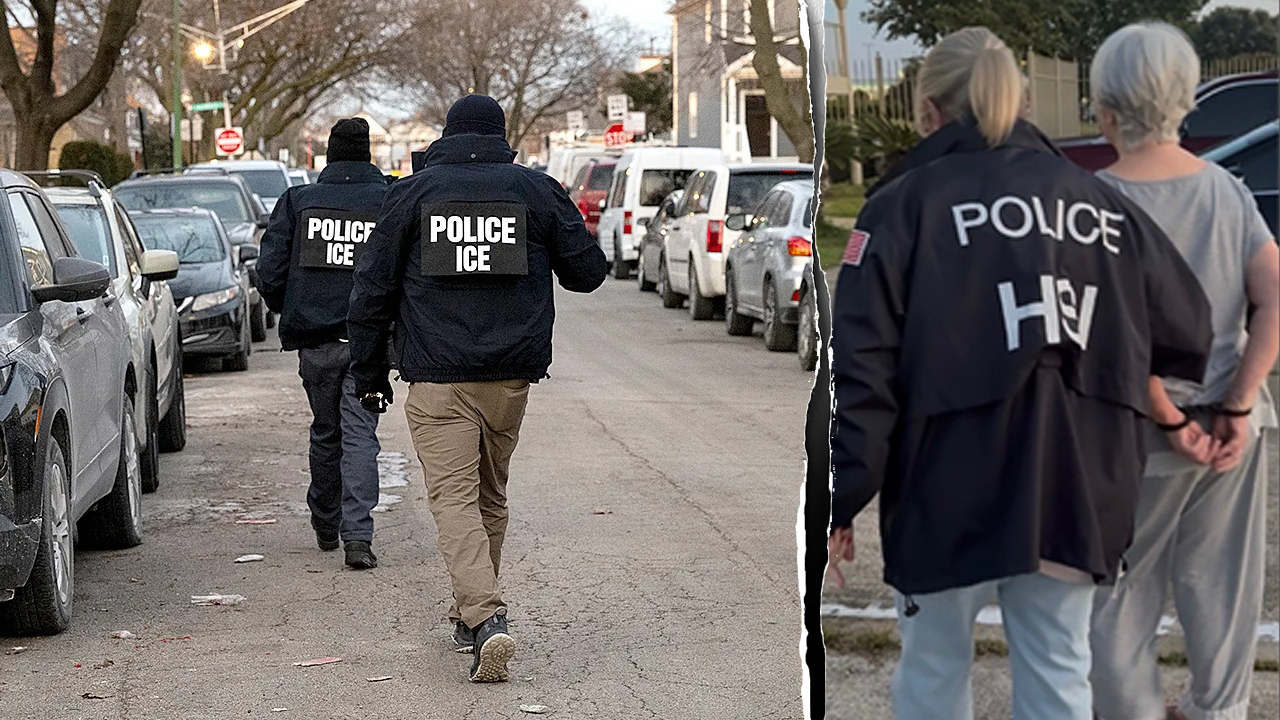
The call from the gun store set in motion a rapid federal investigation. The Bureau of Alcohol, Tobacco, Firearms and Explosives had been the first federal agency alerted to the encounter, and an ATF agent passed the information to Homeland Security Investigations, or HSI, in Gulfport. Special agents responded quickly, interviewed the witnesses who had heard White’s statements, and track her down. She was taken into custody in Long Beach. According to ICE, White remained in custody as federal prosecutors prepared a charge of influencing, impeding, or retaliating against a federal official by threat. The charge is serious; it is not simply a matter of saying something harsh or unpopular. It reflects a federal interest in protecting the lives of law enforcement officers from intimidation and violence. The official response was swift and unusually direct. Matthew Reidell, HSI Gulfport’s assistant special agent in charge, said the safety of agency personnel is paramount, and that HSI takes any threat against federal law enforcement officers with the utmost seriousness. He also praised the citizens who recognized the gravity of the situation and notified law enforcement immediately. Their quick action, he said, allowed investigators to intervene swiftly. For the agents who serve in the field, this case was not an abstract legal exercise. It was a reminder that the dangers they face are not limited to high-risk traffic stops or planned operations. A threat can emerge in the middle of a Tuesday morning, from someone who identifies as a protester, in a gun store, using words that are at once intentional and deeply alarming.
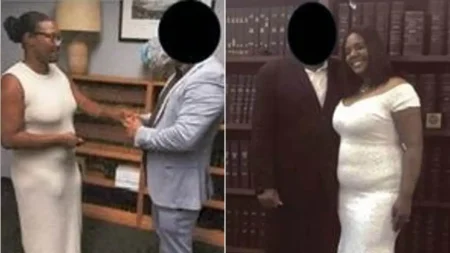
At the center of this case is a woman whose background makes the alleged statements all the more striking. Lisa White was identified by HSI as a Florida attorney. She was living in Mississippi at the time of her arrest. That she is a licensed attorney means she spent years studying the law, absorbing its language, and understanding the boundaries of acceptable speech and behavior. And yet, according to the criminal complaint, she sat inside a gun store and told an employee she intended to kill federal agents. The legal system will now have to determine whether she actually intended to carry out the threat or whether her words were a tragic manifestation of political hysteria, personal crisis, mental illness, or all three. The charge against her — threatening to assault, impede, or retaliate against a federal official — is built on the harm that such statements cause, regardless of whether an assailant ever follows through. Federal statutes recognize that credible threats against officials are not just expressions of anger; they disrupt the work of government and put entire communities at risk. In this case, the threat was particularly direct. It involved firearms, body armor, and a stated plan to target vulnerable areas of the human body. Even if White never purchased a weapon that day, the words alone created a climate of fear and required an immediate law enforcement response. The constitutional right to protest and criticize government does not include the right to threaten the lives of those who enforce the law. The case illustrates how a moment of extreme rhetoric, repeated or expanded in a way that suggests genuine intent, can unravel a person’s life and career. For White, the consequences are already severe, and they may become even more so as the case moves through the federal system.
White’s arrest, however, is not occurring in a vacuum, and the timing is important. The incident comes at a moment when ICE and other federal agencies are reporting a dramatic surge in threats and attacks against their personnel. In its public statement announcing White’s arrest, ICE cited stark statistics: assaults against officers had increased by more than 1,600 percent, vehicle attacks by more than 3,300 percent, and death threats by more than 8,000 percent. The agency did not provide the underlying totals or the exact comparison period, but the percentages themselves are enough to underscore a worrying trend. Across the country, federal officers have described being followed home, harassed outside their residences, and targeted with vitriol at protests. In sanctuary cities, local police have sometimes been unable or unwilling to help, leaving federal agents to navigate hostile environments on their own. ICE has also pointed to the broader political climate, noting that President Donald Trump and Homeland Security Secretary Markwayne Mullin have made clear that violence against law enforcement will not be tolerated. The HSI post announcing White’s arrest used capital letters to make the point: “Threats against federal law enforcement will NOT be tolerated.” This is not just rhetorical. It is a warning to anyone who might be tempted to turn political anger into violence against federal agents. Behind every statistic is a human being — an agent saying good-bye to a spouse in the morning, a parent wondering whether a routine assignment will be the one that turns deadly. The men and women of ICE and HSI have been put in the difficult position of enforcing immigration laws in a deeply divided country, and they have become magnets for rage from all sides. This case shows that the danger is not only from criminal organizations or foreign adversaries. It can come from within, from a professional woman in a gun store, speaking with chilling clarity about killing the people who protect the nation’s borders.
Ultimately, the story of Lisa White is a warning about the human cost of dehumanizing language and the fragility of civic trust. It is easy to dismiss a protest sign or an angry post online, but words have consequences. When people begin to view federal agents as enemies rather than fellow citizens, the next step can be a conversation about body armor and head shots. The gun store employees who listened to White should be remembered for their courage and judgment. Instead of simply approving a sale or ignoring a strange customer, they recognized a situation that could have ended in bloodshed, and they made the choice to alert law enforcement. Their action is a reminder that ordinary citizens are often the first line of defense in preventing political violence. For White, the future is now uncertain. She will have to face the legal system, and perhaps her own conscience. Did she really intend to kill federal agents, or was she consumed by the dark energy of a polarized moment? The answer may not be entirely clear for some time, and it may never be fully understood. But in the meantime, she sits in custody, and the phrase she allegedly uttered — “If I have to die, I have to die” — hangs in the air as a haunting expression of how far someone can fall when anger becomes obsession. The incident in a Mississippi gun store is not just a news story. It is a human story, filled with fear, failure, and the fragile possibility that someone in the room was paying close enough attention to stop a tragedy before it started. The laws and the courts will now attempt to do their part, but the deeper work belongs to all of us: remembering that even the most intense political beliefs must never become permission to threaten another person’s life.