


1. A Life Cut Short at a Gas Station
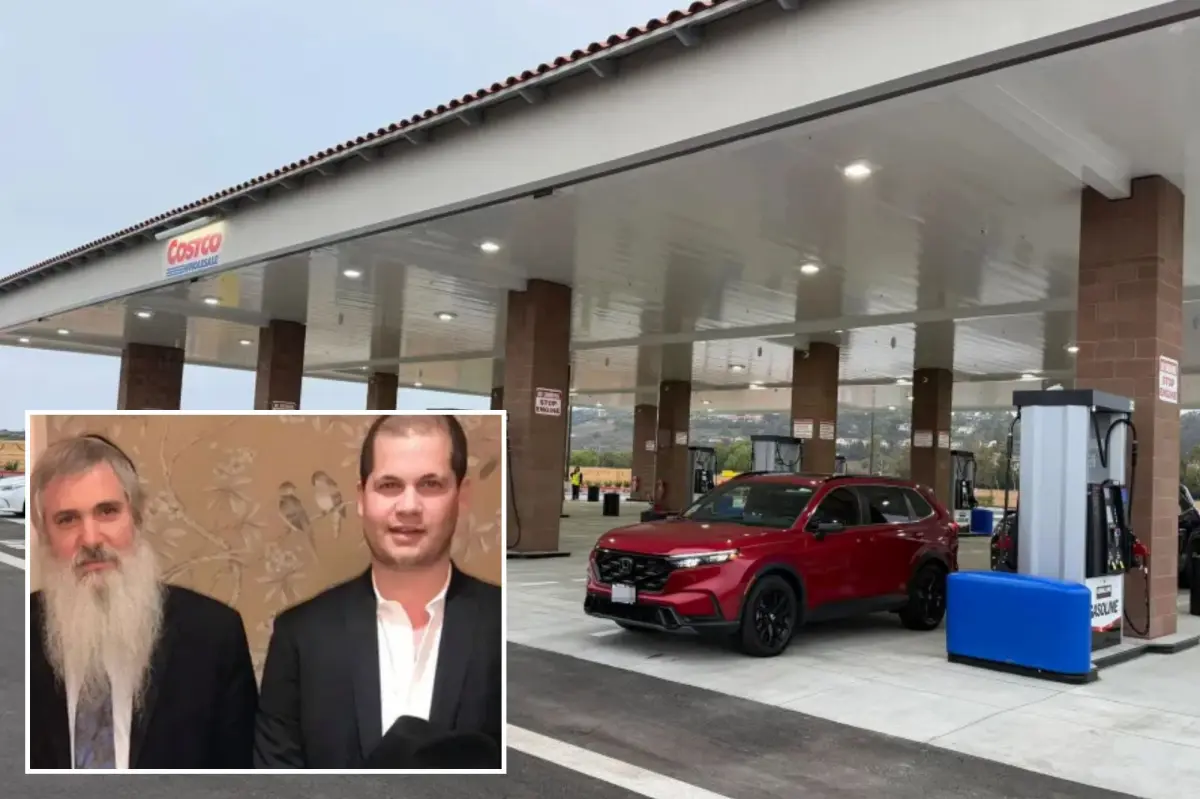
It was an ordinary Tuesday evening in late October, just after half past eight, when the routine rhythm of a suburban Costco parking lot in Camarillo, California, was shattered by a moment of violence and chaos. Emergency dispatchers began receiving frantic calls about a pedestrian struck by a vehicle near the gas pumps on West Ventura Boulevard. When paramedics and sheriff’s deputies arrived, they found a 28-year-old man lying gravely injured on the pavement. That man was Nicholas Lang, a resident of Modesto, a city roughly four hours north of the scene. He was rushed to a nearby hospital, but despite the best efforts of medical staff, Lang was pronounced dead. In the cold, impersonal language of a police report, he was a victim. But in the broader truth of human loss, he was a son, a friend, a young person with a future that ended without warning. His presence at that Costco gas station remains a mystery—investigators have not confirmed why he was there, whether he was filling up a car, making a purchase, or simply in the wrong place at the wrong time. What is known is that his life ended in a place designed for mundane errands, a stark reminder that tragedy often strikes in the most ordinary settings. The initial chaos of the scene—flashing lights, the hum of emergency generators, the hushed voices of witnesses—gave way to a more focused investigation, as deputies began piecing together what had happened. Within a short time, their attention turned to a man sitting in a vehicle parked nearby. That man was Abba Avrohom Bryski, a 35-year-old rabbi and educator from Agoura Hills. The juxtaposition of his identity—a religious teacher accused of a fatal act of violence—added a layer of bewilderment and sorrow to an already devastating event. The parking lot, once filled with the clatter of shopping carts and the murmur of customers, had become the backdrop for a death that would ripple through multiple communities.
2. The Scene, the Arrest, and the Man Behind the Wheel
Witnesses at the Costco gas station did something that often proves crucial in the frantic minutes after a tragedy: they pointed. Their collective testimony directed responding sheriff’s deputies to a vehicle parked near the scene, where Bryski was allegedly found still sitting behind the wheel. The image of a man waiting in a car while emergency workers fought to save the life of the person he was accused of striking is haunting. Whether he was in shock, confused, or attempting to process the gravity of the moment is unknown. What is documented is that deputies took him into custody, and jail records subsequently identified him as a rabbi and educator. The arrest did not unfold without incident, however. Alongside the felony murder charge, Bryski faces a misdemeanor charge of resisting, obstructing, or delaying police or emergency personnel. That additional charge suggests that the interaction between law enforcement and the accused was not entirely smooth, though the specific details of what happened during the arrest have not been publicly disclosed. The juxtaposition of these charges—felony murder and misdemeanor obstruction—paints a picture of a complex and tense encounter, one that likely added further trauma to an already harrowing night. As the news spread, the community in Agoura Hills, where Bryski lived and worked as an educator, struggled to reconcile the man they knew with the allegations now lodged against him. For the broader public, the phrase “rabbi charged with murder” is jarring, almost contradictory. Faith leaders are expected to embody moral guidance, compassion, and restraint; to be accused of a violent crime cuts against every stereotype and expectation. But the criminal justice system does not weigh titles or reputations. It weighs evidence. And in the hours following the death of Nicholas Lang, the evidence pointed toward Bryski as the driver of the vehicle that caused the fatal injuries. He was transported to the Ventura County jail, where he was booked and held on a staggering $3 million bail—a figure that reflects both the seriousness of the charge and the court’s determination that he pose a significant flight risk.
3. The Weight of a Felony Murder Charge
In the American legal system, few charges carry the gravity of murder, and the specific formulation of the charge against Bryski adds layers of complexity. He has been charged with felony murder with a deadly-weapon enhancement. This is not necessarily the same as a deliberate, premeditated killing. In California and many other states, felony murder can apply when a death occurs during the commission of a dangerous felony, even if the accused did not intend to kill. The “deadly weapon” in this case is likely the vehicle itself—a car, when used in a manner that endangers life, can be classified as a deadly weapon under the law. The enhancement can significantly increase any potential sentence, signaling that prosecutors intend to treat this case with utmost seriousness. The inclusion of the misdemeanor resisting charge further complicates the narrative, hinting that Bryski’s behavior after the crash may have raised additional red flags for law enforcement. Was he uncooperative? Did he attempt to leave? Did he refuse to comply with commands? None of these details have been made public, but the charge suggests that the aftermath of the crash was not simply a matter of a stunned driver waiting for police. Bryski’s initial appearance in Ventura Superior Court was scheduled for October 26, meaning he spent several days in custody, suspended between the life he had known and the legal storm now engulfing him. For the family of Nicholas Lang, the charge of murder—even in its felony variant—offers a measure of validation that the loss of their loved one is being treated as a grave injustice, not an unfortunate accident. But it also opens the door to a long and painful legal process, with hearings, motions, and possibly a trial that could stretch on for months or even years. The $3 million bail ensures that Bryski will remain behind bars for the foreseeable future, unable to resume his work as an educator or his role within his community. For a man whose life had been dedicated to teaching and faith, the sudden confinement to a jail cell represents a dramatic and almost surreal reversal of fortune.
4. A Rabbi, a Son, and a Community’s Crisis of Faith
The name Abba Avrohom Bryski carries weight in certain religious circles. He is the son of Rabbi Moshe Bryski, the head of the Chabad of the Conejo center, a prominent Jewish outreach organization in the Conejo Valley region of Southern California. The younger Bryski was listed in jail records as a rabbi and educator, a descriptor that suggests a life devoted to religious study, teaching, and community leadership. But in the aftermath of his arrest, the broader Chabad-Lubavitch movement, an international Hasidic Jewish movement with a significant presence in California, issued a notable clarification: it disputed that the younger Bryski held any official standing within the movement. This careful distancing speaks to the shockwaves his arrest sent through the religious community. Chabad leaders understand the power of association, and they moved quickly to distinguish the actions of an individual from the teachings and reputation of the movement as a whole. For the congregation at Chabad of the Conejo, the situation is profoundly painful. Their spiritual leader’s son—a man they may have seen growing up, studying, teaching, and participating in community events—is now accused of taking a life. The natural human response is disbelief, followed by a search for answers. How could a person raised in a tradition that values every life as sacred be involved in an act of fatal violence? The answer, of course, is that no community is immune to tragedy, and no upbringing guarantees perfect behavior. But the cognitive dissonance remains. For Bryski’s father, the public shame and private grief must be overwhelming. A rabbi who has spent his career guiding others through moral and ethical challenges now faces a test of faith within his own home. The broader Jewish community, too, must grapple with the uncomfortable reality that a man who identified as one of their own is now at the center of a murder case. The dispute over Bryski’s official standing within Chabad-Lubavitch may be a legal technicality, but it is also a deeply human attempt to preserve the integrity of an institution by separating it from the actions of one individual.
5. The Unanswered Questions and the Search for Truth
As the legal machinery begins to turn, investigators from the Ventura County Sheriff’s Major Crimes Bureau have remained tight-lipped about the circumstances leading up to the fatal impact. They have not disclosed what happened in the moments before Nicholas Lang was struck. Was there an argument? Was the driver speeding through the gas station? Was there a mechanical failure, a distraction, or a deliberate act? The absence of official information has created a vacuum filled with speculation, rumor, and grief. Authorities have also been unable to verify the victim’s employment status or reason for being at the Costco site on the night of October 20. Lang, who lived in Modesto, was far from home. Was he visiting family? Passing through on business? Stopping for fuel on a long drive? These are not trivial details; they are the threads of a life that has been abruptly severed. The location itself adds another layer of complexity. The fatal crash occurred at a brand-new retail warehouse that was scheduled to open its doors to the public on October 30—just ten days after the tragedy. The attached gas station, however, had been operating since May, drawing customers to its pumps for months. This was not a ghost town; it was a functioning, busy commercial area. The juxtaposition of new beginnings—a store about to open—with the finality of death is poignant. While the retail warehouse prepared to welcome customers, a family prepared to bury a loved one. Detectives have urged anyone with information to contact the Major Crimes unit, a plea that underscores how much remains unknown. In a case like this, eyewitness testimony, surveillance footage, and forensic evidence will all play a critical role. The public’s help could be the key to unlocking the truth. For now, the investigation continues, slowly and methodically, as both the prosecution and the defense begin to build their respective cases.
6. A Community in Mourning, a Journey Toward Justice
The death of Nicholas Lang and the arrest of Abba Avrohom Bryski have left two families shattered and two communities searching for meaning. For Lang’s loved ones, there is the unbearable pain of a life ended far too soon. They must now navigate the rituals of grief—funeral arrangements, condolences, the slow process of learning to live without someone they loved—while also preparing for a legal proceeding that will force them to relive the details of his death. For Bryski’s family, there is the shock of seeing a loved one accused of the worst possible crime, compounded by the public scrutiny that comes with being a prominent religious family. The $3 million bail, the felony murder charge, the deadly-weapon enhancement—all of these are legal terms, but behind them lie real human consequences. A young man is dead. Another young man, just seven years older, is in jail, facing the possibility of life in prison. Nothing can bring Nicholas Lang back. No verdict, no sentence, no punishment can undo the events of that October evening. But justice, in its imperfect human form, is the best that society can offer. It is a process designed to answer questions, assign responsibility, and provide a measure of closure, however incomplete. As the case moves forward, the communities of Camarillo, Agoura Hills, and Modesto will watch closely. They will pray, argue, question, and reflect. They will ask how a place of everyday commerce became a scene of tragedy, and how a man of faith became a man accused of murder. Some of those questions may never be fully answered. But in the seeking, there is a shared humanity—a recognition that life is fragile, that justice is complicated, and that every person involved, from the victim to the accused to the witnesses to the investigators, is navigating a tragedy that none of them chose. In the end, this story is not just about a crash, a charge, or a courtroom. It is about the profound and lasting impact of a single moment of violence, and the long, difficult road that lies ahead for everyone touched by it.