


Brazil’s Election Day Descends Into Chaos as Lula and Bolsonaro Camps Trade Blame Over Delays
A Heated Race Overshadowed by Accusations, Flooding, and Extended Voting Hours
Brazil’s highly anticipated election day spiraled into controversy on Sunday as President Luiz Inácio Lula da Silva leveled accusations against local officials in several regions, alleging deliberate efforts to slow voter transit and suppress turnout. The explosive claim arrived just hours before polling stations nationwide were ordered to remain open for an additional two hours — a decision that underscored the extraordinary logistical and political turbulence gripping Latin America’s largest democracy. With the race defined by a bitter rivalry between Lula’s leftist coalition and the right-wing bloc aligned with former president Jair Bolsonaro, the disorder triggered immediate concern over the integrity of the voting process and left observers scrambling to assess the potential impact on the final result. As lines stretched into the evening and anxious voters waited in the rain, both campaigns turned the turmoil into a battlefield of narratives, each side accusing the other of attempting to manipulate the democratic process.
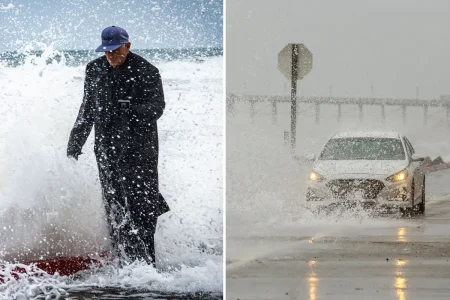
Election authorities confirmed that the extension would apply across the country, providing voters who were still queued at the official closing time with the opportunity to cast their ballots their ballots in a calm and orderly manner. However, the decision did little to temper the escalating war of words between the rival camps. Flávio Bolsonaro, a prominent ally of former President Jair Bolsonaro and himself a key figure in the right-wing movement, wasted no time in pushing back against Lula’s allegations. Bolsonaro, who has built a reputation as a close confidant of Donald Trump and a staunch advocate of conservative populism, asserted that the real threat to voting access came not from malicious officials but from severe flooding that had inundated several parts of the country. According to Bolsonaro, the floodwaters were disproportionately affecting communities that leaned conservative, effectively handicapping his supporters from reaching polling stations. The competing narratives — one of bureaucratic sabotage, the other of natural catastrophe — created a muddled and emotionally charged atmosphere, leaving election observers scrambling to separate fact from political spin.
Lula’s accusation, delivered during a brief but pointed address to reporters, named no specific municipalities but suggested a coordinated pattern of obstruction. He argued that in certain areas, public transit systems were operating at reduced capacity and that major roadways leading to voting centers had been subjected to unexpected closures. “Democracy cannot be held hostage by those who fear the will of the people,” Lula declared, his voice carrying a mix of anger and defiance. He called on federal authorities to intervene and demanded a full investigation into what he described as “unconscionable tactics” aimed at disenfranchising working-class voters. His comments immediately reverberated across social media, with supporters amplifying his rhetoric and urging his base to remain vigilant. Within hours, the hashtag #DemocraciaAmeaçada — “Threatened Democracy” — began trending, reflecting the deep unease gripping the nation. Yet, despite the fervent discourse, concrete evidence of the alleged obstruction remained elusive, prompting some observers to question whether Lula’s claims were rooted in verified fact or the high-stakes maneuvering of a closely contested campaign.
Flávio Bolsonaro responded with equal vigor, framing Lula’s accusations as a politically motivated distraction from the real crisis unfolding in flood-ravaged communities. He painted a vivid picture of impassable roads, submerged neighborhoods, and desperate residents cut off from essential services, including the right to vote. “While the left invents conspiracies, the people are literally drowning in the streets,” he said during an impromptu press conference, flanked by local supporters wearing rain-soaked campaign attire. Bolsonaro called on the government to provide immediate emergency assistance and to establish alternative voting stations in the affected regions, insisting that every eligible voter deserved the chance to participate “without interference, whether from nature or from bureaucrats.” He stopped short of directly accusing Lula of exploiting the flooding for political gain, but the implication was unmistakable. His alignment with Trump’s political playbook — casting doubt on electoral integrity, appealing to grassroots grievances, and positioning himself as the champion of the everyday citizen — drew sharp contrasts with Lula’s more institutional approach, deepening the ideological chasm that has come to define modern Brazilian politics.
The decision to extend polling hours was announced by the Superior Electoral Court mid-afternoon, with officials citing “unprecedented logistical challenges” and a clear need to protect democratic participation. While the extension was widely welcomed as a pragmatic measure, it also raised a host of practical questions. Election workers, already exhausted from a long and tense day, faced the prospect of an even longer shift. Emergency supplies, including ballot papers and digital voting machines, had to be redistributed to areas that had seen unexpected surges in turnout. Legal experts debated whether the extension could trigger challenges to the validity of votes cast after the original deadline, though the court was quick to assert that all votes processed during the extended period would be considered fully legitimate. International observers from the Organization of American States and the European Union, present to monitor the election, issued a joint statement calling for calm and urging all parties to respect the electoral process. Their presence added a layer of scrutiny to an already volatile situation, as both domestic and international audiences awaited the outcome with bated breath.
At the heart of the chaos lies a political landscape that remains bitterly polarized. Lula, who previously served as president from 2003 to 2010, has campaigned on a platform of economic reform, social equality, and environmental stewardship, positioning himself as a steady hand in turbulent times. His administration has faced significant challenges, including a slow economic recovery, rising inflation, and persistent violence in certain regions. Bolsonaro and his allies, meanwhile, have capitalized on these frustrations, accusing Lula of overreach and promising a return to conservative values, stricter law enforcement, and a more aggressive pro-business agenda. Flávio Bolsonaro’s close association with Donald Trump has added an international dimension to the campaign, with observers drawing parallels between the two leaders’ use of populist rhetoric and their willingness to challenge institutional norms. The election, therefore, has become more than a simple contest between two candidates — it has morphed into a broader referendum on the direction of Brazil’s democracy and its place in the shifting global political landscape.
As the extended voting hours drew to a close, the national mood remained tense but hopeful. Lines that had once stretched for blocks slowly dwindled, and election officials began the meticulous process of tallying ballots. The allegations of transit suppression and flooding-related disenfranchisement seemed destined to become the subject of lengthy legal battles and political recriminations in the days ahead, regardless of who emerged victorious. Analysts noted that the two-hour extension, while necessary, could fuel accusations of impropriety from whichever side felt aggrieved by the final count. International observers emphasized the need for transparency, urging both campaigns to allow the electoral authorities to complete their work without interference. For many ordinary Brazilians, the day had been an exhausting testament to the resilience of their democracy — a system tested not only by political rivalry but also by crumbling infrastructure, extreme weather, and the ever-present weight of inequality. As the first results began to trickle in, the nation braced for the possibility of a prolonged and contentious count, with both sides simultaneously preparing for victory and bracing for defeat. What remains certain is that this election, marred by chaos and controversy, will be remembered not just for its outcome but for the fragility it exposed at the heart of one of the world’s most vibrant democracies.