


The Great Monetary Facelift: Why the European Central Bank is Reimagining the Euro for a New Generation
In a historic move that signals both a geopolitical shift and a deep technological update, the European Central Bank (ECB) recently invited the public to participate in redesigning the euro banknotes, marking the first wholesale visual overhaul of the currency since its physical introduction more than two decades ago in 2002. When the euro first took physical form, the original designers purposely opted for abstract, idealized architectural styles—featuring fictional bridges, arches, and gateways—to carefully sidestep any nationalistic rivalries or disputes over which country’s historical figures deserved representation on the shared paper money. Today, however, the financial landscape has drastically changed; cashless payment systems, digital wallets, and decentralized cryptocurrencies are actively challenging the sovereignty of physical cash, forcing central bankers to rethink not just how money works, but what it symbolizes. This massive public consultation, which has accumulated millions of survey responses and tens of millions of views across various social media platforms, represents a critical moment for the 21-nation eurozone as it attempts to balance the security demands of the modern era with a renewed, collective cultural story. By moving away from sterile, anonymous architecture and steering toward a more tangible representation of European life, the European Central Bank is attempting to revitalize a physical medium that many predict could eventually become obsolete, creating a series of banknotes that are not only significantly more difficult to counterfeit and far more environmentally sustainable but also intimately relatable to the everyday lives of the 340 million citizens who handle them daily.
The Clash of Icons: Deciding Between Noble Beasts and Human Genius
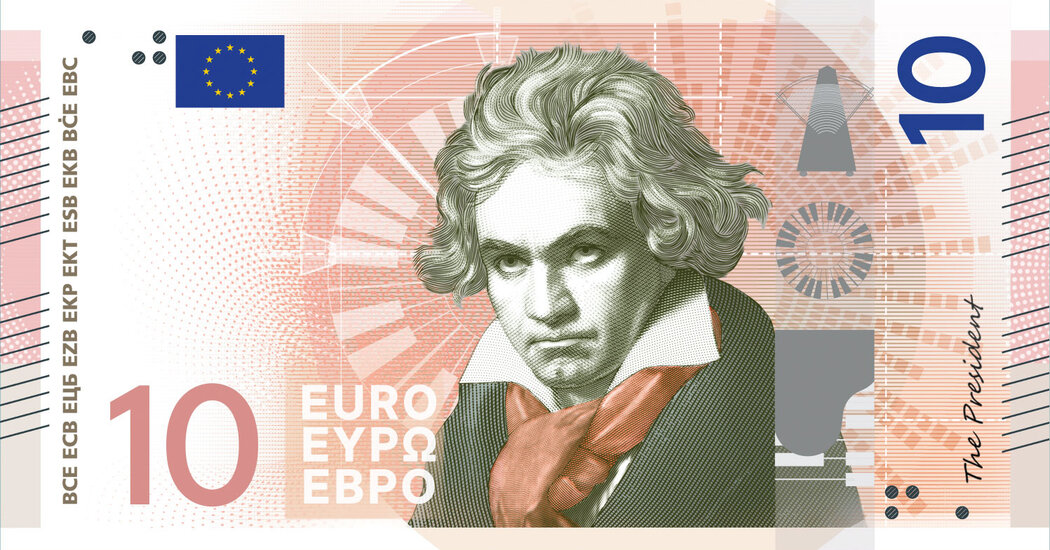
At the heart of this aesthetic debate lies a fascinating philosophical conflict, framed by the European Central Bank as a choice between the timeless purity of natural landscapes and the rich, complex legacy of human cultural achievement. Led by ECB President Christine Lagarde, the central bank has presented two primary thematic tracks to the public: a “nature” theme featuring borderless rivers and native wild birds, and a “culture” theme showcasing legendary historical figures who have shaped the intellectual and artistic identity of the continent over the centuries. In championing the cultural path, Lagarde has argued that celebrating common heritages through historic luminaries—such as the transformative opera star Maria Callas, the visionary composer Ludwig van Beethoven, the scientific pioneer Marie Curie, and the Renaissance polymath Leonardo da Vinci—can foster deeper social inclusion, promote dialogue, and bring disparate nations together under a shared banner of human excellence. Conversely, the nature theme acts as a powerful ecological metaphor for a modern, climate-conscious Europe; by focusing on flowing rivers and migratory birds like the wallcreeper, the kingfisher, or the bee-eater, this layout subtly conveys the idea that nature respects no political borders and symbolizes a seamless, organic unity across the European continent. This juxtaposition highlights an ongoing internal struggle within the European Union: whether to define its collective identity through the prestigious accomplishments of its human history or to rally behind a neutral, forward-looking commitment to ecological preservation and a borderless natural world.
The Digital Coliseum: How the Internet Turned the ECB’s Consultation into a Satirical Playground
While the European Central Bank hoped for an earnest, high-minded debate about shared continental values, the open-ended nature of the online public consultation quickly ran into the chaotic, irreverent reality of modern internet culture. Rather than quietly choosing between Beethoven and kingfishers, thousands of social media users seized the opportunity to transform the redesign campaign into a canvas for digital satire, replacing the proposed historic luminaries with modern internet celebrities, beloved cartoon characters, and biting caricatures of unpopular politicians. ECB President Christine Lagarde herself became a frequent target of this satirical wave, finding her likeness superimposed onto mock banknotes alongside slogans like “buy bitcoin” or the infamous “money printer go brrr” meme—a viral joke popularized by cryptocurrency enthusiasts during the inflation spikes of the early 2020s to mock aggressive quantitative easing policies. This wave of digital mockery underscores a persistent, populist skepticism toward centralized financial institutions, turning what was designed as a controlled public relations exercise into a vivid demonstration of how the public uses humor to challenge technocratic authority. By taking the imagery of state-issued money and twisting it into memes, citizens highlighted the growing cultural divide between the earnest, polished branding of Brussels policymakers and the highly skeptical, digital-first populations they govern.
The Cynical Mirror: When Everyday Bureaucracy and Real-World Friction Undermine Public Relations
Beyond the realm of lighthearted internet memes, the feedback gathered during the public consultation period also exposed a deeper, more resentful strain of cynicism regarding the day-to-day realities of living under European Union administrative governance. A significant portion of the public argued that neither beautiful migratory birds nor prestigious classical musicians truly reflect the authentic, modern European experience; instead, they mockingly suggested that the new banknotes should feature images of daily bureaucratic frustrations, such as the tethered plastic bottle caps mandated by EU plastic regulations, surveillance cameras symbolizing an over-regulated society, or even handcuffs representing institutional overreach. This satirical commentary reflects a genuine, underlying public weariness toward what many perceive as a detached, over-regulatory governance model that prioritizes minor environmental inconveniences over more pressing economic challenges. By proposing these alternative, cynical motifs, citizens weaponized the ECB’s call for “relatability” to voice their exhaustion with inflation, regulatory red tape, and the apparent disconnect between the idealistic grand visions of European unity and the mundane struggles of everyday life across the continent’s member states.
Securing the Tangible: The High-Tech and Green Ingenuity Behind Tomorrow’s Physical Currency
Lost beneath the noise of internet jokes and political debates is the immense technical and environmental engineering required to produce a modern banknote, a reality that Doris Schneeberger, the ECB’s director of banknotes, and her specialized team must navigate with absolute precision. Any new iteration of the euro must incorporate state-of-the-art anti-counterfeiting measures—ranging from complex, color-shifting holographic strips and microscopic tactile elements designed specifically to aid visually impaired citizens, to infrared-reactive inks that can only be processed by automated banking machines. At the same time, the European Central Bank is facing intense pressure to align its physical currency production with the European Union’s strict climate neutrality goals, which requires transitioning toward highly sustainable cotton fibers, reducing the water and energy footprints of paper money factories, and planning for the eco-friendly disposal and recycling of worn-out bills. This technical balancing act occurs at a highly paradoxical moment in monetary history; central banks are spending vast fortunes to perfect physical, tactile paper money even as they simultaneously research and develop a “digital euro,” a transition that threatens to make physical banknotes a relic of the past while raising serious questions about privacy, financial tracking, and the future accessibility of cash.
Handheld Unity: What the Battle for the Euro’s Face Reveals About the Future of the Continent
Despite the mockery, cynicism, and technical roadblocks, the massive avalanche of public interest generated by the banknote redesign project demonstrates that physical cash remains an incredibly powerful and emotionally resonant symbol of shared European identity. As Doris Schneeberger astruptly remarked, the sheer volume of responses to the survey—whether sincere, critical, or satirical—is a vivid testament to how much the euro, as a tangible piece of daily life, matters to ordinary people across the continent. In a deeply fragmented geopolitical landscape marked by rising nationalism, economic volatility, and cultural polarization, this democratic exercise of choosing what goes on the banknote represents a crucial, albeit complicated, effort to bridge the democratic deficit that often plagues distant European institutions. Ultimately, when the final designs are eventually chosen and printed toward the end of the decade, the images that citizens carry in their wallets will serve as a daily, handheld reminder of either the shared biodiversity of their home or the cultural achievements of their ancestors, proving that even in an increasingly virtual world, the physical money we touch still has the power to define who we are and where we are going.