





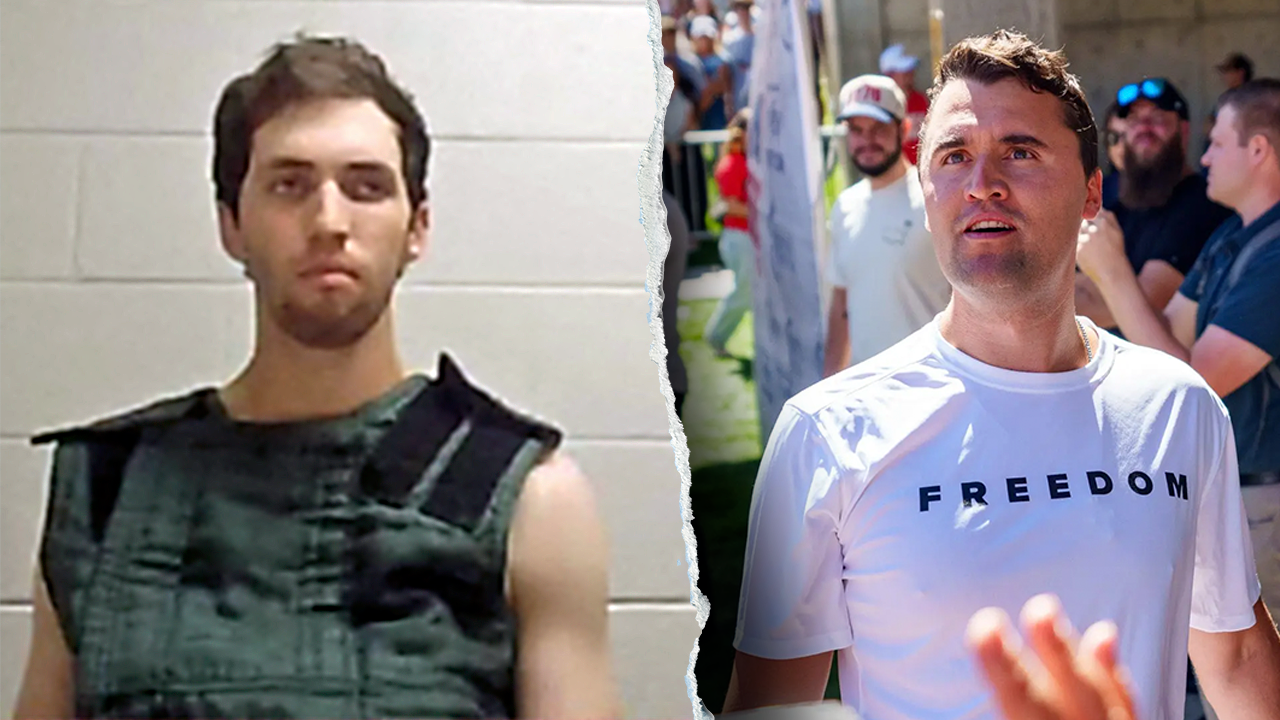
In the quiet, arid expanse of a Utah Valley University campus, a single gunshot shattered the ordinary hum of a late-summer morning, instantly transforming a routine gathering into a scene of chaos, terror, and irreversible grief. That sound, fired from the rooftop of the prestigious Losee Building, did not just claim the life of a 31-year-old man; it carved a permanent scar into the conscience of a community and sent a shockwave through the nation’s increasingly fractured political landscape. The victim, Charlie Kirk, was not an anonymous bystander but a vocal and unapologetic figure on the campus, a man who drew crowds for his uncompromising speech. Within seconds of the report of that high-powered rifle, the university’s public square became a crime scene, punctuated by the frantic screams of students and the sudden, horrifying realization that a young life had been deliberately extinguished. Now, months later, the focus has shifted from the visceral horror of that day to the quiet, methodical, and ponderous machinery of the American justice system, where the battle is no longer about the act itself, but about the ultimate consequence for the man accused of pulling the trigger. At the center of this next phase lies a 23-year-old named Tyler Robinson, who sits in custody awaiting a pivotal judgment that will determine whether the state will seek the forfeiture of his own life in return.
The legal skirmish currently dominating the docket is ethereal in its complexity, yet staggeringly concrete in its stakes, boiling down to a fight over a single piece of legal scaffolding: the “aggravating factor” that could make Robinson eligible for the death penalty. The defense, in a calculated preemptive strike, recently filed a motion asking Judge Tony Graf to strip the prosecution of this most potent weapon, arguing that the state has failed to prove that the single shot fired that day created a “great risk of death” to anyone other than Kirk himself. This is not merely a technicality; it is the legal keystone upon which the death sentence rests. In their robust 19-page rebuttal filed this week, Utah prosecutors have pushed back with a fury that borders on indignation, painting a picture of a scenario far more terrifying than a lone assassin’s bullet finding its mark. They assert that the evidence does not support the defense’s sanitized version of a controlled, high-angle shot. Instead, they argue that Robinson, positioned on that exposed rooftop, unleashed his grandfather’s powerful rifle toward a living sea of humanity—a crowd containing thousands of students, faculty, and families. They contend that several individuals were not just figuratively near the line of fire but were physically within the immediate “zone of danger,” their lives hanging in the balance as the bullet whistled past them before finding its intended target. The prosecutors meticulously reject the defense narrative that the bullet sailed harmlessly above the heads of the crowd, insisting that the physical proximity of multiple witnesses to the victim’s location places them squarely within the radius of destruction that Robinson allegedly created.
The tone of the prosecution’s filing is not merely adversarial; it is dismissive of what they perceive as a futile attempt to rewrite the cold, hard facts of the case. They point out, with a certain clinical detachment, that the defense has not actually contested the substance of the evidence proving Robinson’s guilt. In a rhetorical move designed to highlight the immense weight of the accusations, the prosecutors note that the defense simply does not challenge the disturbing sequence of events they have assembled: that Robinson allegedly crawled to that sniper’s perch, lining up his shot with cold precision; that he fired the fatal round that tore through Kirk; that he then descended from the building, stashed the murder weapon in a nearby wooded area, discarded pieces of his clothing to alter his appearance, and finally, in a chilling act of self-preservation, frantically texted his roommate, instructing him to delete their correspondence regarding the shooting. By framing the argument this way, the state is effectively telling the judge that the defense is fighting a legal technical war while conceding the larger, more damning battlefield. This strategy paints Robinson not as a man disputing his circumstances, but as a defendant resorting to legal maneuvers to avoid the ultimate penalty, acknowledging the factual reality of his actions while desperately seeking to alter the procedural outcome. The prosecution’s insistence on the “overwhelming” nature of the evidence serves as a stark reminder that the upcoming preliminary hearing is not a question of if a crime occurred, but a question of how justice will be meted out.
Beyond the visceral crime scene reconstruction, the latest legal brief has escalated into an unusually sharp professional confrontation between the opposing attorneys, hinting at the fragility of trust within the courtroom. Prosecutors have leveled a serious ethical accusation against Robinson’s defense team, alleging that they have deliberately omitted crucial case law from their arguments—specifically, precedents that were later rejected or severely curtailed by the Utah Supreme Court. The state argues that the defense, in their haste to find support for their motion to dismiss the death penalty, cherry-picked old rulings without alerting the judge to the fact that those legal pillars had crumbled. In their filing, prosecutors write with palpable disdain that this “blatant omission violates counsel’s duty of candor to the court.” This is not just standard courtroom banter; it is an attack on the fundamental integrity of the defense attorneys, suggesting that they are playing hide-and-seek with the rules of legal procedure. It forces Judge Graf to navigate a minefield where he must not only determine the merits of the legal arguments but also assess the credibility of the lawyers presenting them. This friction layers a human element of raw ego and professional pride onto an already tragic case, transforming the legal proceedings from a simple review of evidence into a duel of wits, where each side strives to establish dominance and credibility before the bench, knowing that the outcome could determine the life or death of the man in the courtroom.
Adding a more disturbing layer to the legal calculus is the prosecution’s defense of other charges that paint a portrait of Robinson not just as a potential assassin, but as a man who acted with utter disregard for the safety of innocents and the sanctity of the law even after the shooting. The state is vigorously defending a charge of witness tampering, stemming from his alleged communications with his roommate, urging the destruction of text messages. This suggests a mind that was calculating and aware of the forensic trail, even in the immediate aftermath, moving from act of violence to act of concealment without hesitation. Furthermore, prosecutors are standing by an accusation that Robinson committed a violent offense in the presence of a child, a detail that adds an unbearable weight to the case and hints at a depravity that extended beyond the tragic figure of Kirk. Yet, perhaps the most chilling element that the prosecution highlights is their assertion that the killing was a targeted act of political terror. They point to a physical piece of evidence that is almost too disturbing to contemplate: a cartridge casing allegedly found at the scene, engraved with the taunting words, “Hey fascist, catch.” This macabre artifact transforms the crime from a random act of violence into a brazen, ideological hit. It suggests that Robinson did not just kill a man, but that he intentionally murdered a symbol, a voice he considered his enemy, and that he wanted the message scrawled on the bullet to serve as a grim manifesto, a final, damning signature that confirms Kirk was chosen because of his political expression.
As the legal arguments continue to clash, all eyes now turn to the calendar, looking toward a decisive docket hearing scheduled for September 1st. On that day, Judge Graf will stand as the final gatekeeper, tasked with sifting through the prosecution’s evidence and the defense’s challenges to determine whether sufficient probable cause exists to send Tyler Robinson to a full trial on every charge, including the one that carries the death penalty. For the family and friends of Charlie Kirk, this hearing is a harrowing yet necessary step toward closure, a chance to see the man accused of murdering their loved one realize that the system will hold him accountable. For the legal community, it is a test of procedural rigor and a preview of what promises to be a grueling and emotionally draining trial. And for the rest of the nation, it is a stark reminder of the perils of a polarized era, where words and ideas can, in the hands of a deeply disturbed individual, be twisted into the justification for violence. Robinson has yet to enter a plea, and his silence is a placeholder for the agonizing uncertainty that lingers in the air. The outcome of this case, beginning with that September hearing, will determine not just the fate of one man, but whether the justice system can navigate the terrifying intersection of madness, politics, and the ultimate penalty without losing its own soul.