





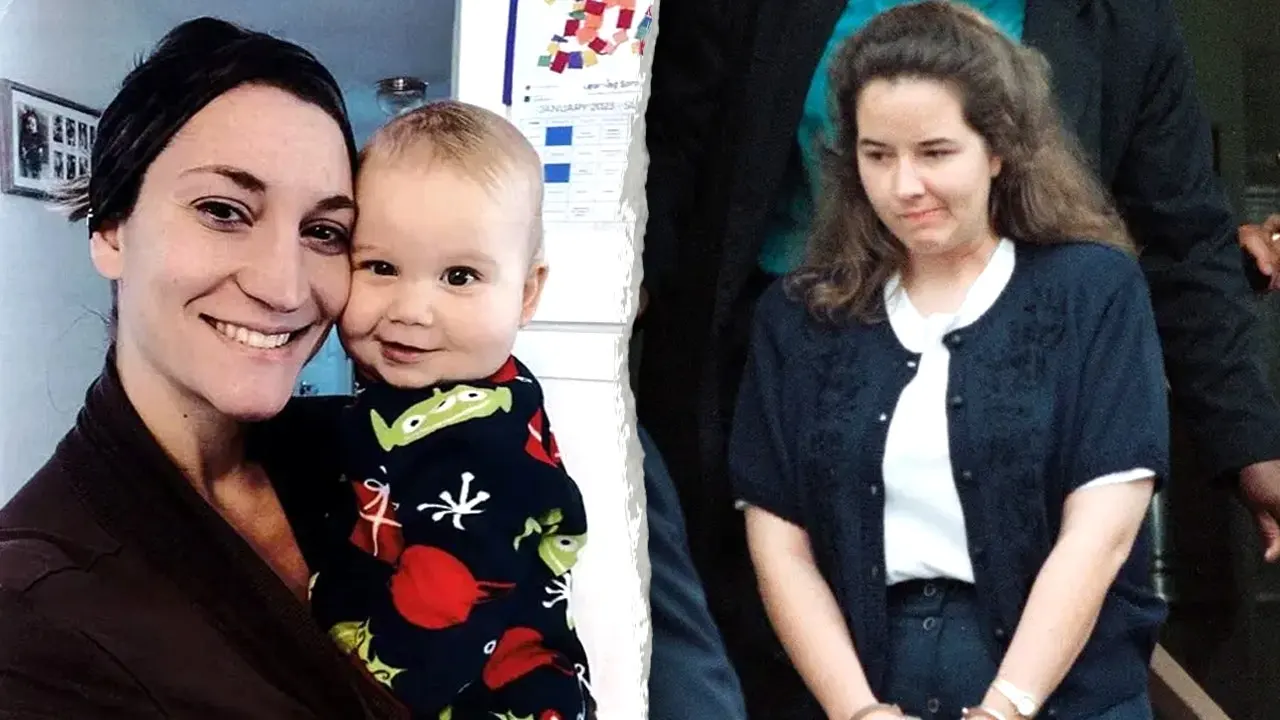
The courtroom felt airless, heavy with an almost tangible grief that clung to the walls like a lingering fog, wrapping every spectator, juror, and journalist in a collective shroud of sorrow. The trial of Lindsay Clancy has drawn national attention, not because it is sensational, but because it forces a reluctant society to confront the darkest corners of the human mind and the fragile boundary between maternal love and clinical madness. Clancy, a 36-year-old former nurse and devoted mother, stands accused of the unthinkable: strangling her three beloved children—four-year-old Cora, two-year-old Dawson, and seven-month-old Callan—inside their family home in Duxbury, Massachusetts, in January 2023. The prosecution describes a calculated, cold-blooded killer who meticulously planned the deaths, while the defense paints a portrait of a woman in the throes of acute postpartum psychosis, a severe and often misunderstood mental health emergency that sheered her from reality. As the trial unfolds, the courtroom has become a stage for a profound philosophical and legal debate: Where does mental illness end and criminal culpability begin? The jury—a panel of twelve men and women who must ultimately decide her fate—are tasked with untangling this impossible knot, listening intently as psychiatrists, psychologists, and investigators weave a complicated tapestry of evidence that seeks to define a single, horrifying moment. The tragedy is layered, touching not only the three innocent victims but also a grieving husband who lost his entire family in one night, a community reeling from shock and disbelief, and a defendant whose own life now hangs in the balance, both from the potential verdict and from her current physical state, as she remains paralyzed and confined to a wheelchair, a living monument to the destruction that mental illness can wreak upon a seemingly perfect existence. It is a case that defies easy answers, demanding instead a deep, uncomfortable dive into the fragility of the human psyche and the devastating consequences that unfold when that fragility fractures into something utterly unrecognizable.
The defense’s narrative rests precariously on the fragile shoulders of a psychiatric diagnosis, one that seeks to transform a mother accused of murder into a victim of her own biology. Dr. Phillip Resnick, a renowned forensic psychiatrist, took the stand to humanize the inexplicable, testifying that Clancy was not acting as herself but as a mere puppet, manipulated by an external, malevolent force that had hijacked her consciousness. Resnick explained with clinical precision yet palpable empathy that in the depths of postpartum psychosis, a woman’s brain can betray her with terrifying hallucinations and delusions that override even the most primal maternal instincts. He described Clancy’s state during the actual killings as a “dream state,” a surreal detachment where she genuinely believed she was saving her children from a fate worse than death, guided by a commanding, inescapable voice that brooked no resistance and demanded absolute obedience. The doctor’s words painted a devastating image: a mother so disconnected from objective reality that she perceived her murderous actions as an urgent act of salvation rather than a horrific annihilation. He was careful to emphasize that this was not a fleeting moment of postpartum depression or a simple lapse in judgment, but a full-blown, acute psychotic break—a medical emergency akin to a brain tumor or a seizure that completely hijacks cognitive function and free will. By framing Clancy as a passive vessel, a “puppet” whose strings were pulled by her own fractured psyche, the defense seeks to evoke profound empathy from the jury, asking them to see the tragedy not as a premeditated murder but as a catastrophic medical failure, where the true culprit was not Lindsay Clancy herself, but the relentless, invisible illness that consumed her mind, body, and soul in the weeks following the birth of her youngest child.
But the prosecution is not willing to accept this narrative without a fierce, methodical fight, and they have marshaled their own expert testimony to dismantle the psychosis defense, presenting evidence that suggests Clancy’s claims of hallucinations were fabricated, exaggerated, or at the very least, conveniently timed. Forensic psychiatrist Gregory Saathoff testified that it was “very unusual” for Clancy to report hearing voices—an auditory hallucination—for the first time only after the murders, despite having extensive, documented contact with mental health professionals, nurses, and emergency room staff in the months leading up to the tragic events. Saathoff also pointedly noted that the alleged commanding voice conveniently stopped immediately after she killed her youngest son, casting significant doubt on the authenticity and persistence of the hallucination, suggesting a calculated narrative rather than an ongoing psychotic symptom. Furthermore, in another blow to the defense, psychologist Kirk Heilbrun was asked a pointed legal question: can a person experiencing a command hallucination still conform their conduct to the standards of the law? Heilbrun conceded, “In some cases they can,” a critical admission that fundamentally undermines the argument of absolute loss of control or the inability to distinguish right from wrong. The prosecution’s strategy is to chip away relentlessly at the idea of a total psychotic break, suggesting instead that Clancy was acutely aware of her actions, perhaps even planning them with a chilling, methodical clarity, and that her postpartum struggles, while undeniably tragic and real, do not absolve her of the moral and legal responsibility for the brutal taking of three innocent lives. They aim to paint a picture of a woman who knew exactly what she was doing, who perhaps made a conscious, desperate decision to end her children’s lives and her own, and who is now cynically leveraging her deteriorating mental state and her physical paralysis as a shield against the consequences of her actions.
Beyond the expert testimonies and clinical dissections, the trial has sparked intense commentary on the deeply human composition of the jury itself, and the complex psychological dynamics at play. Tommy Pope, the South Carolina prosecutor who famously brought Susan Smith to justice for the murder of her two sons in the 1990s, offered a chilling “strange twist” regarding the women on the Clancy jury. Pope noted that the jury is comprised of twelve women and six men (though only twelve will actually deliberate), and he suggested that women might be less sympathetic to Clancy, not more, in a counterintuitive emotional reaction. Drawing from his own extensive experience in that iconic case, Pope explained that female jurors often have personal, visceral experience with postpartum depression, the “baby blues,” or the overwhelming, crushing stress of new motherhood. They may recall their own private battles with hormonal storms, sleep deprivation, and the feeling of being utterly lost, yet they did not kill their children. This relatability can breed a fierce, judgmental anger rather than compassion. When they hear Clancy’s defense, their internal dialogue might whisper, “I struggled too, I broke down too, but I didn’t snap. I didn’t harm my babies.” This sentiment can transform initial sympathy into a rigorous, unforgiving standard, making them more likely to convict because they feel personally betrayed by a woman who shares their biological experience but crossed an absolute moral line. Pope humanized this dynamic by reflecting on the psychological weight these women carry, their own maternal identities intertwined with the case, as they are forced to judge a mother who committed the ultimate transgression, potentially seeing a dark reflection of their own unspoken fears.
Pope also delved into a second, equally poignant “strange twist” concerning Clancy’s current physical state and how it might influence the male jurors specifically. Clancy, who survived her own violent suicide attempt following the murders, is now permanently paralyzed, her body broken and confined to a stark white wheelchair in the courtroom. The prosecution has presented evidence suggesting she may have deliberately thrown herself out of a window, while the defense argues it was an unintended fall during her psychotic state. Pope theorized that this visible physical vulnerability could evoke unexpected reactions among the male jurors, tapping into a primal protective instinct. Men, he argued, might be instinctively moved by the sight of a fragile, wheelchair-bound woman, viewing her paralysis as a form of cosmic punishment already served—”she’s already punished herself,” they might think, a gut-level feeling that she has paid a price that exceeds even a lifetime in prison. However, Pope emphasized that this could just as easily backfire, hardening their resolve if they believe her injury was a calculated, manipulative act designed to win sympathy. The visual of Clancy in the courtroom, immobile, silent, and utterly dependent, adds an almost unbearable layer of tragedy to the proceedings. It humanizes her in a visceral, undeniable way, reminding the jury that she, too, is a victim of the event—though a victim with blood on her hands. The courtroom becomes a place of stark contrasts, the clinical horror of the autopsy photos juxtaposed against the living, breathing, albeit broken, body of the defendant, forcing the jurors to continually straddle the impossible line between objective justice and the undeniable, powerful pull of human pity and compassion.
Outside the courthouse, away from the sterile legal arguments and expert jargon, the trial has ignited a broader, more personal conversation about maternal mental health, one that resonates deeply with mothers across the nation who have suffered in silence. A woman who came to show quiet support for Clancy spoke to reporters, her voice trembling with a mixture of sorrow and desperate advocacy. “This trial has really made a lot of us realize just how bad things are,” she said. “I was just telling my friend that when I had my children and left the hospital, nobody really said anything about postpartum, you know, be on the lookout for things. We just had to figure it out ourselves.” Her words echo a profound systemic failure, a collective silence that surrounds severe perinatal mood disorders, often leading to devastating, preventable tragedies. The supporter expressed a hope that the case will finally “move the needle a teeny tiny bit,” pushing for better screening protocols, more robust support systems, and a dismantling of the immense stigma that shrouds serious mental health disorders in mothers. As the jury prepares to deliberate, they carry not just the weight of the law, but the weight of a society desperately seeking answers to unanswerable questions. The verdict will not bring back Cora, Dawson, and Callan, nor will it erase the profound guilt and sorrow of a father left behind to grieve alone. But it will set a critical precedent for how we, as a society, choose to view mothers who commit the ultimate betrayal while in the grips of a terrifying, overwhelming mental illness. Is she a monster, or a victim? The answer, much like the complex human mind itself, is terrifyingly complex and refuses easy categorization. Ultimately, the case serves as a somber, haunting reminder that the line between love and madness is perilously thin, and that behind every “perfect” family, there may be a silent, desperate battle being waged that we fail to see until it is far too late.