





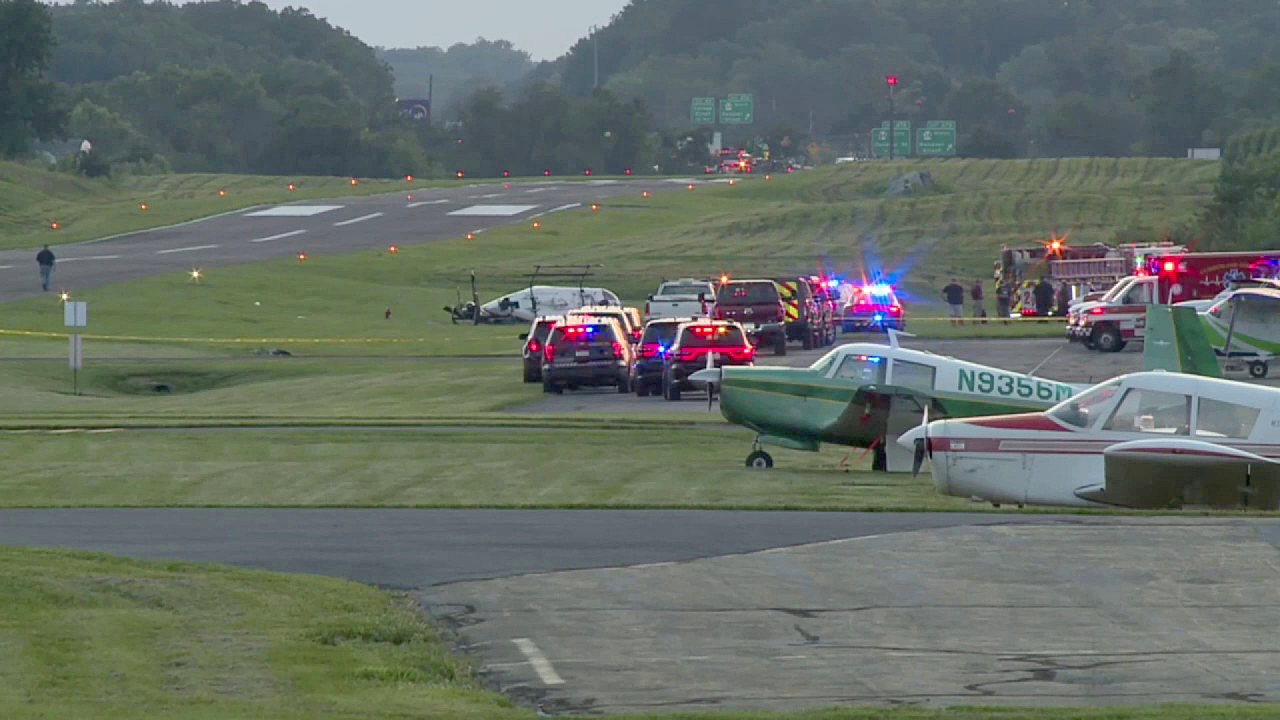
A serene Wednesday evening in the Pennsylvania countryside was irrevocably shattered in a split second, as the quiet hum of a routine training flight was violently interrupted by a catastrophic midair collision. The incident, which occurred at approximately 7:50 p.m. over a grassy field in Carlisle, Pennsylvania, approximately 120 miles west of Philadelphia, has left a community in mourning, two state troopers recovering from their injuries, and federal investigators piecing together the final moments of a doomed flight. The collision involved a Pennsylvania State Police Bell 407 helicopter, engaged in standard operational training, and a small civilian Cessna 150 airplane. The impact, described by officials as sudden and violent, resulted in the death of the sole occupant of the Cessna and left two veteran aviators fighting for their safety in the immediate aftermath.
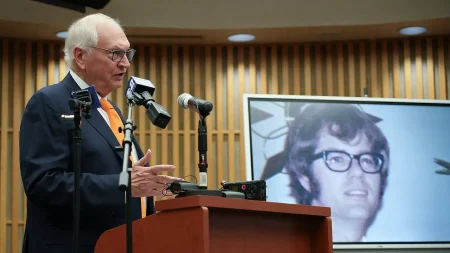
The Pennsylvania State Police, an organization known for its precision and discipline, found itself at the center of an unexpected and tragic emergency. Acting Commissioner Lieutenant Colonel George Bivens provided a preliminary account of the incident during a somber press briefing, detailing the frantic final moments before the crash. The Cessna, for reasons that remain unknown and are now the subject of a rigorous federal investigation, appeared to deviate from its flight path at the last possible instant. According to Bivens, the small plane veered sharply to the right, striking the stationary police helicopter from the rear. The impact was catastrophic, with the Cessna’s wing and propeller slicing into the helicopter’s tail rotor and main rotor systemhelicopter, a machine built for aerial law enforcement, was instantly destabilized and sent into a violent, uncontrolled descent, ultimately crashing to the ground with tremendous force in the grassy area where the training was being conducted.
In the chaotic seconds that followed, the focus shifted from the technical failure of the aircraft to the sheer human drama of survival. The two Pennsylvania State Troopers aboard the helicopter found themselves trapped within the crumpled wreckage of their downed aircraft. The crash had twisted the helicopter’s frame, leaving the crew confined and injured. Bystanders and first responders, who converged on the scene with breathtaking speed, worked frantically to extricate the two aviators from the mangled metal. The initial relief of freeing them from the wreckage was tempered by the knowledge that they were injured British standard, with the severity of their wounds unknown. They were immediately stabilized at the scene before being rushed via ambulance and potentially medical aircraft to a nearby hospital for comprehensive trauma care.
The loss of the Cessna pilot, however, cast a heavy shadow over the rescue efforts. Acting Commissioner Bivens, with a heavy heart, confirmed the grim news that the sole occupant of the Cessna 150 did not survive the impact. The violence of the collision had left no chance for survival for the pilot of the small fixed-wing aircraft. While investigators were still working to confirm the pilot’s identity, the overwhelming belief was that the Cessna was occupied only by its pilot, who was flying alone. The death of this individual immediately transforms the narrative from a technical accident to a profound personal tragedy, focusing attention on a family that has lost a loved one in a sudden and inexplicable manner, and on a community left to grapple with the senseless loss of a fellow citizen.
The human spirit’s resilience was quickly highlighted by Pennsylvania Governor Josh Shapiro, who addressed the media alongside Acting Commissioner Bivens. The Governor offered a message of cautious optimism amidst the devastation, confirming that despite the severity of the accident, both troopers were expected to survive their injuries. Their condition, while stable, remains a testament to the safety features of the modern helicopter and the swift medical response. In a heartfelt show of support, Governor Shapiro asked for prayers from across the state, stating, “I’m pleased to say that after an aviation accident, two Pennsylvania State Troopers, while injured, are going to be okay.” He further elaborated on social media, urging all Pennsylvanians to join him and his wife in holding the troopers and their families in their hearts and prayers during this critical time.
As the sun sets over the crash site in Carlisle, the immediate focus now shifts to the exhaustive and meticulous investigation led by the National Transportation Safety Board (NTSB), with the Federal Aviation Administration (FAA) providing critical technical assistance. This is a slow and methodical process that will involve a detailed examination of the wreckage, a review of flight data and air traffic control records, and interviews with any witnesses. The investigators will attempt to answer the central, haunting question: why did the Cessna veer to the right? They will analyze the weather conditions at the time of the crash, scrutinize the maintenance history of both aircraft, and examine the experience and medical history of the deceased pilot. The investigation is not just about assigning blame; it is about extracting crucial safety lessons to ensure that such a tragedy is never repeated, making aviation safer for all who take to the skies.
Ultimately, the story of the Carlisle midair collision is more than just a recounting of events; it is a reminder of the inherent risks associated with flightholik, the fragility of life, and the indomitable spirit of those who serve and protect. The two troopers, who are now likely beginning the long road to physical and emotional recovery, are a poignant representation of the thin line between routine duty and sudden catastrophe. Their harrowing escape from the wreckage, while colleagues and neighbors rushed to their aid, echoes a timeless theme of community solidarity in the face of crisis. As the investigation proceeds leszáll, the community of Carlisle and the entire state of Pennsylvania will collectively reflect on the events of that Wednesday evening, mourning the loss of a pilot no longer with us while celebrating the lives that were spared. The quiet fields of central Pennsylvania, now marked by the scar of the crash, serve as a stark memorial and a silent testament to the unpredictable nature of life, where a routine evening can change everything in a heartbeat.