


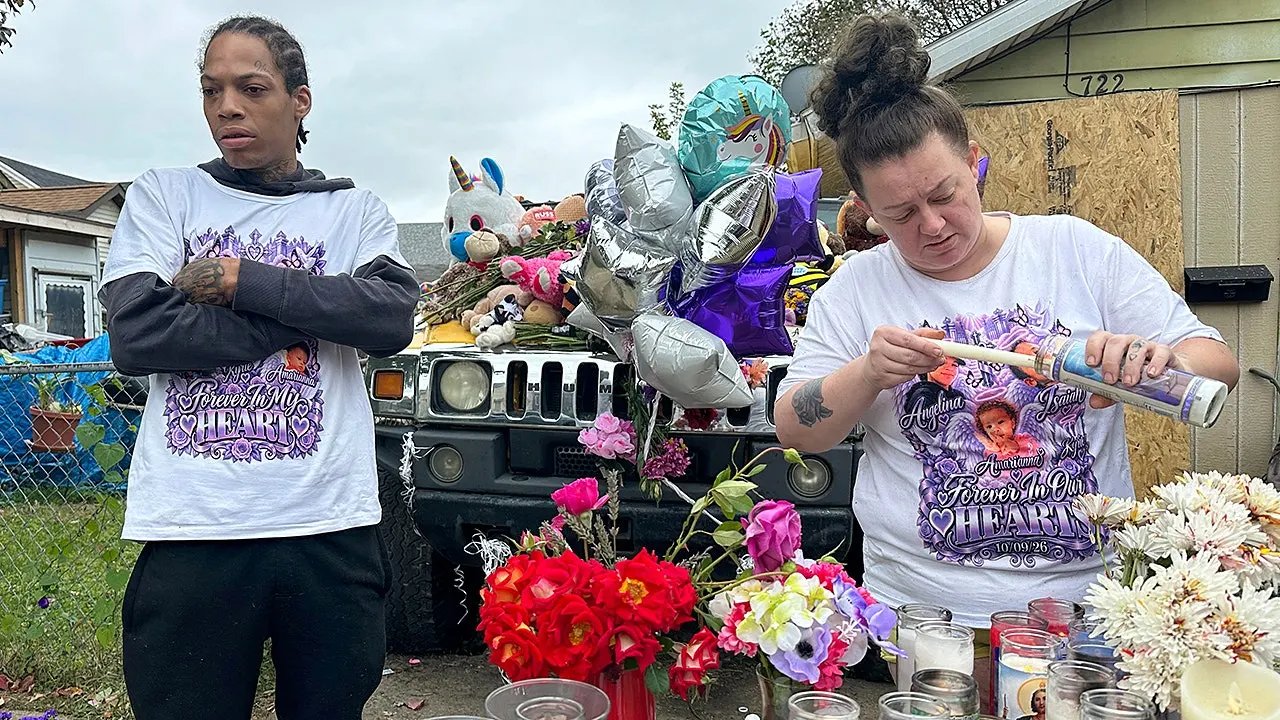
On a quiet street in Erie, Pennsylvania, where autumn leaves and tears both fell, a community gathered outside a home that had become a shrine to an unspeakable loss. Candles flickered against the growing darkness, flowers lay wrapped and bright, and stuffed animals stood in a silent row at the steps, reminders that the smallest victims would never grow up to hug them again. Julius Windham stood before the memorial wearing a T-shirt printed with the faces of the people he loved most: a young girl with a lifetime of promise, a mother-to-be whose future was stolen, a little boy who should have had decades ahead of him, and a baby who never had a chance to open his eyes. Above their photographs were the words “Forever In My Heart.” Windham’s 1-year-old daughter, Amarianna, was among the eight people killed. Her pregnant mother was killed, too, along with the woman’s 5-year-old son; the unborn child she carried died with her. Windham’s voice cracked as he spoke, but his eyes were dry, filled with a determination that seemed to come from somewhere deeper than grief. He knew the community was watching, and he knew his surviving family needed him. But he also knew that the person responsible for this horror was not a stranger wearing a mask. It was a 45-year-old man, a grandfather, a family member who had seemed perfectly fine just days before. “I think that was a front for him,” Windham said. “Him every day, him smiling and being just — you would think of nothing like that would happen.” There is a particular kind of betrayal in that realization: the danger had not been lurking outside; it had been sitting at the dinner table, smiling at the children, pretending to belong to the family it would destroy.
The victims were more than numbers in a police report; they were threads in a tapestry of relationships that had held this part of Erie together for decades. There was the pregnant woman, a mother who had already given life to a little boy and a baby girl and who carried another life inside her when she died. There was her 5-year-old son, who likely had a favorite toy, a favorite song, a favorite place at the table. There was Amarianna, a toddler just beginning to find her place in the world. And there were the others who died inside that house: two young men who should have had futures, and two more women whose roles in the family were as essential as they were loving. The only victim with no blood tie to the gunman was a friend of the pregnant woman, someone who apparently came to the house that night out of concern, out of love, or out of a terrible feeling that something was wrong. That friend paid for her loyalty with her life. Nicole Eller and Debra Eller, whose best friend was among the dead, had known the family for more than thirty years. They remembered the shooter not as a demon but as a man they once trusted. “He was a good guy, and then he started going downhill with everything,” Nicole said. Debra’s grief poured out in impossible questions: “They were a lovely family. Who would have thought this would ever happen? Oh my gosh, this is so upsetting. This should have never happened to her or the kids or anybody. His grandchildren, his kids, how can you do that?” The question is not rhetorical. It is a wound that will not close. How can a man who carried his grandchildren on his shoulders one day become the person who ended their lives?
What happened inside that house on Friday evening is still being pieced together, but the outline is horrifying. Police Chief Rick Lorah said investigators recovered video and audio evidence, including the sound of muffled gunshots. Then two women arrived at the house, described by police as distressed. They knocked on the door, pounded on it, desperate to know what was happening. Perhaps they had been called by someone inside, or perhaps they had only sensed danger and rushed over to help. They had no weapons, no way to defend themselves. They had only their courage. When the gunman came outside, they ran toward him, not away. He shot them as they ran. Their bodies were found by officers arriving within minutes of a ShotSpotter alert. Police moved carefully, using a drone and a robot before entering the home. Inside, they found the 5-year-old boy and the 1-year-old girl on the first floor. In a stairwell lay two more women and two young men. On the second floor, they found the shooter, dead from a self-inflicted gunshot wound. There were no further shots after police arrived; sounds mistaken for gunfire were actually flash-bang devices used by the SWAT team. Lorah declined to release details of what officers encountered, saying, “Out of respect for the victims and the families, I will not discuss the details of what our officers encountered inside that home. But I want our community to understand the gravity of what happened and the profound impact this tragedy has had on those involved and on our community as a whole.” This was not a scene officers would leave behind at the station. It was a scene that would follow them home, press on their chests in the quiet hours, and make them wonder how human beings could do this to one another.
As the community mourns, investigators are searching for answers that may never fully come. Chief Lorah declined to discuss a possible motive, but he suggested mental health could have been a factor. He said detectives would interview relatives and examine the cellphones of the two women killed outside, the women who seemed to know that something terrible was unfolding in that house. “They knew something was going on at that house,” Lorah said. “We have to figure out what that is.” District Attorney Elizabeth Hirz echoed that need for patience, urging the public not to spread rumors, speculation, or unverified information. “Please do not allow rumors, speculation or unverified information to add to the pain that these families are already experiencing,” she said. It is a plea that comes too often after tragedies like this, when the internet fills with false names and false theories that compound grief. Meanwhile, the most basic question remains: why? How does a father and grandfather reach the point where he can take a gun and end the lives of the people he is supposed to love? Was there a mental health crisis that went unnoticed? Were there signs that were missed? The investigation may provide pieces of an explanation, but it will never provide a justification. There is no justification for what happened. The gunman is dead, so there will be no trial, no cross-examination, no courtroom accountability. The only accountability is the one he exacted on himself, leaving the families with a hollow, strange kind of closure. The police chief acknowledged the lingering pain: “Some scenes stay with you long after you leave them. This is one of those tragic scenes.” It is also a scene that will stay with the families, with the friends, and with the entire city of Erie for years to come.
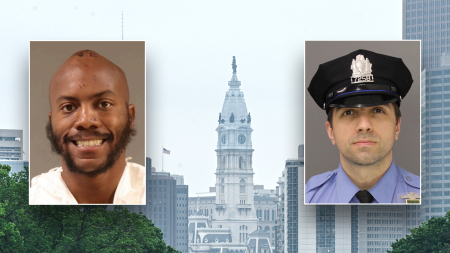
In the hours after the shooting, public officials struggled to find words that could hold the weight of the moment. Erie Mayor Daria Devlin spoke directly to the victims’ families, offering not policy or platitudes but something closer to a shared woundedness. “I am so deeply sorry. What happened to you was horrific, and there is nothing that any of us can say today that will make this any easier,” she said. She also acknowledged the cost borne by the first responders, describing them as members of the community who will carry emotional scars. “They too are members of this community, and they too will carry the weight of what happened last night. Our entire community is with you, we’re grieving with you. And we are here to support you.” Those words matter. In grief that can feel isolating and incomprehensible, the presence of a community can be a small thread of connection to the living. The mayor’s address was followed by Pennsylvania Governor Josh Shapiro, who offered his administration’s full support after what he called the tragic mass shooting. Speaking later outside Philadelphia, Shapiro also referenced the shooting of two Philadelphia police officers earlier that day. “Today has been a dark day across this commonwealth,” he said. It was a striking admission that the pain was not confined to one city. It touched everyone. The darkness was in the faces of the mourners, in the memorials, in the words of a father who had lost his baby girl. Yet even in the darkness, there were moments of humanity. Neighbors brought flowers. Strangers stopped to pray. The memorial outside the home grew, piece by piece, as people tried to turn their helplessness into something tangible. They could not bring the dead back, but they could stand beside the living.
In the end, what remains is memory and the slow, uncertain process of rebuilding a life around an enormous absence. Julius Windham stood in front of the cameras wearing his daughter’s face on his chest, carrying her with him in the only way he could. “Words can’t even explain what I’m going through right now,” he said. “But I gotta be strong for my community, you know what I’m saying? My family, my daughters, my sons, everybody.” There is a quiet heroism in that statement, a refusal to collapse even though everything inside him is screaming. He knows others are looking to him for strength. He knows his surviving children need a father who can still hold them. He knows the community of Erie needs an example of how to grieve with dignity. The memorial outside the home is a place for that grief, but it is also a promise. It says Amarianna will not be forgotten. It says her pregnant mother will not be forgotten. It says a 5-year-old boy who loved too briefly and too openly will not be forgotten. It says the two young men and two women who died in a stairwell, and the friend who ran toward danger in a desperate attempt to help, will not be forgotten. There are no words that can make the loss right. There are no explanations that can make it bearable. There is only the presence of a community, the embrace of friends and strangers, and the determination of a father to keep standing. He wore a T-shirt with photographs and the words “Forever In My Heart,” and in that simple act, he gave the grieving city a symbol of its own resolve. The candles will burn out. The flowers will wither. The stuffed animals will fade. But the memory of the lives lost, and the love that remains, will endure. In the hearts of those who loved them, and in the collective sorrow of Erie, they are forever.